When I first started pinning, I’d spend an hour designing a pin, post it, and then basically forget about it.
No saves. No clicks. Nothing. I mean nothing.
I didn’t really understand what was happening. Pinterest looked simple. Pretty images, good titles, that’s what I saw. But that’s not quite how it works.
There’s no single thing that makes a pin go viral.
But there are a few things that, if you keep doing them again and again, and over time, they start helping your numbers go up.
That’s what I want to show you here.
In this post, I’ll share my Pinterest strategy with you so you can try it out and create your own winning strategy to make Pinterest pins go viral.
Let’s jump right in!
What's Inside
What Does “Going Viral” Actually Mean on Pinterest?
We can call a piece of content that gets popular very fast with internet users “viral content.”
Similarly, on Pinterest, we can call them “Viral Pins.”
So, when your daily Pinterest traffic experiences a significant increase, it means you may have some viral pins.
Here’s a real example from one of my own pins:
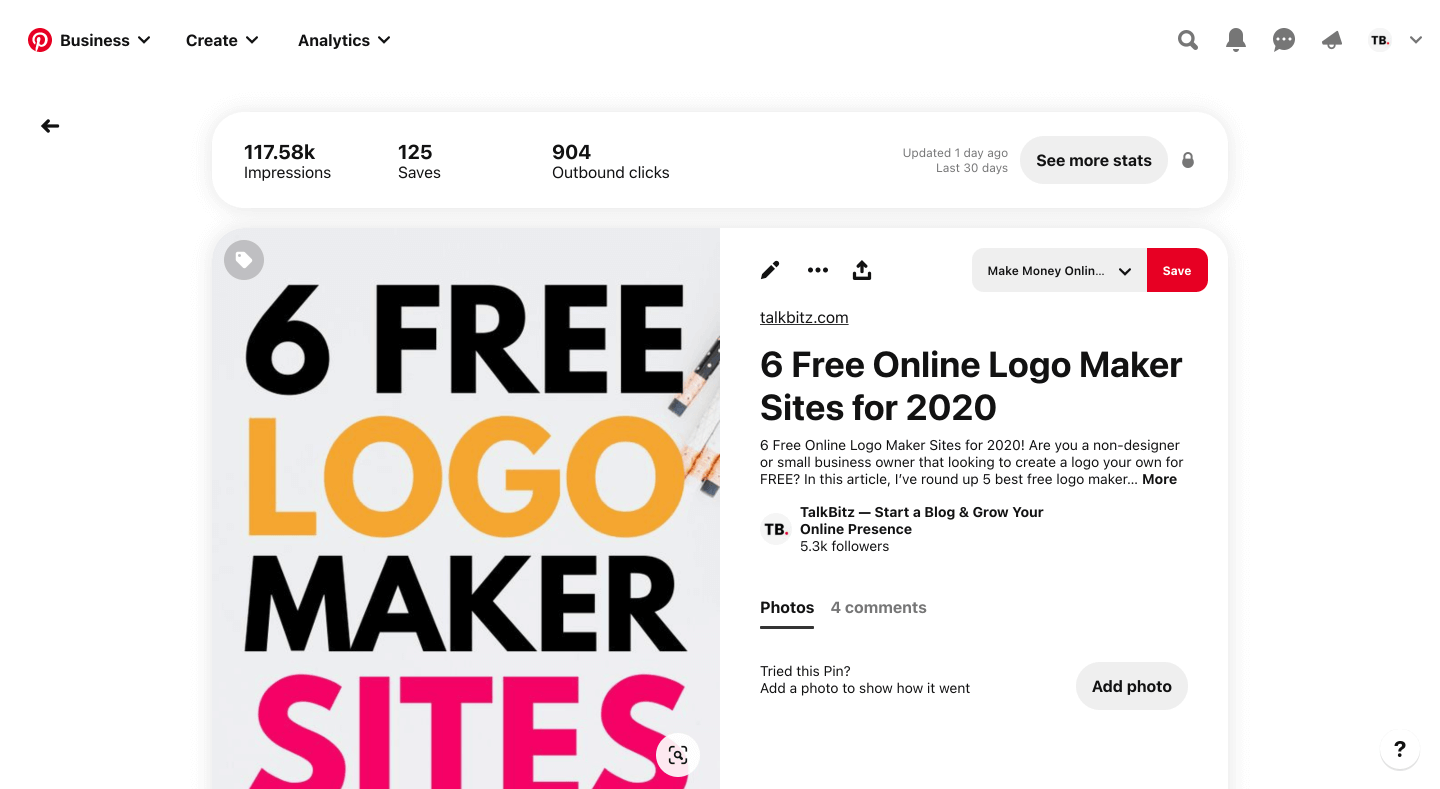
In a single 30-day window, that pin got 117,580 impressions, 125 saves, and 904 outbound clicks. The pin was for a post about free logo maker sites. Just a clean vertical design with a bold title and the right keywords in the description.
That’s what a pin looks like when it starts getting traction on Pinterest.
Pinterest picked it up, showed it to more people, and the numbers kept climbing without me doing anything extra.
That’s the thing about Pinterest. You do the work upfront, and it keeps working for you later.
The Image is What Stops the Scroll
Pinterest is not like Instagram or X, nor is it TikTok either.
Think of it more like a search engine, except everything is visual. People scroll fast, and if your image doesn’t stop them, they’re already gone. Your pin never even gets a chance.
So yes, the image matters a lot here.
Now, you don’t need a professional photographer or anything like that. Free stock photos work fine to start.
But the problem is, if you’re using the same photos everyone else is using, your pin will just blend in. And on Pinterest, blending in is pretty much the same as not being seen.
What’s worked better for me is taking a stock photo and actually doing something with it. Change the layout, add bold text, and adjust the colors to match your style.
Canva makes this a lot easier because you get access to photos and graphics that aren’t plastered all over the platform already.
Plus, the background removal tool there saves a lot of time when you’re trying to put something together quickly.
And another thing is, Pinterest recommends a vertical 2:3 ratio, something like 1000 x 1500 pixels. Taller pins just take up more space in the feed.
What it simply means is, more space = more attention. Keep that in mind when you’re designing.
Write Titles That Make People Click
The image gets them to stop. The title gets them to click.
Think about your own behavior on Pinterest. When you’re searching for something, you’re scanning titles fast.
The ones that get clicked usually tell you exactly what you’re getting, or they spark some kind of curiosity, or maybe it holds the promise of what you will get from it.
Something like “5 Free Online Logo Maker Sites for Non-Designers” works because it’s specific. You know who it’s for, you know what you’ll find, and the number tells you it’s a quick read.
That’s a lot of trust built in a short time.
Numbers help, specific audiences help, and most of all, action words help. Generic titles don’t really do much.
Also, don’t just make one pin per post and call it done. Try two or three different titles (different angles) for the same blog post and see which one picks up more saves and clicks.
That’s not spamming Pinterest, that’s just testing.
The thing to avoid is uploading the exact same pin over and over, because Pinterest will treat that as duplicate content, and it won’t help you.
If you’re stuck on titles, ChatGPT is actually pretty useful here.
Give it your blog post title and ask it to write 5 Pinterest pin titles with action verbs and specific keywords. Just clean up whatever it gives you before you post it.
Use Keywords So the Right People Find You
Keywords on Pinterest work differently from Google, but the idea is kind of similar. You want the right people to find your pin, and keywords help Pinterest figure out who to show it to.
The easiest way to find them is right inside Pinterest.
Go to the search bar, type something related to your topic, and look at what comes up as suggestions. Those are real terms people are searching for. Just use those.
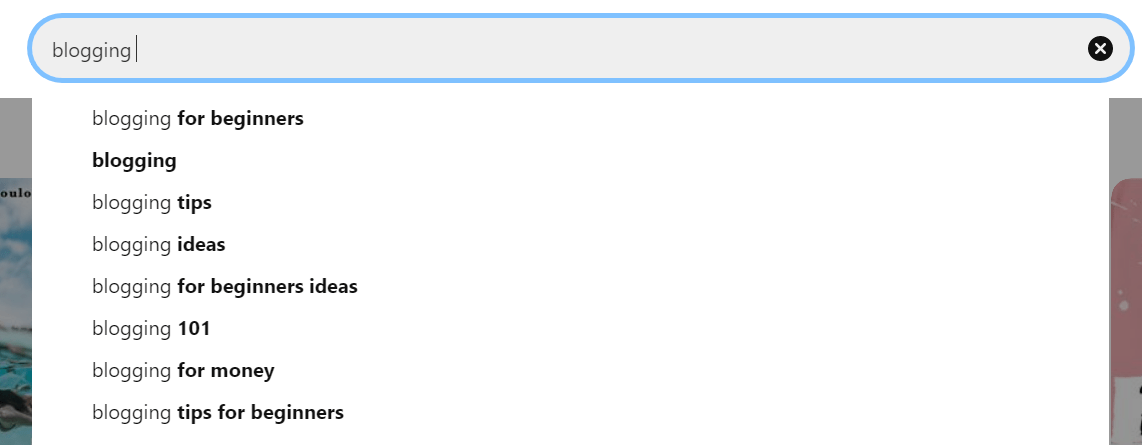
Put your keywords in three places: the pin title, the pin description, and the alt text on your image.
Don’t stuff them in there awkwardly.
Just write naturally and include them where they make sense.
And don’t stop at just your pins. Your board names and descriptions matter too.
A board called “Blog Tips” tells Pinterest almost nothing. A board called “Pinterest Marketing Tips for Bloggers” gives it something to work with.
Same idea, just a bit more specific.
It’s a small thing, but it adds up over time.
Don’t Pin 50 Things Then Disappear for a Week
Pinterest rewards you for being there regularly. I’m not talking about pinning 50 things in a day and then disappearing for two weeks.
That doesn’t work.
What works better is pinning maybe 3 to 8 times a day, spread out through the day, over a long period of time.
Tools like Tailwind make this way easier since you can schedule pins in batches, and it handles the timing for you.
This part is boring, but it matters a lot more than most people think.
The Board You Pin to Matters More Than You Think
Your pin can have a great image and a great title, and still not perform if it lands on the wrong board.
Make sure your boards have clear, keyword-rich names and descriptions.
As I mentioned earlier, a board named “My Blog Posts” doesn’t tell Pinterest much, and it doesn’t help people either. But a board named “Pinterest Marketing Tips for Bloggers” gives a lot better context.
Also, pin to group boards when you can, especially when you’re starting out, and your own account doesn’t have much reach yet.
Check Your Analytics, Then Do More of What’s Working
This is the part most people skip.
Pinterest Analytics tells you which pins are already getting traction. If a pin is getting saves without you doing anything, that’s a signal.
Make more pins pointing to that same post. Try different titles, different images. Give it more chances to spread.
There were pins of mine that got no real movement for months, with almost no traction at all. Then, after changing the pin design just once, impressions went up a lot, even doubled.
It doesn’t happen every time, but it does happen sometimes.
Wrapping Up
If you’re just starting out, don’t overthink the viral part.
Start with one good pin, a clear title, the right keywords, and a board that actually makes sense for it. That’s already more than most people do.
Then just keep going. Change the things that are not working. Do more of what is working.
The pins that eventually spread are usually the ones you made after learning what didn’t work the first time.
And if you want a head start on the design side, grab my free Pinterest templates here.

Happy pinning!