
You’ve probably been thinking about this for a while.
You know you need a website, maybe for your business, your portfolio, your side hustle, it could be for anything.
So you look it up.
And suddenly you’re comparing website builders, reading about hosting, watching a YouTube video that tells you WordPress is the only real option.
And somewhere in the middle of all that, it starts feeling like being dropped in the middle of a city with no map and no phone.
Thing is, that part, knowing which builder to use, is usually harder than the actual building.
So in this post I’m sorting out that part first, then I’ll walk you through how to make a website, step by step.
Disclosure: This post has affiliate links. I earn a commission if you buy, at no extra cost to you.
What kind of website do you actually need?
This is a question you must answer first before picking a platform, and that alone helps to know what you’re building.
That’s not because the process changes dramatically, but because it saves you from overthinking something that’s actually a pretty simple decision.
And the website builder we’re going to use here, Wix, handles almost everything people need when they first build a site.
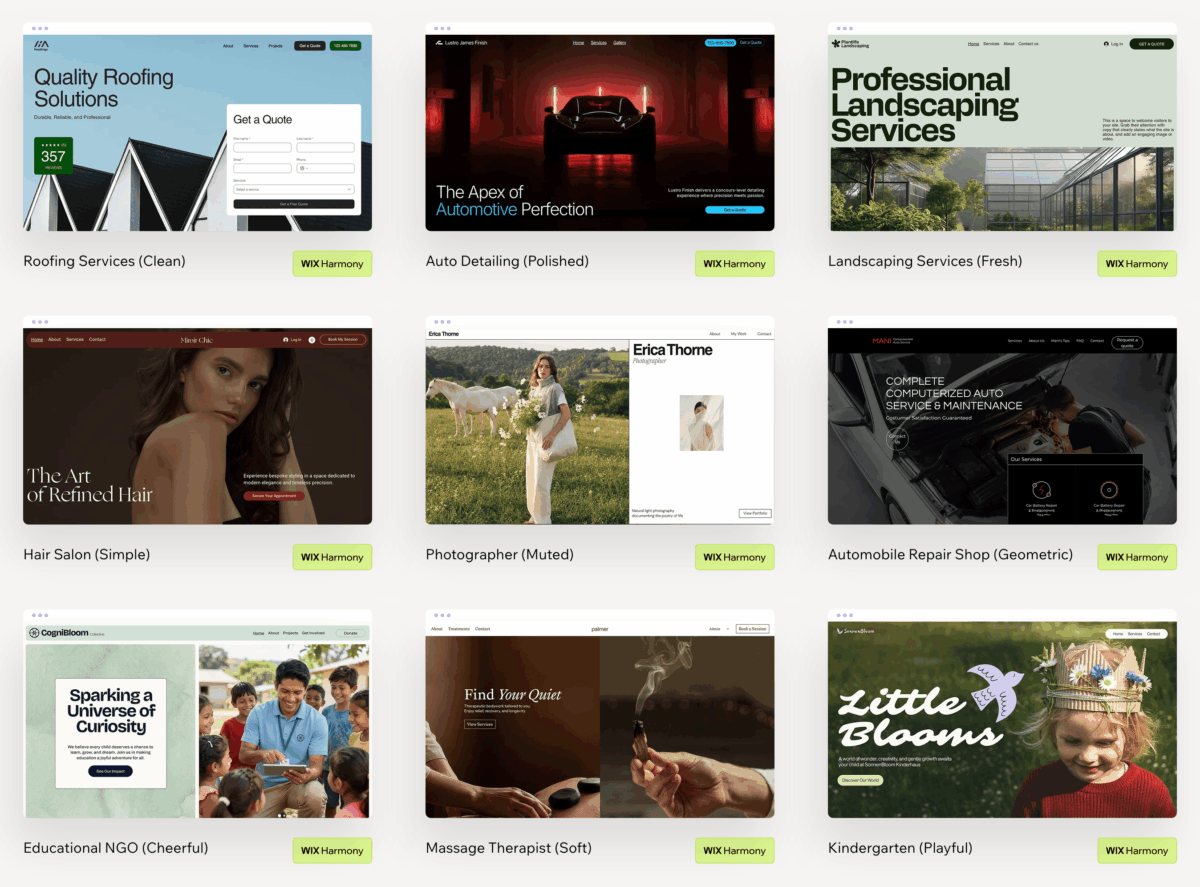
A blog, a small business website for a local service, a freelancer, or a coach.
An online store for physical products or digital downloads, even a portfolio, a personal brand or landing page for a side hustle.
All of them.
You can start with a template or a blank one or there’s an AI agent that lets you describe the site you want and it will generate it and stay by your side as you customize the site.
The only real cases where Wix might not fit are a large store with hundreds of products and complex inventory rules (that’s more of a Shopify situation) or custom development where you need full server access.
If you’re reading this post, you’re probably not part of either of those camps.
If you’re on that first list, the platform decision is easy to make, and Wix solves it way better. Don’t overthink it.
How much does Wix actually cost?
Wix has a free plan. So yes, you can start building your website right now, today and they are not going to charge you a penny.
But I will be straight with you here.
The free plan puts Wix branding in your header, runs Wix ads on your pages, and gives you a subdomain that looks like yourname.wixsite.com.
That’s fine if you’re exploring the editor to see how things work. It’s not fine if you’re trying to look professional.
But for most people starting a business site, blog, or portfolio, the Light plan is the right starting point.
It comes with a free domain for the first year, no Wix branding anywhere on your site, and everything a real website actually needs, with a 14-day money-back guarantee, which is like a 14-day trial.
| Plan | Price | Best for |
|---|---|---|
| Free | $0 | Trying out the platform, or hobby site |
| Light | $17/month | Blog, portfolio, personal or business site |
| Core | $29/month | Small store or booking-based service |
| Business | $39/month | Growing store with higher sales volume |
And there are also two things here that are worth knowing before you decide on a plan.
All pricing is billed annually upfront, so you’re paying the full year at once rather than month to month.
On the other hand, monthly billing exists but costs more.
And if you already own a domain from Namecheap, or anywhere else, you can connect it directly instead of using the free one that comes with the plan.
So the best way to do this is, try the free plan if you’re just looking around, or start with the Light plan if the branding and accepting payments are really a thing for you, and you’ll get 14 days to decide if this is the right one you really needed.
Let’s walk through it step by step.
Step 1: Sign up and pick how you want to start
First of all, you need to go ahead and make a Wix account. It’s free to start, and you can have the editor open in front of you in under two minutes.
→ Start building your website on Wix, my top pick for anyone making their first website
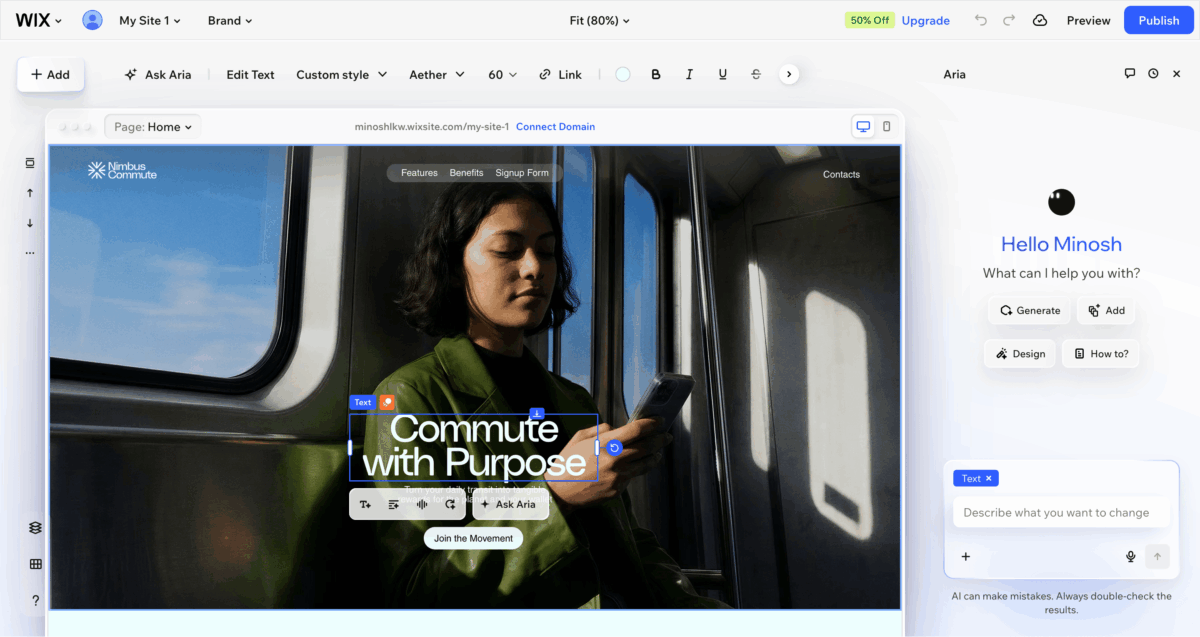
While you’re creating, they ask you some questions about what your site is all about, what you want to call it, what features you need and so on.
All those are easy to answer or you can just skip all of them together and move to the next step.
And then you get two options to pick from, which are, use the AI agent called Aria, or pick a template and customize it yourself.
Aria works through a conversation, Like you use ChatGPT or whatever all those AI tools now you see on the Internet.
You describe your business or site in plain English, and it generates a complete site including layouts, copy, images, and pre-configured sections based on your category.
It’s not close to 100% perfect and you’ll definitely adjust things, but it’s a fast way to get a starting structure that’s already built around what you’re doing, because you can just describe it in your own words.
If you’d rather have control from the beginning, skip Aria and go straight to the template library.
There are over 2,100 templates, with modern looks organized by industry, type and style. When choosing, focus on the layout and navigation structure rather than just colors, because colors are easy to swap later.
But one important thing you have to take seriously here is, it’s not possible to switch to a different template for a site you already created.
This means you have to start over with a new template if you need to and import those elements, pages and media from your old site, and have to transfer your plan and domain to it.
So give yourself some time to pick the template you really want.
Step 2: Customize your website
Well, this is the fun part, and also the one people overthink the most.
If we compare Wix with other website builders on the market, and I’ve seen and tested a lot of them by now, everything in the Wix editor is easy to get and it’s drag-and-drop.
You can click any element and you can move it, resize it, update the text, swap the image, or remove it entirely. No code, and now you can even ask AI to make changes.
Start with the obvious things like your business name, tagline, and contact details.
Then replace the placeholder images with real ones and Wix has a built-in free stock photo library if you don’t have your own yet.
Add your logo. If you don’t have one, there’s a free logo maker built into Wix that gets you something usable in a few minutes.
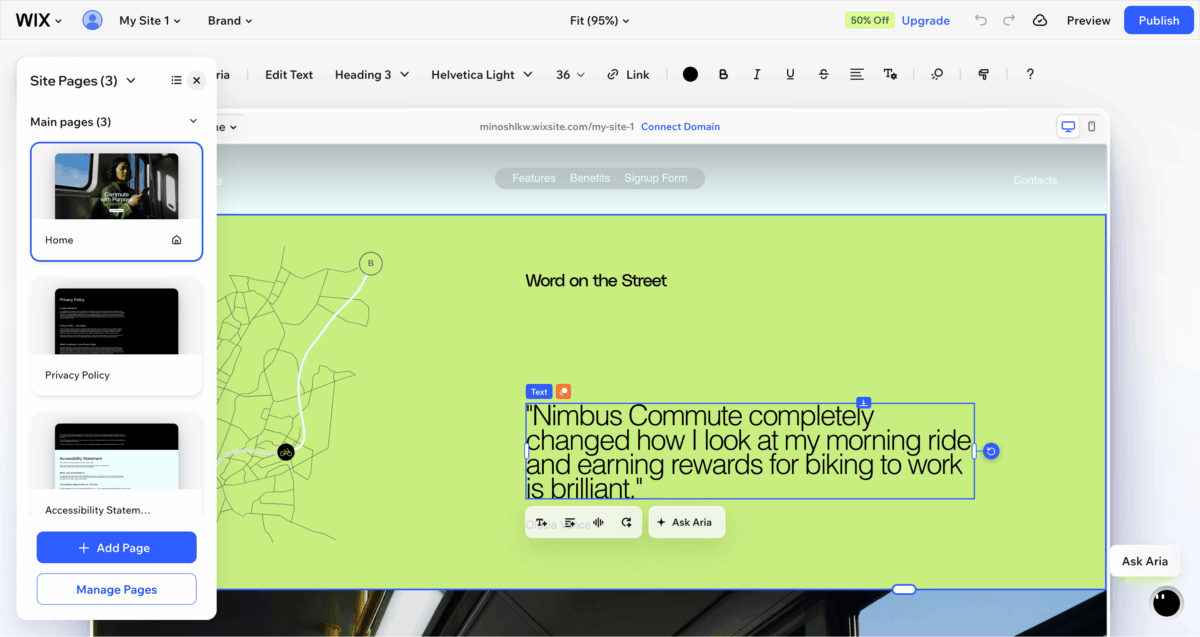
For page structure, start with what you actually need.
Some basics like Home, About, and Contact, and then add a services or blog page if that’s actually core to what you’re doing right now.
Don’t create lots of pages for things you don’t have yet. Put up what you actually have first, then add to it after.
And one more thing you should do early is to click the mobile preview button inside the editor.
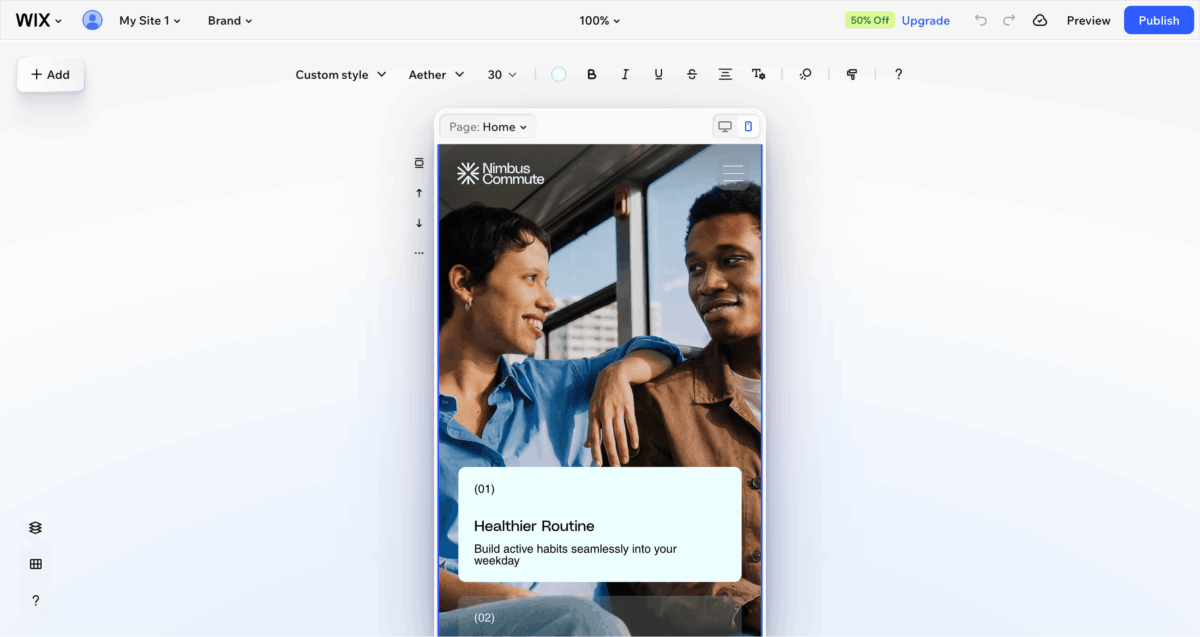
That’s because most traffic, especially from Pinterest and social media, lands on mobile, and things that look fine on a desktop screen have a way of being completely broken on a phone.
Wix is already good at keeping designs smooth on any device, but just take a look before you publish, not after.
Step 3: Connect your domain
On paid plans, Wix gives you a free domain for the first year, and the setup process walks you through claiming it even before you land on the editor.
If you skipped that already, you can still get one from the Wix dashboard by going to Settings from the right sidebar and then choosing Domains.
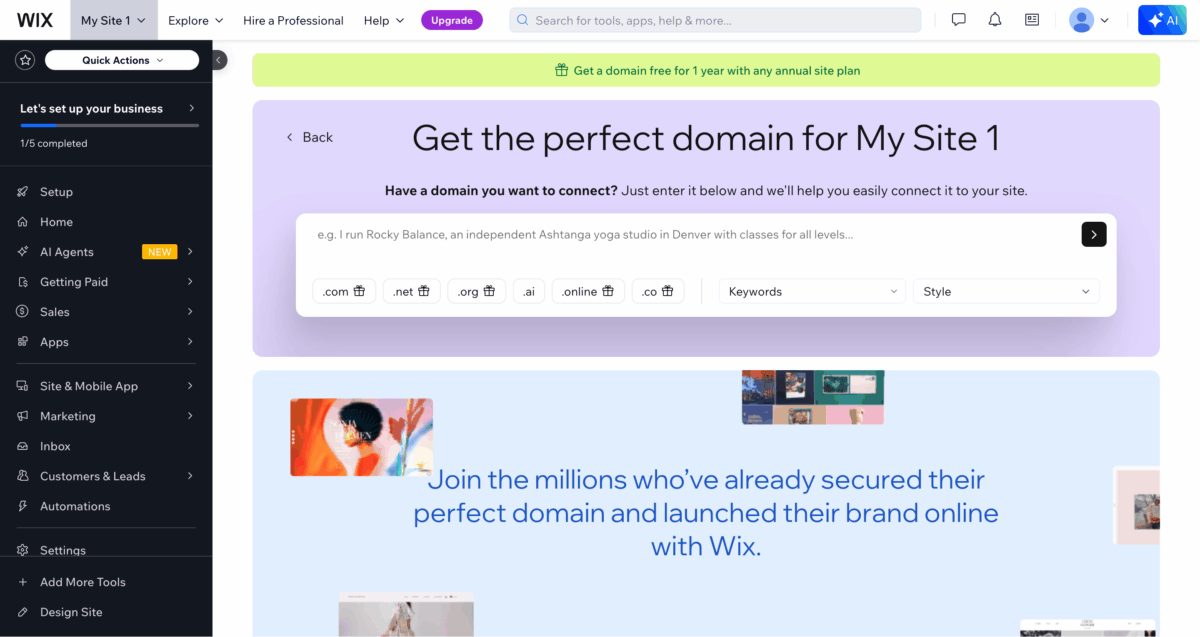
Or this will appear when you publish the site from the editor too.
If you already own a domain, there’s a “Have a domain name you want to connect?” option inside the Wix dashboard.
But if you go either way, you need a paid plan to have a custom domain, or you can still keep going and publish with what Wix gives you, something like yourname.wixsite.com/sitename.
Step 4: Set up the basics before you hit publish
This actually takes like 20 minutes, but most people might skip it and regret it later.
Go to Settings > Marketing > SEO & GEO > SEO Settings and Open each page and fill in the SEO settings.
Wix has a built-in SEO panel for every page, so add a specific page title and a real meta description for each one and also turn on site indexing for your entire site.
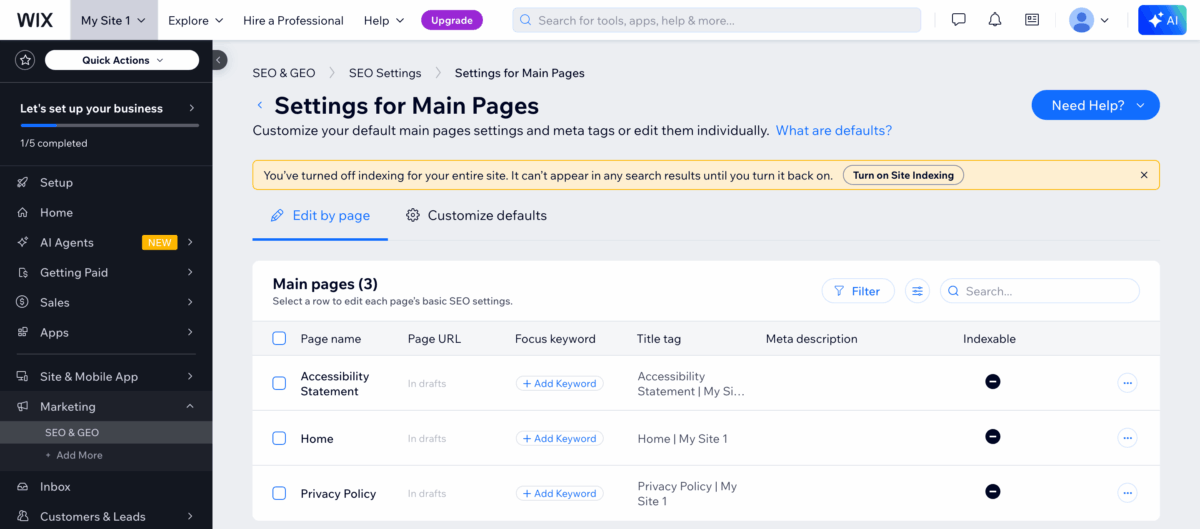
These are what pop up in Google results, and they also show up on social media when someone shared your website there, so don’t leave them empty.
Next, you can also connect Google Analytics, Google Search Console and Google Business Profile.
All of them are free, and Wix handles the connection inside same Settings > Marketing Integrations, and none of them require you to code anything.
So take your time and turn on and fill in what you needed in that Marketing section.
Step 5: Publish
Click the Publish button in the top right corner of the editor. On a paid plan with your custom domain connected, the site goes live automatically.
That’s it. You have a website.
Now go check it on your phone, send the link to friends, family, and see how it actually looks in the real world.
You’ll probably spot one or two things to fix, that happens, and that’s completely normal.
The point is it’s live, and you can keep improving it from here.
And if you get stuck somewhere, Wix has a Help Center with thousands of guides, live chat on weekdays, and a phone callback any time of day.
You are not alone in this.
Now go build it
That’s really everything you need. You’ve got the platform, you’ve got the steps, and now there are no more excuses to just let it collect dust.
The only thing left is you opening that editor.
And the hardest part was just deciding to start.
You’ve got the map now. Take the first step with Wix.
Frequently Asked Questions
- Is Wix really free?
- Yes, but the free plan comes with Wix branding on your pages and a Wix subdomain instead of a real domain. That’s fine for testing the platform. For an actual business site or blog, the Light plan at $17 a month is where it becomes professional.
- Is Wix good for SEO in 2026?
- Yes. Wix switched to server-side rendering, which means search engines now get proper HTML instead of blank JavaScript shells. In 2025, Wix sites scored a median Lighthouse SEO score of 100 on both mobile and desktop. You’re not starting at an SEO disadvantage.
- How long does it take to build a site on Wix?
- Using the AI builder, a basic site can be ready in under 2 hours. If you’re picking a template and building manually, most people finish within a weekend. This isn’t a week-long project.
- Can I make money from a Wix website?
- Yes. Wix has a built-in store for physical and digital products, appointment booking, lead capture forms, and a blog for affiliate content. The monetization tools are included on Core and Business plans.
- Do I need to pay for hosting separately?
- No. Hosting is included in every Wix plan, including the free one. You don’t need to set up a server or deal with a hosting provider. It’s all built in.