You can sell online without buying, storing, or shipping a single product.
Yes, I really mean it.
Print on demand, Redbubble, Merch by Amazon, digital products, and affiliate marketing all let you do it, and you can start most of them for $0.
But first, I’m going to guess how you got here.
You looked up how to sell online, and every second video was about dropshipping.
Find a supplier in China, build a Shopify store, run Facebook ads, wait three weeks for shipping, and then deal with the angry emails when the product shows up looking nothing like the photo.
And somewhere in the middle of all that you thought, “is this really the only way?”
It’s not. Not even close.
So the five models below split into two groups.
The first group still sells actual products, you just never get your hands on them, and the second group skips those physical products completely.
Let’s get started!
Disclosure: This post has affiliate links. I earn a commission if you buy, at no extra cost to you.
Part 1: Sell real products without ever touching them
All three of these models use some kind of print on demand behind the scenes. Someone somewhere places an order, a printer makes the item, and then it ships straight to the buyer.
The only difference is where you sell and how much control you get.
1. Print on demand: build your own store with Printify or Printful
Print-on-demand (POD) means you design a product, list it in your own online store, Etsy, TikTok, you name it, and a print company makes and ships it only after someone buys it.
You don’t have to pay anything upfront. You pay the base cost when an order comes in, and you keep the difference, the profit.
And when it comes to who does the printing, the two big names are Printify and Printful.
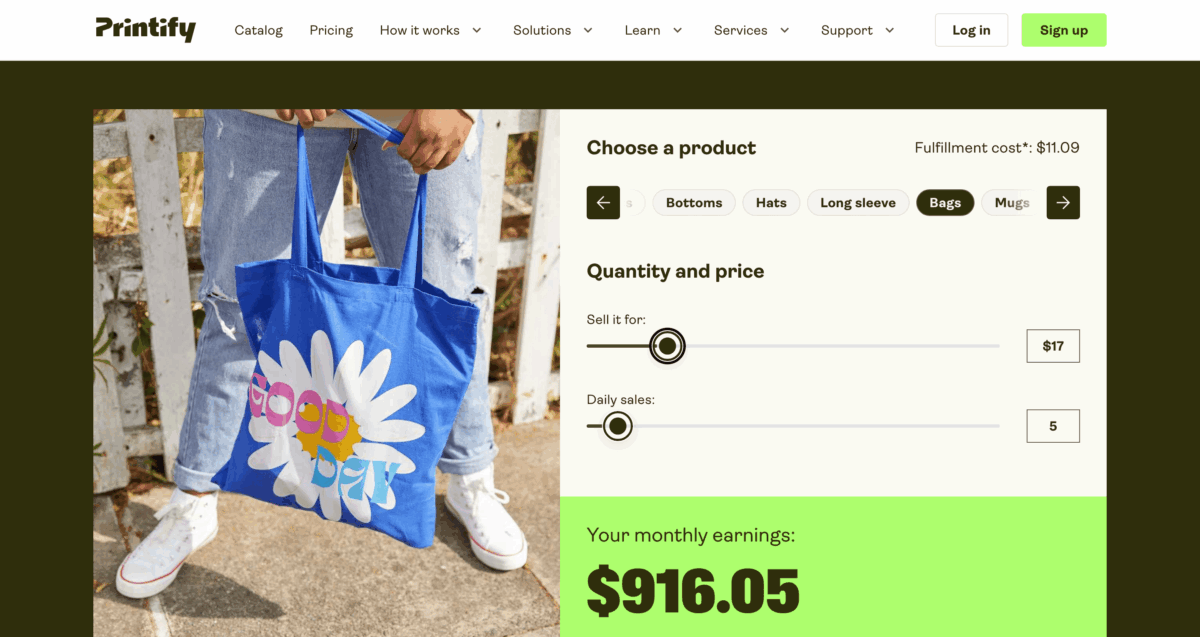
Printify works with a network of different print providers, so you pick who prints your products (usually t-shirts, bags, mugs, phone cases, wall art) based on price, location, and quality ratings.
That’s what makes the base costs lower, but quality can change from one provider to the next.
Printify’s free plan costs $0, and the Premium plan (which lowers more of your base costs) went from $29 to $39 a month in February 2026.
On the other hand, Printful mostly owns its own print facilities. So you get one quality standard and more predictable results, but less room to play with pricing.
It has a free plan too, but the product and shipping costs are a bit higher because you pay for that in-house control and consistency.
The big thing here is, both platforms have a built-in store option.
Printify has Pop-Up Stores, a hosted simple storefront you can set up in minutes without touching any code or website builder. Printful has Quick Stores, which works the same way.
| Built-in store option | Other platforms (Etsy, Shopify) | |
|---|---|---|
| Cost | Free, no monthly fees, no setup cost | Etsy charges per listing + transaction fees. Shopify starts at $39/month |
| Setup time | Minutes, no code, no website builder needed | Etsy setup is quick too. Shopify takes longer to configure properly |
| Traffic | None built-in, you bring visitors yourself | Etsy has millions of buyers already. Shopify has none by default |
| Customization | Basic logo, colors, domain | Etsy is limited. Shopify gives you full control |
| Best for | Testing a design before committing to a full store | Growing a real brand with repeat customers |
The way it works is, you get a product link, you share it, and orders come in straight through.
I know, neither will bring you organic traffic on their own, so you’d need to drive people there yourself, through Pinterest, social media, or wherever your audience is.
But if you just want to test whether a design sells before paying for a full online store setup, they’re a decent free option.
And once you see you’re getting some good sales, starting a Shopify store is the best way to build your own brand and get sales from anywhere, even from social media, and also ChatGPT connected to one place.

What you actually keep from each sale
This is the part most POD tutorials blow through, so let’s slow down.
Say you sell a mug on Etsy for $19.99 using a Printify provider.
The base cost is $4.69, shipping is $5.69, Etsy’s transaction fee is about $1.30, payment processing is about $0.85, and the listing fee is $0.20.
That leaves you around $7.26, which is about a 36% margin.
Not bad, right?
Except if that sale came through Etsy’s Offsite Ads (where Etsy advertises your listing on Google or social media and takes up to 15% of the order total when it leads to a sale), your $7.26 drops to somewhere around $4.26.
And you don’t get to choose which sales count as offsite ad sales.
So yeah, this is not the kind of business where one sale pays your rent. It works through volume, over time, with designs that keep selling for months or years.
That’s exactly why I said running your own Shopify store makes sense one day, you can cut out those platform fees, so your margins look better when volume is higher.
What makes a design actually sell
The design is what does most of the selling here. That said, “Good vibes only” in a nice font is going up against thousands of listings that look just like it.
What works is more like niche plus emotion, designs made for a very specific group of people who feel something when they see it, like dog breed owners, nurses, teachers, people obsessed with one hobby.
You can still start small, maybe 2 or 3 product types and 5 to 10 designs. Order a sample before you list anything (you don’t want to find out the print is blurry from a customer review).
And don’t use quotes, characters, or logos you don’t have permission for or you don’t own.
So if you ask me how to sell online without inventory and build something that’s actually yours, this is the model to look at first.
Printify is free to start and it’s simple, so that’s a good enough reason to try it first.
2. Redbubble: upload your art and let the marketplace find buyers
Redbubble is a marketplace where shoppers already come to buy art on products like t-shirts, stickers, phone cases, and there are around 70 other products.
As a seller or, we can say, an artist, you upload a design there, and Redbubble does everything else. I mean, printing, shipping, customer service, payments, taxes, even Google Shopping ads.
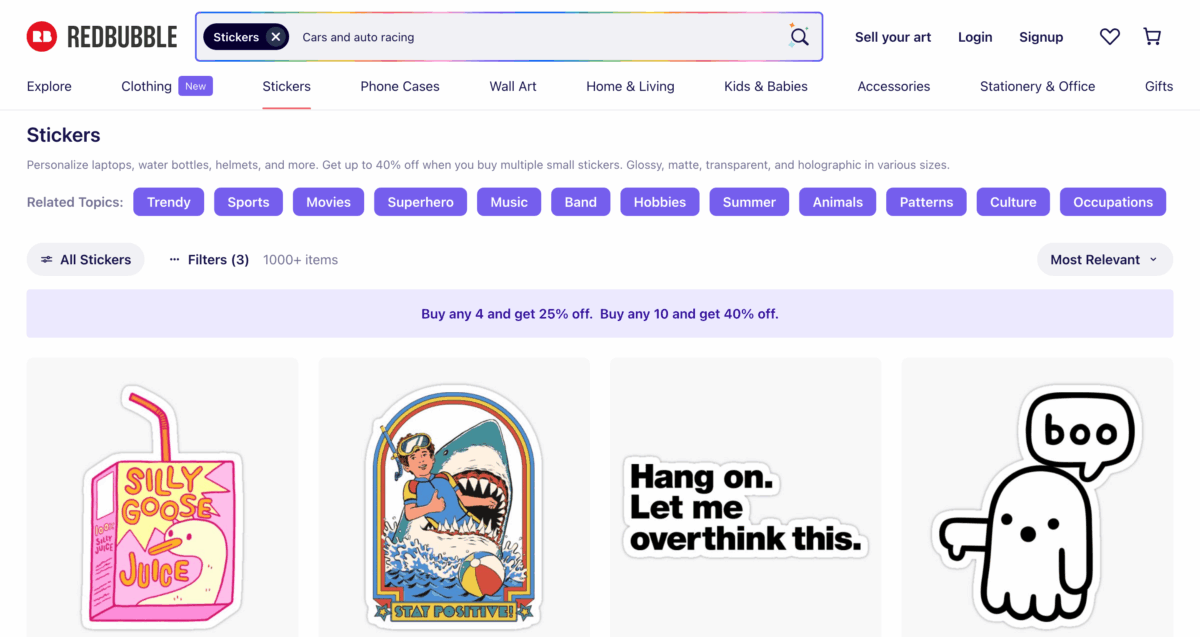
This is more like another kind of print-on-demand platform but for artists and designers to sell their artwork and designs.
There’s no monthly fee and no setup cost so you can open a shop this afternoon.
But even with all of that done for you, there is one catch.
And that is control.
You don’t get customer emails, you don’t build a brand, and you’re always living on someone else’s platform.
Redbubble says it connects over 700,000 artists and designers across the world, and Semrush data from September 2026 also shows about 19.8 million estimate of total visits to the website.
It’s some serious traffic that you would never get on your own when you are just starting to sell.
The tier system most people don’t know about
In 2023, Redbubble introduced a three-tier system, and the fees got updated again in September 2025.
Standard tier sellers lose 50% of their earnings to a platform fee, premium tier sellers lose 20%, and then Pro sellers, (an invite-only group based on sales, quality, and engagement) pay nothing.
There’s a $150 fee cap per payment period, so you won’t lose more than that in a single month regardless of tier.
Another thing is, if you set your markup above 20%, Redbubble charges an extra 50% fee on the earnings above that threshold.
And your tier depends on design quality, how often you upload, and how well your design sells, not just how much you sell.
The part nobody puts in the YouTube thumbnail
I saw a story on a Substack newsletter about a person who opened a Redbubble shop in 2021. She put up designs every day for six months. She got no sales, so she decided to quit.
Then about two years after opening the shop, she found out that she did make sales after all. Her account was also tagged Standard, which she mentioned took a big bite out of her profits.
It’s not the kind of thing that motivates you but I like this story because it’s what really happens to a lot of people, and it’s way more useful than any income screenshot.
From what I see, stickers are probably the smartest starting product here but they’re not gonna make you a living.
They’re cheap (around $2 to $4), so people buy them on impulse, which means your first sale might come faster. Fan art, pop culture, and niche hobby designs do well too.
So what is Redbubble good for anyway? I’d say, for trying things out.
If you have zero audience and zero budget and you just want to know if your designs have any demand at all, it’s a free way to find out.
Just don’t build your whole income plan around it.
3. Amazon Merch on Demand: get your designs in front of Amazon shoppers
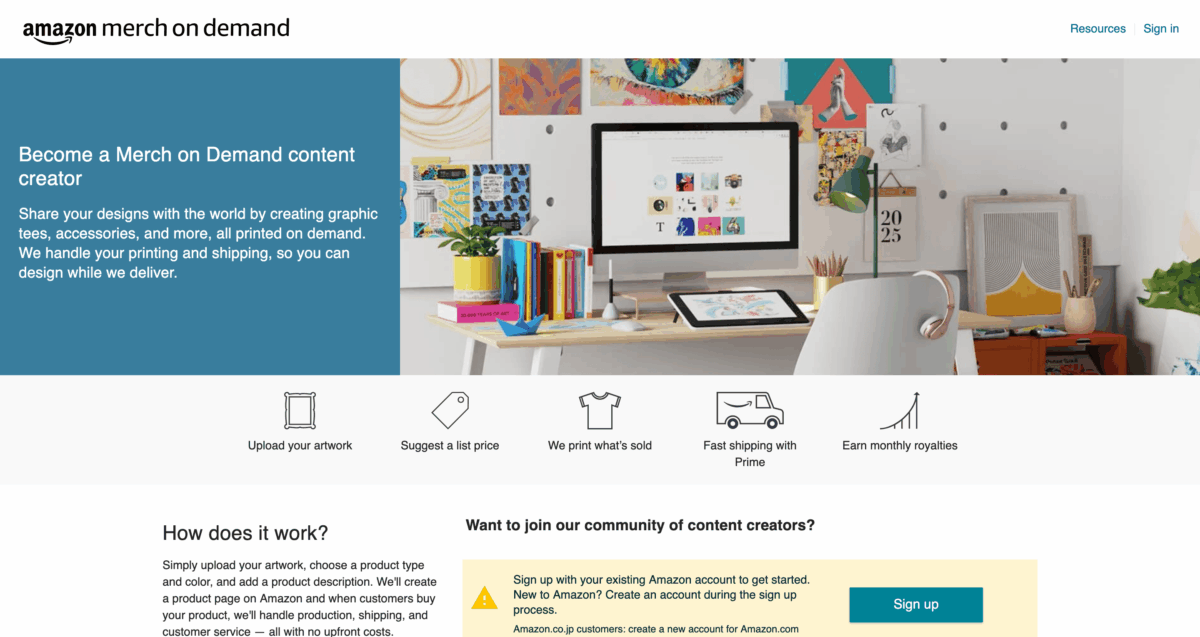
Merch by Amazon (now officially called Amazon Merch on Demand) is Amazon’s own print on demand program, quite similar to the models we talked about earlier.
You can upload your designs, Amazon lists them as real products, and when someone buys, Amazon prints, ships, and handles returns. You get a royalty.
So yes, this pretty much sounds like Redbubble but the difference is who’s walking through the door.
I mean, Amazon gets about 2.3 billion visits a month, according to Semrush, and those people are already in buying mode. They search “nurse shirt,” they find a nurse shirt, and if they like it, they buy it.
Most of their products include t-shirts, tank tops, long sleeves, sweatshirts, tote bags, phone cases, PopSockets, pillows, and tumblers.
So it’s mostly merch, and if you want to sell shirts online without inventory, this is probably the most hands-off way to do it, Amazon handles everything once your design is approved.
You have to apply first, and this part is weird
You can’t just sign up and sell whatever you want. You have to apply at merch.amazon.com with your contact info, a US bank account, and a tax ID (SSN or EIN) and some guides say Amazon aims to review within 14 days.
But in reality, I have seen some discussions where people wait anywhere from a few weeks to a few months, and some even longer, with no updates in between.
One estimate says the approval rate is around 30% to 40%.
If you get rejected, you wait 60 days before applying again, and Amazon might not tell you why. You just get a no. (Both figures are from seller community discussions, not Amazon directly.)
That part is annoying. You can’t fix something when nobody tells you what’s broken.
But also we need to get that it’s more for people like established content creators, independent designers, graphic artists, YouTubers, social media influencers, and brands.
Tiers, slots, and the June 2026 royalty change
Once you’re in, you start with a limited number of design slots and move up as you make sales, not by uploading more.
Then in June 2026, Amazon changed how royalties work, meaning now your royalty depends on how much of your own traffic you’re driving, based on a trailing two-month average.
For a standard $19.99 t-shirt, the Creator tier (all sales coming from Amazon’s own search) pays $2.44.
The Plus tier (at least 15% of your sales driven by your own traffic, like social media or ads) pays $4.88.
The Premium tier (at least 35% from your own traffic) pays $5.27. You also need to sell at least 10 units a month to qualify for Plus or Premium.
What that means is, if you have no audience outside of Amazon, you’re stuck at the lowest rate.
Even though it’s not a must, Amazon basically wants you to bring your own traffic now if you want a bigger piece of your sales.
What sells on Amazon Merch
It’s simply what you do for a living, who you are, and how you feel.
“Proud plumber dad,” “Dachshund mom,” “4th grade teacher squad,” those are just specific enough that the right person sees it and goes, yeah, that’s for me.
On the other hand, funny cat shirts and quotes could work, but that space is way too packed.
Maybe you can try uploading holiday designs by September, because Q4 is the biggest season. And stay far away from trademarks, and they also have some content policies you need to take seriously because Amazon can suspend your account permanently.
Income-wise, at $2.44 per t-shirt, ten sales is $24.40. Getting to $200 or more a month usually takes 12 to 24 months, and designs with no sales for a certain period get removed automatically.
If you can be patient and you like the idea of selling on Amazon without running a full seller account, it’s worth applying.
But treat it as a way to find out which designs people actually want, and then bring those winners to an online store you own one day.
Part 2: Make money online without selling physical products at all
The next two skip physical products completely.
There are no base costs, no printing, and no shipping, and one has you make something once and sell it again and again.
The other one has you selling other people’s products, but in a way where everyone comes out happy.
4. Digital products: make it once and sell it again and again
A digital product is a file people download. It could be templates, planners, spreadsheets, ebooks, printables, Canva kits, Notion setups, Lightroom presets, even a small piece of software or tool.
You make it one time, or maintain it regularly, and every sale after that costs you almost nothing.
That’s the big thing that makes it different from POD. You don’t have a base cost chewing into every sale, even if there are some transaction fees, so your margins end up way higher.
What gets that first sale the quickest is usually something really niche that solves one issue for one specific type of person.
For example, “Budget planner” is too broad, and it competes with everything. “Budget tracker for college students” or “wedding planning checklist” is much easier to sell because the right person instantly knows it’s for them.
But that doesn’t mean those have less competition, you still gotta come up with something good enough to actually sell.
Where to sell: Gumroad, Payhip, or Etsy
Gumroad charges 10% + $0.50 on each sale but with no monthly fee. Payment processing adds about 2.9% + $0.30 on top, so on a $20 product you’re paying around $3.38 in total fees.
It also has a built-in marketplace called Discover, but sales through Discover cost 30%, so treat that as a bonus, not a plan.
They also handle sales tax for you since January 2025, which is one less headache.
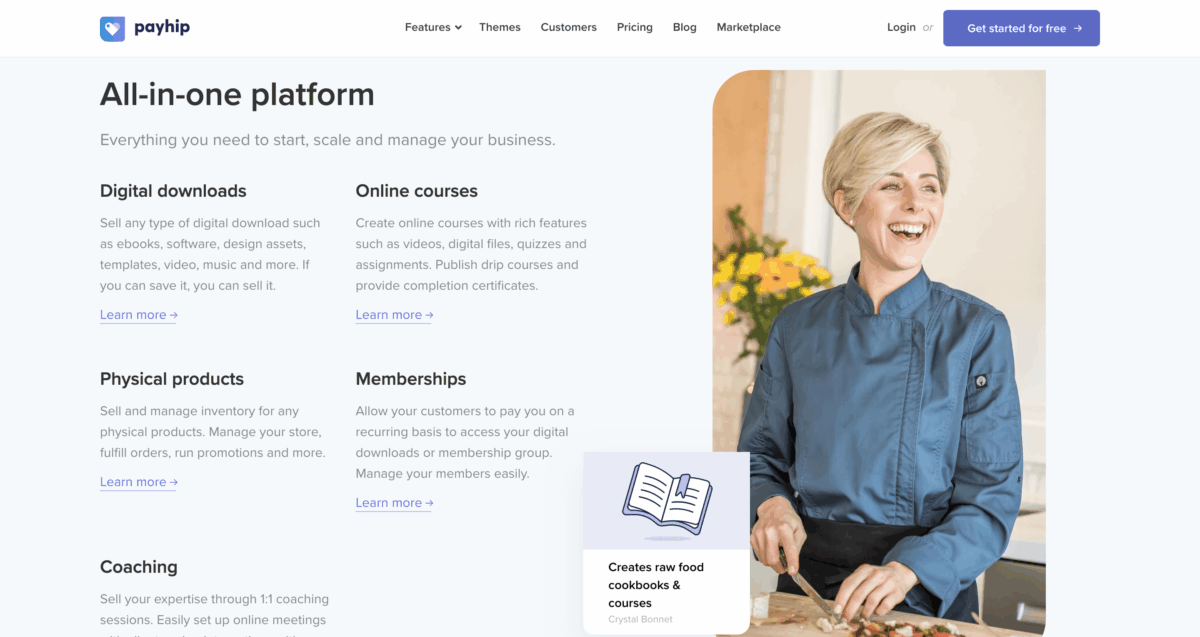
Payhip’s free plan takes 5% plus processing. The $29 a month plan drops that to 2%, and the $99 plan drops it to 0%.
So with a $20 product, you’d keep around $16.62 on Gumroad and around $18.12 on Payhip’s free plan. The $29 plan only starts to make sense when you’re selling close to $1,000 a month.
Then there’s Etsy, which is another place to sell digital products.
It gets millions of visitors a month, so you’re not starting from zero traffic.
A $12 printable nets around $10.40 after Etsy’s fees. On the other side, there are already millions of digital product listings on Etsy, so it’s kind of way too crowded.
Based on what I’ve seen, a new shop with 5 to 10 listings rarely hits $500 a month, and sellers who get results usually have 50 or more listings, clear titles with keywords like “editable” or “Canva template,” and good mockup images.
My take is, start with Gumroad if you have even a tiny audience somewhere, add Etsy if you want marketplace traffic, and move to Payhip once your sales are steady enough that the lower fees actually matter.
What the first few months really look like
If you don’t have any audience, getting that first sale usually takes weeks or maybe even months.
People usually make somewhere from $0 up to $200 in those first six months, but only if they can get enough buyers to visit their shop.
So it’s realistic to make a few hundred a month by the time you hit months 6 to 12, if you keep adding products and figure out ways to drive traffic like pinning on Pinterest or creating TikTok content.
The best way to do it is to create content around a specific niche, show your audience what you’re really good at, and then offer the product to them.
5. Affiliate marketing: earn by recommending things you already use
Affiliate marketing means you recommend a product through a special link, and you earn a commission when someone buys through it.
You don’t have any product to hold, no inventory, no need to do customer service, and no refunds to deal with.
Your only job is to bring people in and earn their trust.
On paper, it’s not getting smaller.
The global affiliate marketing industry is usually valued at over $17 billion, and some stats show that an average affiliate website brings in $149.76 for every 1,000 visitors.
Programs that work for beginners
Amazon Associates pays 1% to 10%. The rates are low, but people already trust Amazon, so they buy easily, but still baking it into your content and promoting it is not that easy.
Most of the programs, Amazon included, want to see a website, blog, or social account before they approve you, it’s more like a requirement, and practically you also need a way to drive sales to them.
Software programs usually pay the most for each sale.
Some even give you $200 for a single subscription sale, and web hosting companies, like Kinsta, also pay somewhere around $50 up to $500 or more per sale.
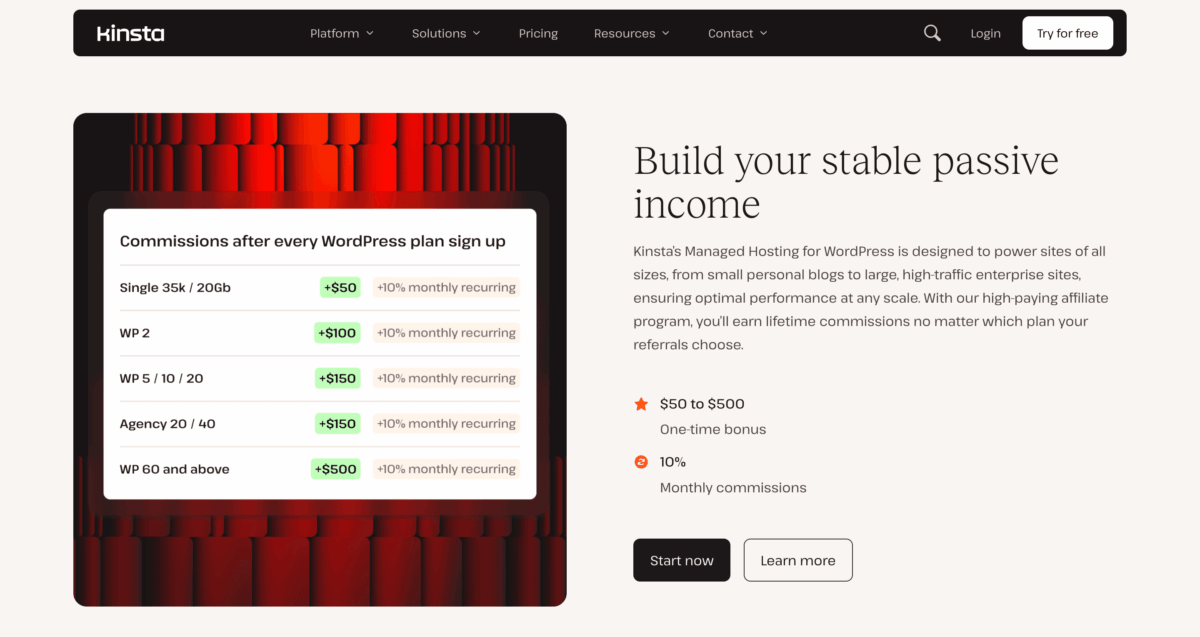
Sometimes, making just one sale like that pays better than selling 50 products on Amazon, so that’s why many creators go after software related niches, but knowing enough about the software to actually recommend it is the biggest barrier.
And right now, you probably don’t need a website to start, which means social channels like Pinterest, YouTube, TikTok, X, and even email newsletters all get the job done.
The thing is, if all your people are on just one social channel, one algorithm change can wipe it all out. In that case, having a blog or newsletter is the most promising way to go.
Also, in the US you have to disclose affiliate links.
That’s the law, not a nice-to-have.
The month 3 trap
This part right here is the most important thing in this section, so I’m going to keep it dead simple.
Months 0 to 3, you’ll probably make $0. Yes, I really mean it.
You’re making content and you’re waiting for people to find it.
If you want a rough idea, months 3 to 6, most people make their first commission, usually somewhere around $50 to $200 a month.
Months 6 to 12, maybe $100 to $500 a month if you stick with it. About 4 in 10 affiliates make under $1,000 a month, even with experience.
And the biggest mistake? Quitting at month 3. Right before things are finally about to pay off for them.
I get it, three months of work for nothing feels terrible.
But that’s exactly when most people bail, and then the people who stayed see the real picture because 3 months is a reasonable time period to see if it’s going to work or not.
For me to earn the first dollar from this blog, it took me around 6 months to make an affiliate sale, which was for Canva, even though they ended up ending their affiliate program for bloggers now.
The second big mistake is promoting stuff you’ve never actually used or don’t even know anything about.
Remember that you are promoting something for a human being at the end of the day.
So bake it nicely into your content while helping them with value to make a nice decision instead of just asking them to buy this thing now.
Out of all five models, affiliate marketing can go the highest because you don’t have any product costs at all.
But it also takes the most patience.
So which one should you start with?
Each one is meant for a different type of person, so here’s how to think about it.
If you like designing and want something you own long-term, go with your own POD store using Printify or Printful.
If you just want to test out designs without any risk, Redbubble is free and takes about ten minutes to set up.
If you can wait for approval and you want Amazon’s shoppers to see your designs, apply to Amazon Merch on Demand now, because the wait alone could be weeks or even months.
If you would rather build something once, like a template, a planner, or a guide, digital products give you the biggest profit margins of anything here.
And if you are more about writing or making content than designing, affiliate marketing lets you skip dealing with products altogether and still make a pretty good living.
And asking yourself a few questions could really help you figure this out better.
Do you have fun making visual stuff, or does it sound like something you would hate doing?
Do you already have even a small audience somewhere?
Can you keep going for at least three months without making much money at all?
Just be honest with yourself about that last one.
Every model here is slow at the start, like super slow, and the people who make money are mostly just the ones who didn’t stop.
Pick the one that doesn’t feel like something you’ll quit in two weeks, and stick with it for at least 90 days before you decide if it’s working.
Yes, do it for at least 3 months!