
The first time I added an affiliate link to a TalkBitz post, I was kind of excited about it.
I had read enough “passive income” articles to believe the timeline would be short. Put a link in a post, someone reads it, they click, commission comes in.
I had it mostly figured out in my head.
But my first month was just zero commissions. Not even a click on most of them.
That woke me up. Made me see things differently.
But affiliate marketing is real even in 2026. People do make money from it.
But the gap between “this is how it works in theory” and “this is how it actually pays you” is just bigger than most beginner guides tell you, and that’s what I want to cover here for real.
Disclosure: This post has affiliate links. I earn a commission if you buy, at no extra cost to you.
What is Affiliate Marketing?
In the simplest way I can put it: you recommend something, someone buys through your link, you get a cut. There is no product to build, no inventory, no customer service. The company handles all of that. You just drive the right people to click.
And all that starts when you sign up for an affiliate program; they give you a tracking link. That link has a code in it that says “this sale came from you.”
When someone buys, the commission goes into your account automatically.
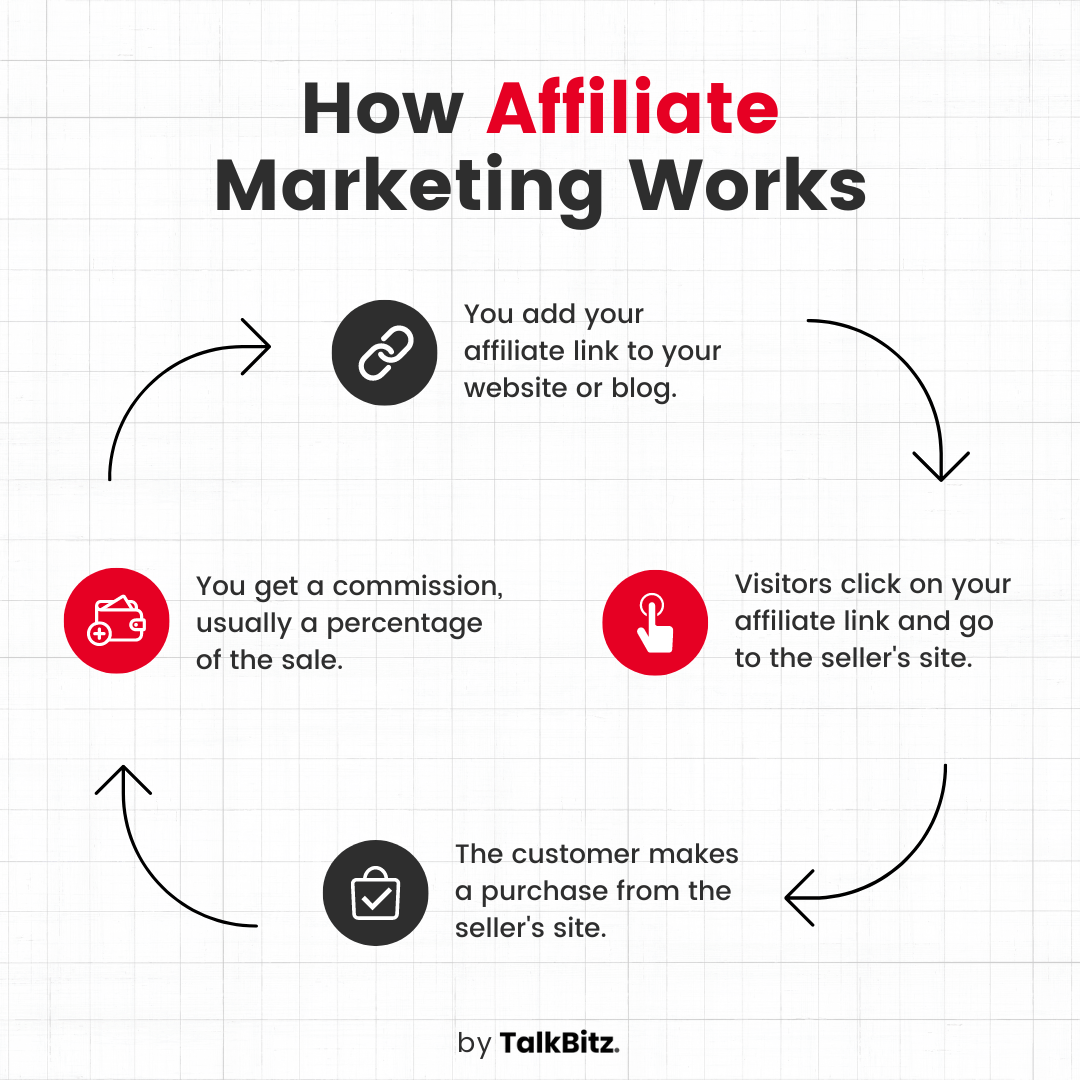
The commission also changes a lot based on what you are selling. Digital products and software tools usually pay 20% to 50%, sometimes more.
On the other hand, physical products through programs like Amazon pay much less, usually 1% to 10%. Some programs also pay recurring commissions, meaning if someone signs up for a tool through your link and stays subscribed, you keep getting paid.
That recurring part is where things get interesting over time.
Does It Actually Make Money?
Here is where I am going to be real with you, because most affiliate marketing guides do not talk about this.
Let’s say that if you start this today, you have no audience at all. Somehow, you get approved for an affiliate program. But you still can’t just expect to see money in the first few weeks.
Not because the model doesn’t work. It’s because affiliate marketing runs on trust, and trust takes time to build. You need people who read your stuff, or watch your content, and actually believe you when you say “this is worth it.”
That doesn’t happen overnight.
For me at TalkBitz, the first small, consistent commissions started around month four or five. And that was after publishing a good number of posts that mentioned tools I was actually using.
The links that convert are the specific ones. Not “this tool is great, go check it out.” More like “I tested this on TalkBitz and here’s what actually happened.”
That kind of detail is what decides if a person clicks on your link or just keeps scrolling without a second thought.
And if you’re creating content just to make some affiliate sales, this is not going to work either. Your focus should be on content and making it so good for your audience, and affiliate marketing is just another way how you monetize it.
How to Find Affiliate Programs
Before you look for programs, you need a topic area. That is what we call a niche. Something you’re going to write or talk about all the time.
If your content is about personal finance, you’d look at budgeting apps, investing platforms, and financial tools. If you’re in an online business like I am, you’d look at hosting, software, course platforms, things your audience actually needs to buy anyway.
Here are some of the programs most beginners start with:
- ShareASale: a marketplace with hundreds of programs across every category. Easy to get into.
- Amazon Associates: low commissions, but Amazon’s trust factor means conversion rates are decent. Good for getting your first sale.
- Impact: bigger brands use this. Takes more to get approved, but pays better.
- Fiverr Affiliates: good if your audience is freelancers or people who want to hire help.
- CJ Affiliate: large network, similar to ShareASale. More variety.
One more thing to know here is that not every program will accept you right away. Impact and CJ sometimes reject new sites with low traffic.
That’s normal.
What you first need is content, traffic first, and an audience, at least a few people. And then start with the ones that are beginner-friendly, ShareASale and Amazon especially, and build from there.
Also, whatever tools you already use probably have their own affiliate program. Writing about something you genuinely use is way easier than pitching something you’ve never touched, and readers can usually tell the difference.
Where to Promote Affiliate Links
Affiliate marketing is not that hard to understand. You share a link, someone buys, and you get a commission from that sale.
But the bigger question is, what is the best way to make all of this actually work the way you want it to?
1. Start a Blog (Still the Strongest Long Game)
This is what I did, and what I’d still recommend for anyone who wants something that doesn’t disappear when a platform changes its algorithm.
A blog post lives on your site. It can rank on Google and share on social media. It can bring in readers for months without you touching it again.
The links inside that post just keep sitting there.
The content that converts best for me is how-to and list posts.
For example, I write about how to build a website or how to start a newsletter from scratch. These are things I have personally gone through, so I understand the full picture much better than someone who has not done it.
Those work because the person reading is already wanting to do the thing; they just need someone real to tell them whether it’s actually worth it.
2. Pinterest (Most Affiliates Skip This One)
Pinterest is one that most people never thought of, and I get why. It looks like a mood board app, not a traffic source.
But for the kind of content affiliate marketing runs on, tutorials, how-to guides, and product comparisons, it actually drives a decent amount of clicks.
The way it works for affiliates is a bit different from the other channels here. Most affiliate programs don’t allow you to drop your tracking link directly into a pin.
Some do, but a lot don’t. So the better move is to pin your blog posts that already have the affiliate links inside them. Someone finds your pin, clicks through to your post, reads it, and then clicks the affiliate link from there.
It adds a step, but it also means the person landing on your affiliate link has already read something you wrote and trusted it enough to keep going.
That usually converts better anyway.
Pinterest works especially well if your content is visual or list-based, things like “kitchen upgrades that actually made cooking easier” or “how to pay off debt on a $40k salary.”
Those do well there.
If your niche is purely text-heavy or news-driven, it might not be the right fit. But you can create visual-driven pins around them like I do for my blog posts.
3. YouTube (Good If You’re Patient)
A lot of people skip blogging and go straight to YouTube. That’s a legit route too.
YouTube is the second most-visited site in the world. Videos even show up in Google searches.
But if you think all you have to do is make a tutorial or a review, drop your affiliate link in the description, and that is it, then that probably is not going to work out for you.
The competition is tough now, so you need to start with a great hook and make your audience naturally click the link. Since YouTube is just videos, not text, no one is just looking at your description if the content doesn’t hold them long enough.
The reality is that video takes more work to produce, I mean, every one of them. If you’ve never edited before, tools like VEED.IO make it a lot less painful.
There’s also a solid YouTube for beginners course out there that walks you through the whole setup without getting too complicated about it.
4. Short Videos on TikTok, Reels, or Shorts
Short-form content is where a lot of beginners start now because it’s faster and easier to produce than a full blog post or YouTube video. You pretty much just need you and your phone, and that is all you have to have to start making stuff.
The catch with TikTok is you can’t drop a clickable affiliate link directly in your video. You’d guide people to your bio link or to a separate landing page instead.
So yes, it adds a step, but it still works, especially for lifestyle products, gadgets, beauty stuff, things that appeal to a younger audience.
But one thing to double-check is that some affiliate programs have rules that say you can’t send traffic from that specific way, and if you are not thinking about that, you might be wasting your effort.
That is why you should take the time to read the terms carefully before you plan your whole thing around that method.
Final Thoughts
Still, the thing that really surprises most people is this one simple fact.
They go into it thinking that the affiliate link is the only thing they need and that it will somehow sell the product on its own, without them having to do much else to make it happen.
It doesn’t.
The content does the selling. The link is just where you send someone after you’ve already convinced them.
If your content doesn’t give a real reason to trust your take, nobody clicks. Doesn’t matter how many links you include.
The people who do well with this think about it less like “I’m putting links on my site” and more like “I’m helping someone make a good decision, and I get a small credit if they buy.”
That change might sound small. But it changes everything about the way you create content.
And one more thing you should never forget: any time you use affiliate links, you need to disclose them. The FTC requires this.
Something simple like “this post contains affiliate links, I may earn a small commission if you buy through them” at the top of your post is enough. Again, that’s not an optional thing; here’s how to set it up properly.
Happy affiliate marketing!