You are probably seeing Substack everywhere right now.
People talk about paid newsletters, 100 true fans, and screenshots of payout emails.
So the real question in your head is, can you actually make money on Substack, or is it just another creator bubble that works only for famous writers?
Short answer: yes, people really do earn there.
Some writers make a few extra dollars that pay for coffee and internet.
Some make part-time income. Some people hit full-time, even six figures.
But the part no one likes to say is this. The results are uneven. Very uneven.
So this is not a start today, rich next month situation. It is more like planting a small tree and giving it water every week.
So the goal of this guide is simple.
I want to show you the real ways you can make money on Substack when the hype filter is turned off.
Disclosure: This post has affiliate links. I earn a commission if you buy, at no extra cost to you.
The Real Ways Substack Pays You (Not Just Subscriptions)
Before we talk about “strategies”, we need to answer this: Where does the money even come from on Substack?
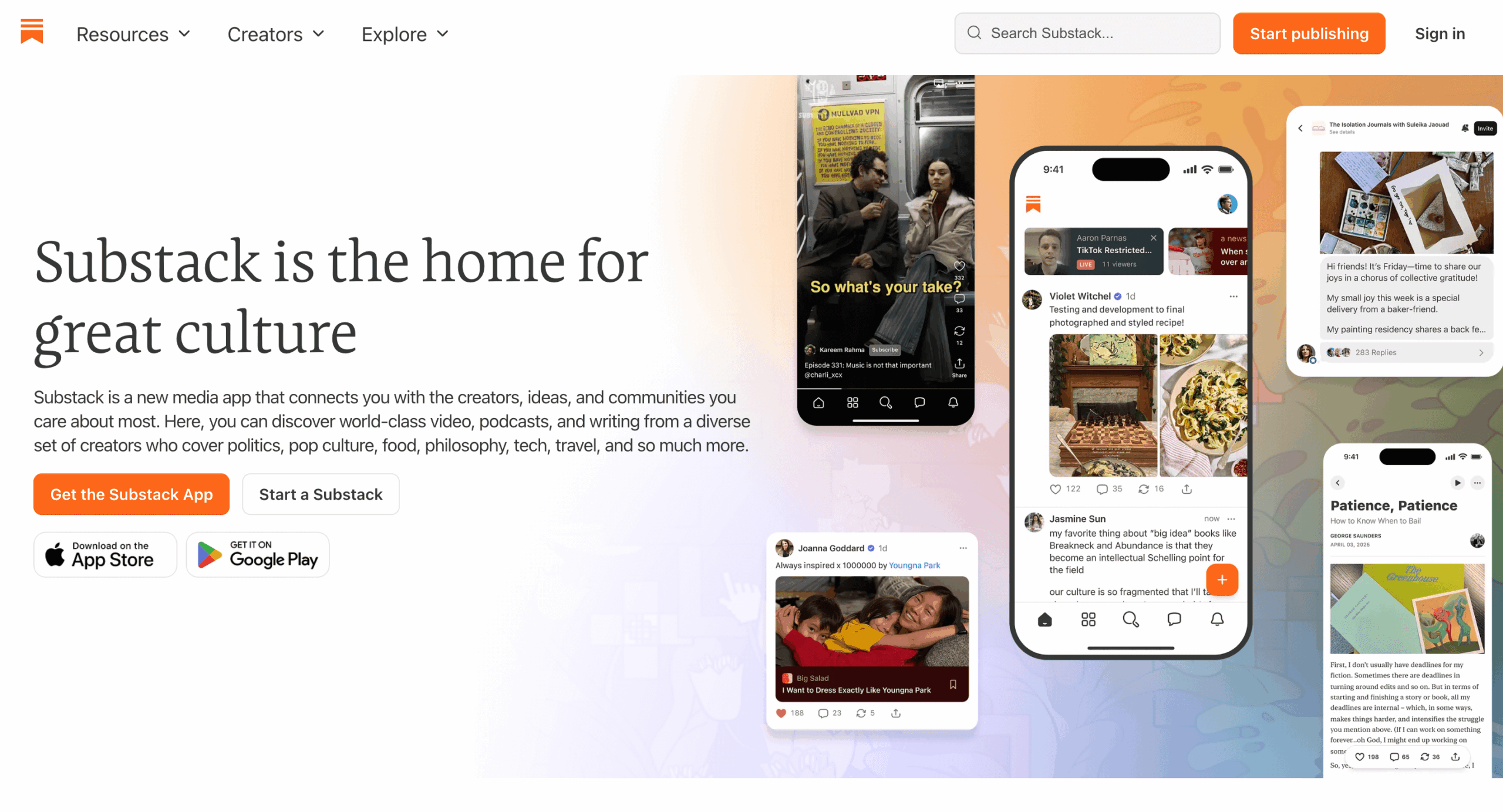
Substack is not YouTube. There is no built-in ad revenue share where you get paid for views. Instead, the core idea is simple: people pay you directly.
Let’s go through the main earning paths.
1. The Free Newsletter: Your First Step to Getting Paid
The first path is the free-only newsletter. Everything you publish is free, so anyone can subscribe with just their email. There is no paywall, and you do not even pay a cent to Substack.
I know, this sounds like so, how on earth do I make money then?
But free is actually the default starting point for most writers.
And there are some reasons for that:
- It is easier for people to say yes to free email than to pay me every month.
- Free content helps you build trust and a relationship.
- Free subscribers give you a base of readers who might pay in the future.
Think of your free newsletter as the front door. People come in, they read, they reply, they share. They get used to seeing your name in their inbox.
Later, some of these people become paying members when you add a paid tier. Or they might buy a product from you. Or show up to a workshop.
So even if your final goal is paid subscriptions, you can usually begin with free. Free content warms people up, and it lets them test your writing and who you are in the first place.
And on the other hand, free will stays important even when you turn paid on.
2. Paid Subscriptions: Where the Real Money Comes From
This is the classic model mode on Substack. People pay a monthly or yearly fee for extra content.
Most writers put their pricing in a simple range:
- Around 5 to 10 dollars per month
- Around 50 to 100 dollars per year
So you set the price and even enable Substack Boost, which shows discounts and special offers at the right moment to your subscribers to maximize your revenue.
On the other hand, Substack handles the payments, but still, you need to connect a Stripe account to Substack to start receiving payments.
They take around 10% as their fee, and Stripe (the payment processor) also takes their fees.
So if you charge $7 per month, here is a simple example:
Let’s say you have 100 paying subscribers at $7 per month.
Gross revenue: 100 x 7 = 700 dollars per month
- Substack fee (10%): $70
- Stripe credit card fee (2.9% of 700): $20.30
- Stripe per transaction fee (0.30 x 100 payments): $30
- Stripe billing fee for recurring payments (0.7% of 700): $4.90
Your Stripe total is 20.30 + 30 + 4.90 = $55.20
That leaves you with about 574.80 dollars per month. (This can vary by payment method)
I know that it’s not life-changing money yet. But as a side income, for writing a newsletter, that is not bad.
It feels small at the start, then you look again and think, alright, this is actually adding up.
Imagine you grow to 300 or 500 paying subscribers. You can see where this is going. Things get interesting, right?
Most writers I saw on Substack don’t go fully paid, even though a few do.
They usually run a mix, with some free posts that anyone can read and some extra posts for the paid members, so the whole thing feels more balanced and easier for people to stick around.
We call that freemium, and that’s one of the simplest ways to grow fast without scaring people off, because they get a taste of your work first and then decide if they want the paid stuff.
3. A Freemium Setup That Actually Works
Freemium just means you mix free and paid content; in other words, getting the balance right.
If you lock everything behind the paywall, new readers cannot taste anything. On the other hand, if you give everything for free, there is no reason to upgrade.
A simple model for beginners looks like this:
- You send maybe three free posts each month
- You send one deeper paid post each month for members
Free posts can be:
- Simple ideas and tips
- Short essays
- Roundups
- Personal updates
Paid posts can be:
- More detailed findings and breakdowns
- Step-by-step guides
- Templates and scripts
- Behind-the-scenes stories
Now, how many free readers become paid?
Believe it or not, more than 100,000 publishers are making money there, and the top 10 writers together pull in more than 40 million dollars a year.
On average, many creators see something like 5 to 10% of free subscribers converting to paid over time, as they say, according to their platform stats.
And the crazy part is that Substack already has over 20 million monthly active users inside the system, so you end up getting readers and money almost for free by simply posting your work there.
But remember, this is only from subscriptions. You can always stack more income layers later.
4. How to Charge More Without Losing Readers: Tiers and Founding Members
Substack also lets you add more than one price.
You can keep one normal monthly or yearly plan, and add one higher tier for founding members.
For example:
- Regular members: 7$ per month
- Founding members: You could set a tier at, say, 20 or 25$ per month (or anything else you pick).
What do they get for paying more?
Simple perks work best:
- A small monthly group call
- Extra bonus posts
- Occasional behind-the-scenes messages
- Early access to certain things
You do not need a giant list of features. One or two real perks are more than enough if they have a real value.
Another important thing to keep in mind is that if you add too many tiers, people get confused. They close the tab instead of choosing.
So keep it simple.
Then there are Pledges.
Pledges are basically a tip jar that Substack built for free newsletters. Yes, that works even if you haven’t turned on paid subscriptions, so your audience can show you they believe your work is valuable.
It’s more like getting a clear sign that you’re on the right path to make money on Substack.
Meaning, if your publication is free only, readers can click pledge and say something like, I am willing to pay 5$ a month if you ever go paid.
But this tip jar is a bit different, because it just sits there as a promise.
Meaning even if they enter an amount and payment information to complete their pledge, there will be no immediate charge.
What will happen is if you turn on paid subscriptions, their pledges will turn into recurring paid subscriptions. If you never turn on paid, nothing will happen.
When or if you later turn on paid subscriptions, those pledges can convert to real subscriptions.
For beginners, this is actually nice. You can test if anyone is ready to pay before you lock anything behind a wall.
5. Can You Get Sponsors on Substack? Yes, Here’s How
Most of the money on Substack today comes from paid readers, which is what we already know, right? But is that the only way?
No, Substack does not run a big ad network inside newsletters. They even clearly mentioned on their platforms that their business model relies solely on subscriptions instead of revenue from advertisers.
That said, you’re welcome to host sponsored content, and they don’t have any policies in place that prohibit publishers from doing so.
Even so, you still need to read the rules closely because some things are not allowed when it comes to ads and monetizing your publication.
So yes, you can still earn with sponsors and extra deals.
That usually happens like this:
- A brand pays to be mentioned in one issue
- You add an affiliate link for a product you use
- You promote your own course or digital product
This is all off to the side. You are in charge.
If you go this route, don’t let every email turn into a sales page. What you need to understand here is that on Substack, your readers came for your voice, your stories, your help.
If everything turns into an ad, it may push people away pretty fast.
So use sponsors and extra offers with care. Think of them like salt in your food, just a little to make things good, not the whole bowl.
Is Substack Actually Worth It for You?
Before you get too excited or start dreaming about how much you can make, we just need to be real for a minute.
There’s no doubt Substack is great for some people. And that might not be the same for some other people.
Who Substack Works Well For (Be Honest With Yourself)
Substack is usually a good fit if:
- You like writing more than short social posts
- You’re fine with taking things slow and steady.
- You have a clear niche, or at least a strong personal story
Simply put, Substack works well for writers, content creators, and small business owners who want a simple, all-in-one platform to publish content, build a community, and monetize through subscriptions without handling technical aspects like website hosting or email lists.
If you enjoy long-form content, essays, teaching through text, or talking directly to your audience, Substack will feel more natural.
You might be someone who:
- wants to write about work and money
- or parenting
- or a specific hobby
- or even a very nerdy topic like wildfire news or essay craft
There are real examples of how it really works for many and how it even changed their lives.
A creative writing teacher grew a newsletter called “Writing in the Dark” to more than 1,300 paid subscribers and around 40K in income in about 17 months, starting from almost zero audience.
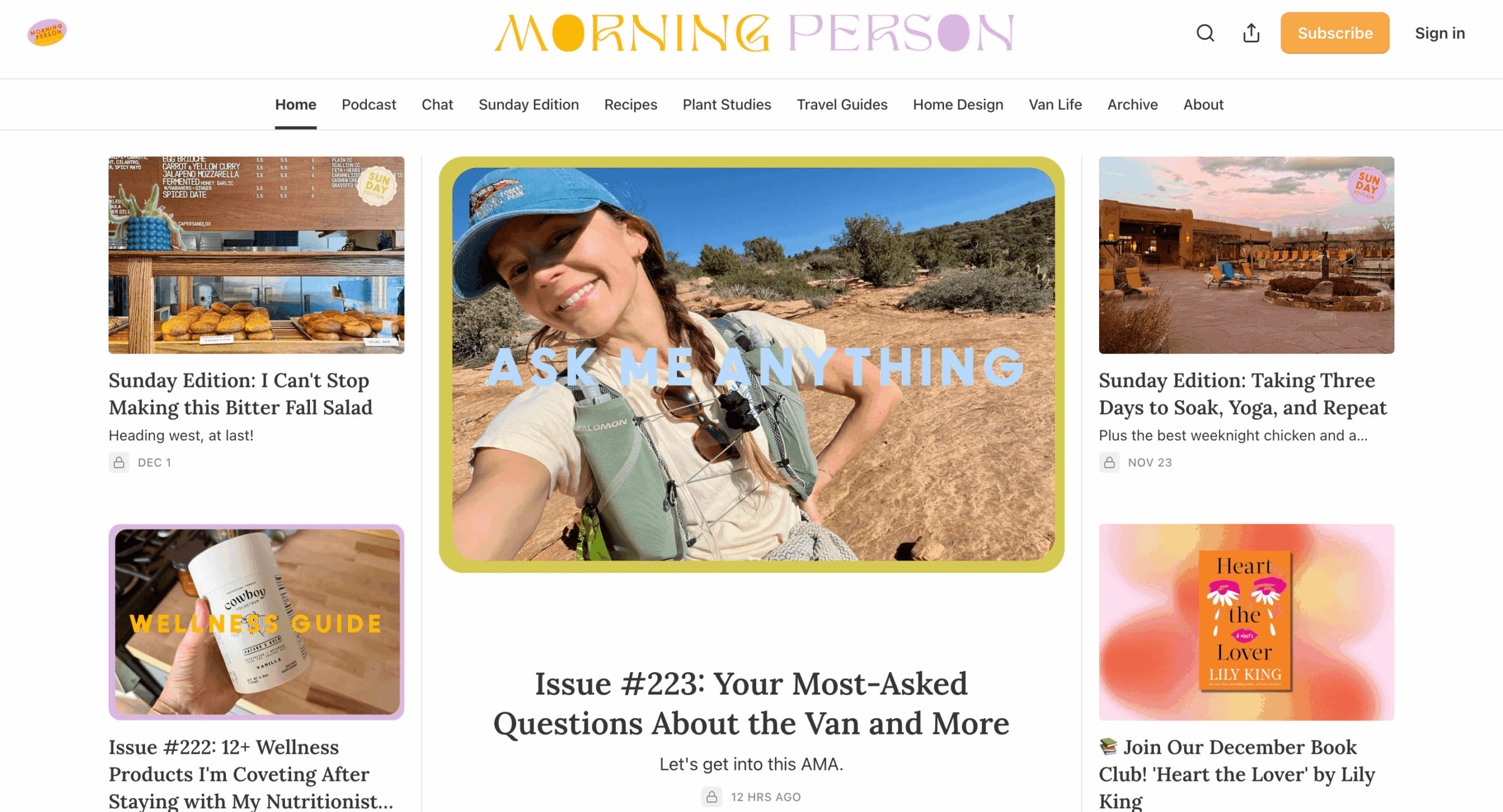
Another example is a lifestyle-culture newsletter called “Morning Person” that brings in around 25K per month by building a loyal community around recipes, home décor, travel guides, daily routines, self-care, and wellness.
Those are strong results.
But they came from people who like writing, who keep moving forward, and who treat this as a serious thing.
Who Should Probably Skip Substack (At Least For Now)
Here comes the tough part, and this is where you need to look at things closely.
Substack might not be a good primary channel for you if:
- You only want quick money
- You hate writing and hate email
- You never want to share any opinion or personality online
If you don’t like the idea of sending a weekly or biweekly newsletter forever, this is going to feel like torture.
Also, if you expect a “viral hack” that gives you thousands of paying readers in one month and online money overnight, you will get frustrated fast.
This is slow.
It is relationship-based.
It grows like a plant, not a firework.
So be honest with yourself.
If you only like making short videos on platforms like TikTok or Instagram, or if you never want to send newsletters to people, you’re probably better off focusing on something else.
You can always try Substack on the side later if you want.
Besides all this, there’s another thing that confuses a lot of people.
You might be thinking, “What if I already have an email list?” or “What if I already run a blog?”
Well, you’ve got a few options.
Use Substack as your main home
You move your audience there (your existing email list), send all newsletters from Substack, and treat it as your main platform. You can still link back to your own site when needed.
Use Substack as a second channel
You keep your main list or blog and use Substack more like a focused publication. For example, your blog covers many topics, but your Substack is only about one thing.
You can also send people from Substack to your site to read full guides, join your other lists, or buy products.
The main thing is, you control your email list. Even if you start using Substack, you can always take your list with you and leave anytime you want.
Like, someday if you feel like you don’t like Substack, you can just export your list and switch to Kit (which is what I use for TalkBitz newsletter), or go the other way.
That’s a big difference from social media nowadays, and a reason to see why newsletters are on a kind of rise, where you never really own your followers on any social media platform.
If the platform changes the rules, algorithm changes, which may hide your posts, or shuts down your account, you lose your audience.
But when you have your own email list, you decide what happens, and you’re not locked into one platform forever.
So Should You Start a Substack? Here’s My Take
Substack is not a magic button that pays you just to write. It’s a tool.
A strong one if you like writing.
If you treat your Substack like a small, real business and a real relationship with readers, the money part will come in slowly over time.
Not overnight. Not in a straight line.
But it happens step by step. Email by email. Reader by reader.
And at some point, you’ll still have those moments where you stare at the screen and think, Am I really worth five bucks a month? Who do I think I am, asking for money?
Well, the readers are adults. They decide where their money goes.
And you are not forcing anyone. You’re just letting people know they can support you if they want.
The best part is knowing that someone decided to pay you just because your words helped them or made their day a little easier.

Frequently Asked Questions
- Is Substack free to use?
- Yes, completely free to publish and grow your list. You only start paying when you turn on paid subscriptions, and even then, it’s Substack taking 10% plus Stripe fees from what you earn, not a monthly bill from you.
- How many subscribers do you need to make money?
- There’s no magic number. Even 100 paying subscribers at $7 a month puts some good money in your pocket. The more realistic question is how engaged your free list is, because that’s what decides how many of them actually pay.
- How long does it take to make money on Substack?
- Most writers take 6 to 12 months to build enough of a free list before paid subscriptions feel worth turning on. Some go faster with an existing audience. Some take longer. It’s slow by design, not a platform problem.
- Can you make money on Substack without paid subscriptions?
- Yes. You can add affiliate links, get brand sponsors, or use your newsletter to sell your own products or services. A lot of writers actually make more from those than from subscriptions, especially early on.
- What percentage does Substack take from earnings?
- Substack takes 10% of your paid subscription revenue. On top of that, Stripe takes about 2.9% plus $0.30 per transaction and a 0.7% recurring billing fee. So the real cut is closer to 13 to 16% depending on your pricing.