Most “home business ideas” posts are going to tell you to start dropshipping, sell on Amazon FBA, or become a virtual assistant.
I should say they are not that wrong, but those days are kind of gone now.
So I spent time looking at what people are actually doing, not what some YouTubers say you should do.
And what I found is a lot more interesting than those three tired answers.
Bankrate found that 36% of Americans had a side hustle in 2024. By 2025, that dropped to 27%.
The main reason?
A strong job market meant fewer people needed one. But with employment trends weakening and tariffs pushing prices up, that’s expected to reverse.
On the other hand, Gen Z is leading the pack though, with 34% still side hustling, more than any other generation.
Which means, at least from what we can see, now is a good time to pick the right idea before everyone else starts looking.
The real question is which ideas actually make sense.
This list is built around real people with real numbers. Not theory, not “you could potentially earn up to…” Not that.
Here’s what I found.
Disclosure: This post has affiliate links. I earn a commission if you buy, at no extra cost to you.
Why most “home business” lists are already outdated
Before the list, I thought I should mention this, and that is, not every idea that sounds good on paper is actually worth starting right now.
That said, the ideas that deserve your time have a few things in common.
They cost little or nothing to start.
You can try them out without quitting your job and there’s a clear way to your first dollar, not a two-year runway before anything happens.
I also kept an eye on Pinterest specifically, because that’s where the TalkBitz audience is. Visual, relatable, beginner-friendly ideas get saved a lot on Pinterest while abstract or complex business models don’t.
That shaped which ideas made this list and which didn’t.
So it left out a few ideas like dropshipping from AliExpress (too slow, trust issues), Amazon FBA (too much upfront cash risk for beginners), social media management (too many people doing it, clients now expect AI tools to handle most of it).
If you were hoping to see those, I get it, they might still work for the right person.
But what I’m saying is that’s just not the best starting point if you’re doing this from your kitchen table with $0.
1. Sell digital products on Etsy (no inventory, no shipping)
This is the cleanest $0-start idea on the list. You don’t have to keep inventory, and there are no shipping headaches. You make something digital once, list it, and it sells while you sleep, at least that’s the goal.
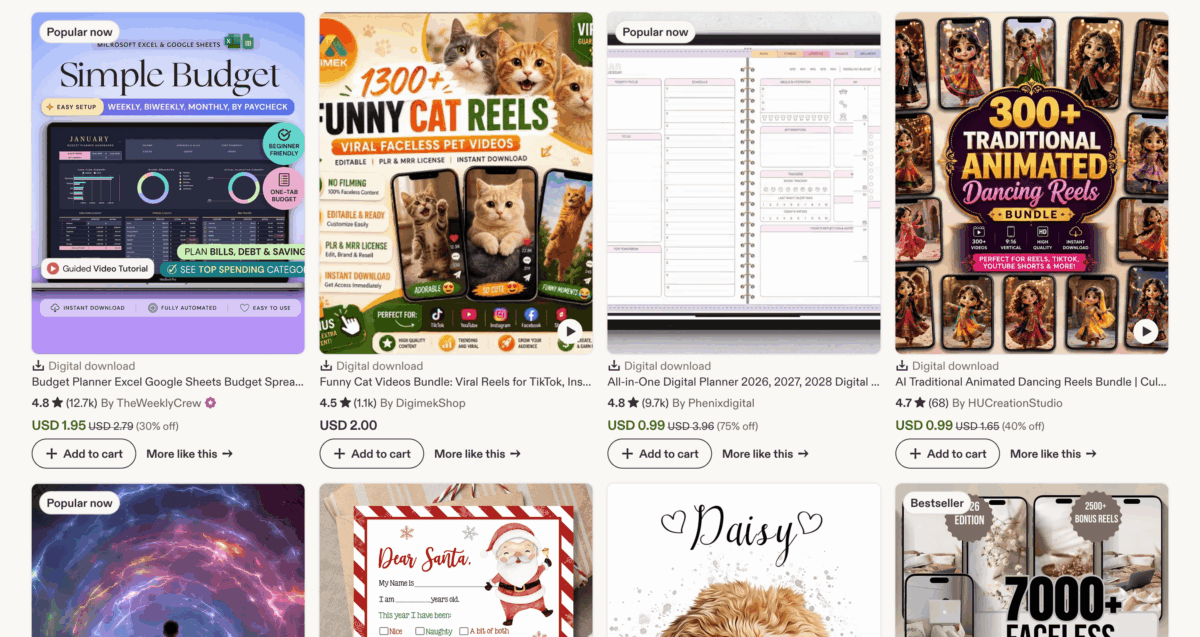
Not too long ago, I saw a CNBC Make It article about a 36-year-old mom who started an Etsy store selling business templates and party games while she was dealing with postpartum depression after her second child and felt unfulfilled with her higher education administration job.
She wasn’t trying to build a business empire. She just needed something that was hers.
It wasn’t instant either.
She went through her stats after a few months and spotted one thing. A small set of budgeting templates she’d made were selling quietly and consistently.
So she stopped trying to make everything and went deeper on those.
Today her shop brings in $10,000 a month or more in passive income. She still calls it her living room side hustle.
That’s just one story, but it doesn’t prove anybody can make that much money.
But it simply shows us what sells, I mean things like budgeting templates, business templates, Notion planners, social media templates, educational printables for kids, party games.
Something that truly helps people do something better.
Tools like Canva make all of these easy to build, you can just do it for free.
The part nobody tells you is month 1 is always slow even if it’s just a clear path that you can earn your first dollar online.
You may see nothing by week 3, and feel like you should quit. But the sellers making real money usually have 30 to 50 or more listings and stuck with it at least four months.
And they figure out what works, which is really the whole game. We go deeper on that here.
That’s not a secret, but most posts skip it because it’s not exciting.
So yes, the start cost is literally $0. Free Etsy account, Canva free plan, and time.

2. Print-on-demand: the low-risk swap for dropshipping
Think of this as the physical product version of digital products, but no inventory risk. You can also look at this idea as a good swap for dropshipping in 2027.
You design a product, a t-shirt, a mug, a tote bag, and when someone orders it, and then third-party print providers like Printify print it, package it, and ship it.
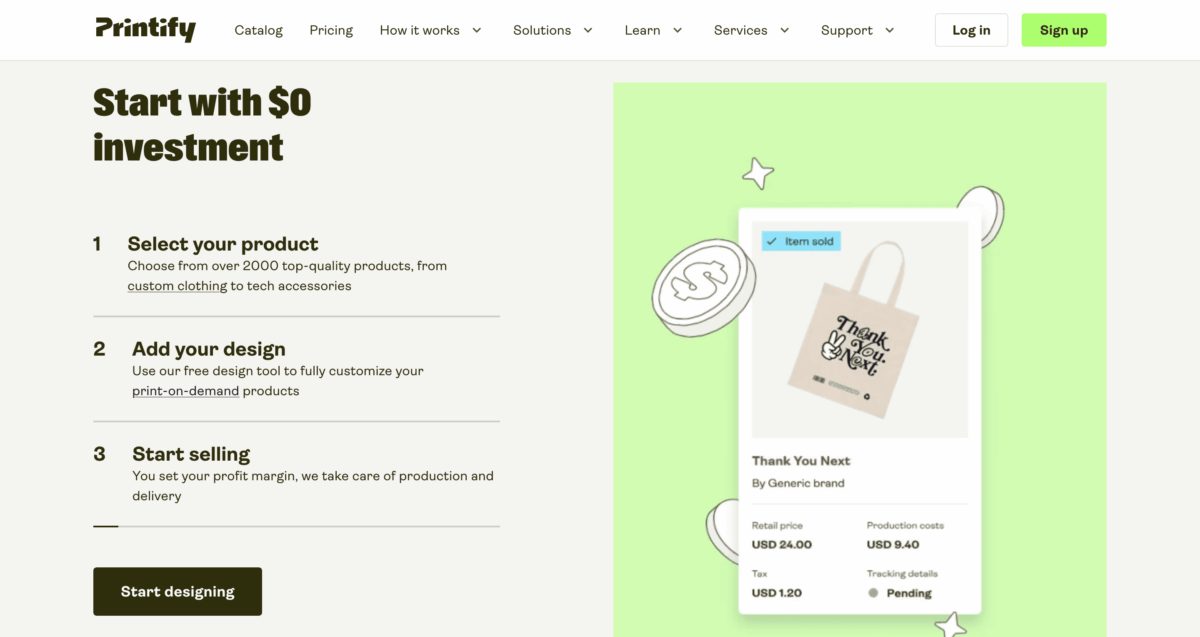
You never touch it. Your job is just designing and getting people to your online shop.
The margins are pretty solid though, roughly 40 to 60 percent depending on what you’re selling and how you price it.
The startup cost is $0 on Printify’s free plan.
What actually sells isn’t just whatever wherever. “Good vibes only” shirts on a plain white background, not those.
I’m talking about a niche, specific, relatable designs win. “Gifts for nurses” apparel. “Plant mom” mugs. Local city pride items.
The tighter the niche, the easier it is to find buyers who feel like the product was made exactly for them.
If you want your own branded online shop, Shopify’s free trial gets you going fast, and there’s nothing to code there at all.
But for most beginners, starting right on Printify first makes sense because they have something called Pop-Up Store so no monthly costs comes with the store part.
Again yes, starting cost is $0. Printify marks up the base product price, which you only pay them when you get an order.
3. Thrift reselling: how a lamp at a yard sale became $5M
I feel like there’s almost nothing stopping you from starting this. More so if you already have stuff at home that you’re not using.
I saw an article title ‘Anyone can do it’, A woman left her job for a side gig. That side gig now makes over a million dollars a year.
Her way of doing it was thrift flipping.
Back in 2011, she had a part time job as a marketing administrator. Her dad showed her a lamp he found at a church yard sale. He told her a lamp like it was going for $70 on eBay.
The next weekend, she went to a thrift store with her son in a stroller hoping to flip her own cheap finds for extra money.
She didn’t know it back then, but that try would turn into a seven figure business.
Today, she is 37, runs NikNax, her own online thrifting marketplace that does $5.2 million a year, and a YouTube channel called Crazy Lamp Lady that brought in $298,000 last year.
And when it comes to what actually flips well right now, it is usually vintage clothing, retro home goods, collectibles, brand-name clothes from Goodwill for $3 to $8 that go for $30 to $80 on Poshmark, eBay, or Depop.
Also the hardest part and the barrier is you need to learn what is worth buying. That takes time, and your first few months you’ll probably buy some things that don’t sell.
The start cost is whatever you have at home to test with first. After that, small amounts at thrift stores.

Every Thursday, I research what’s actually working in online business and marketing, and send it straight to your inbox. 1,800 people read it.
Join them here4. The boring skill from your day job that people will pay for
This one is kind of different from the rest of the home business ideas here, and I think it’s the most underrated idea on this list too.
The founder of Delivrd (a car deal negotiation service) spent six years working at a car dealership before he started the company.
As I read through the story, the most important thing I noticed was that everything started because he noticed one thing that kept happening: customers hated buying cars.
The whole experience.
So in 2023, he started negotiating car deals for free for strangers he met on Reddit, and later, after three years, he was charging $1,000 per deal to negotiate on their behalf.
His business, Delivrd, saves clients an average of $6,300 per deal. In 2025, they closed 3,000 deals and brought in $2.3 million in revenue, building all of it while working remotely with 15 employees.
And I know, car deal negotiating is not an exciting business idea, and that’s exactly why it worked.
Maybe nobody else was doing it that well.
So, if we come back to our main topic, selling a boring skill as a home business idea, the formula here is dead simple.
What do you know from your day job that other people pay professionals to handle? Can you do it remotely? Can you charge somewhere between $100 and $1,000 per project?
Just think about it.
If we look at what works, based on what I found, bookkeeping for small businesses ($50 to $100 an hour), resume writing and LinkedIn profile updates ($150 to $500 per package), HR policy writing for small businesses, grant writing for nonprofits, proofreading and editing, and contract review are some good options.
None of those are going to impress anyone at a dinner party.
But on the other hand, it’s kind of easier to sell boring skills from a day job than to tell people “I’ll grow your business” because the skills are specific, and people know what to expect.
To get your first clients, platforms like Upwork and Fiverr let you list your service in front of buyers who are already looking without needing to build an audience first.
If you go that way, starting cost is almost $0. You already have the skill, but you still have to deal with the competition.
5. Why a newsletter might be the smartest business you can start right now
This is probably the 2027 idea that most people are totally sleeping on right now.
Lenny Rachitsky, who now has over 700K newsletter subscribers, spent seven years as a product manager at Airbnb.
When he left, he started writing about what he had learned, first on Medium, and then moved it to Substack so he would own his own email list.
He wrote for about 10 months for free before he added a paid tier. Today his newsletter brings in an estimated $1 million a year.
The highlighting thing here is, he didn’t build a product or run ads first. He just wrote about one thing he knew well, kept at it consistently, until people started paying for it.
But there’s another thing here we need to look at closely too. We all know social media algorithms keep changing, AI search is squeezing blog traffic and short videos are doing another part.
Email lists, on the other hand, are getting more valuable. A newsletter with 1,000 engaged subscribers is a real asset. It’s not owned by Meta, Google or any other company.
Nobody can take it away from you, it’s yours. You grow it with a platform that fits your goal, and if you don’t like that platform, you walk away with your email list to a new one.
So yes, the model is straightforward.
You can start one free on Substack, Kit or Beehiiv, and when people keep asking you the same follow-up questions, that’s your first digital product, a $9 to $49 guide or template that answers it.
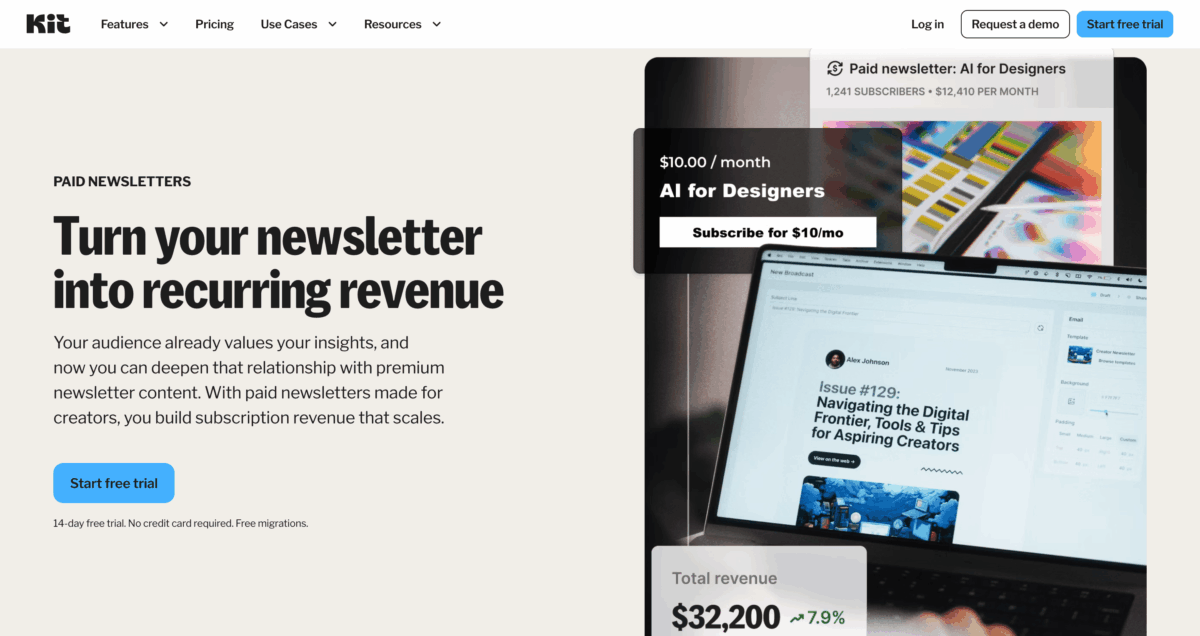
Or if you think you should start charging for your newsletter, you can just set a fee for it too.
Like, 100 subscribers paying $5 a month comes out to $500 a month.
That’s not a huge number but that’s a real target you can reach for a niche newsletter after writing consistently instead of maybe doomscrolling on Instagram or TikTok.
You can start from any niche you can think of, but personal finance, parenting, home organization, side hustle advice, and niche hobby communities are things that look like they work well.
It doesn’t need to cover a lot. Actually, the more specific, the better.
It costs $0 to start with Substack and also the platforms I mentioned above. I already use Kit for our TalkBitz Newsletter anyway and Beehiiv is another good one.
6. Candle making, soap, or skincare: the most Pinterest-native business on this list
This one costs a little money to start, not much, but I’m including it because it’s one of the most Pinterest-native businesses on this list.
And also yes, doing some good research and handling things carefully is something to take seriously too.
People search for “how to start a candle business,” and I saw it everywhere on Pinterest and there are so many guides, videos and pins that teach you how to start that too.
So the usual way it starts is you make a small test batch at home, sell to friends and neighbors, put a few items on Etsy, and keep building from there.
And then the “I made this from my home” angle is really strong content on Pinterest and TikTok and it can work as a great way to sell it beyond your neighborhood.
Your first batch of supplies will cost you somewhere between $50 and $150 depending on where you are, so it won’t really be $0, but I think it’s the lowest-cost physical product option on this list.
When you’re getting consistent orders and want to look more professional, a simple website really helps a lot.
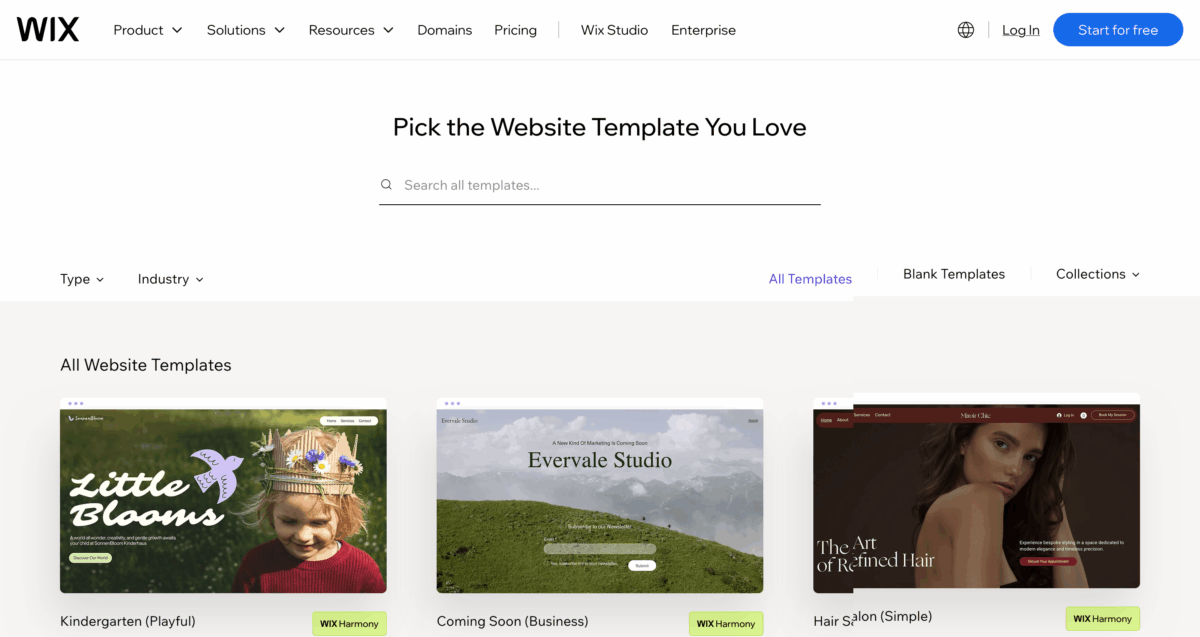
A Wix site with a clean product layout and a contact form is enough. You don’t have to hire anyone to build that for you either, it’s a great DIY solution you can start building yourself in a weekend.
But on top of all of them, the biggest thing to check before you start selling skincare or any lip products is that regulations vary by state for anything that goes on your skin.
So check your local rules first.
And for that reason, candles might be a lot simpler to start with if you want to skip that headache early on.
7. Professional organizer: $65/hour, no storefront, no degree
This is a business that costs nothing to start, you don’t hold any stock, and you run it locally. And you can see Pinterest has a big crowd of people who want exactly this.
Before and after organization posts are one of the most saved kinds of content on the platform. Pins like “I organized my kitchen for $0” perform better than almost anything else in the home niche.
So, if you enjoy decluttering and have a good eye for space, this business is genuinely easier to start than most people think.
And I know it doesn’t look like something easy you can run just from home because you go to clients’ homes, but the business itself runs from home since you don’t need any office or storefront.
The rates are actually good.
According to Thumbtack, the average professional organizer in the US charges around $65 an hour. Some even charge up to $137 an hour or more for specialized or high-end clients.
If you don’t really know what the job actually is, it’s basically helping people clean out their closets, set up home offices, go through years of stuff they’ve collected, and downsize.
When it comes to how to get your first clients, I think it’s pretty much word of mouth, neighborhood Facebook groups, or Nextdoor app.
You don’t need a website to start, just get one or two clients from people you know, do great work, take before/after photos with their permission, and build from there.
The biggest barrier is you have to be comfortable going into strangers’ homes. Some people love it, some people would find that exhausting, and you also have to keep an eye on your own safety when you’re in a stranger’s home.
Anyway, if you don’t want to do it that way, making content is also a good way to make this work for you just because you love organizing things.
Starting either way would cost you $0.
8. Bookkeeping for small businesses: the gap nobody is talking about
This one might sound like it needs a finance degree. But, well, you really don’t.
While I was looking up ideas for this post, I saw an Entrepreneur article about a 26-year-old from Washington who lost her full-time accounting job in August 2025.
A few weeks later she saw a Facebook ad for a bookkeeping business program, got a free QuickBooks ProAdvisor certification, and listed herself on the ProAdvisor directory.
A local business owner found her through that directory and became her first client.
She spent $10 on a business license and $12 on a domain to get started. That’s it.
Today she brings in $2,800 a month gross from her bookkeeping clients, according to that same article.
The reason this works right now, and what I think is going on, is that there are more small online businesses today than we have ever had before.
Etsy sellers, Shopify store owners, freelancers, coaches, content creators, most of them have no idea how to manage their books.
A full accountant is overkill and too expensive for where they are.
But a bookkeeper charging a few hundred bucks a month? That they’ll pay for.
That’s the gap.
Typical rates usually fall somewhere between $300 and $800 a month for each client, depending on how big the business is and what they actually need. Five clients at $400 each adds up to $2,000 a month.
You don’t need to be a CPA. A free QuickBooks ProAdvisor certification is enough to get started, and that directory puts you in front of business owners already looking for help.
Start cost would be almost $0 if you skip the optional stuff, but rules are different in each country, so check what’s required where you are before you take on paid clients.
9. Teach one skill online (you don’t need a certificate for this)
This is another great home business idea. You think you need a credential or a certification, but you really don’t. You just need to be about 3 steps ahead of the person you’re teaching.
Think about it this way.
Someone who meal prepped on $150 a week, built a Notion workflow, or figured out how to get their kids to sleep by 8pm can teach that to someone who hasn’t figured it out yet.
They’re not professionals, but they just went through it first.
You don’t need to be the best in the world at it. You just need to be far enough ahead that the person behind you finds your perspective useful.
The business model here is to pick one skill, make a social profile, talk about that niche, and when you have some followers, build a beginner-friendly self-paced course or workshop around it, and sell it for like $19 to $197.
I know, saying it is easier than doing it, but that’s the whole process behind it and what most social media people are doing right now.
What you need is something you learned or figured out the hard way that you can pass on to someone in a single day for a price.
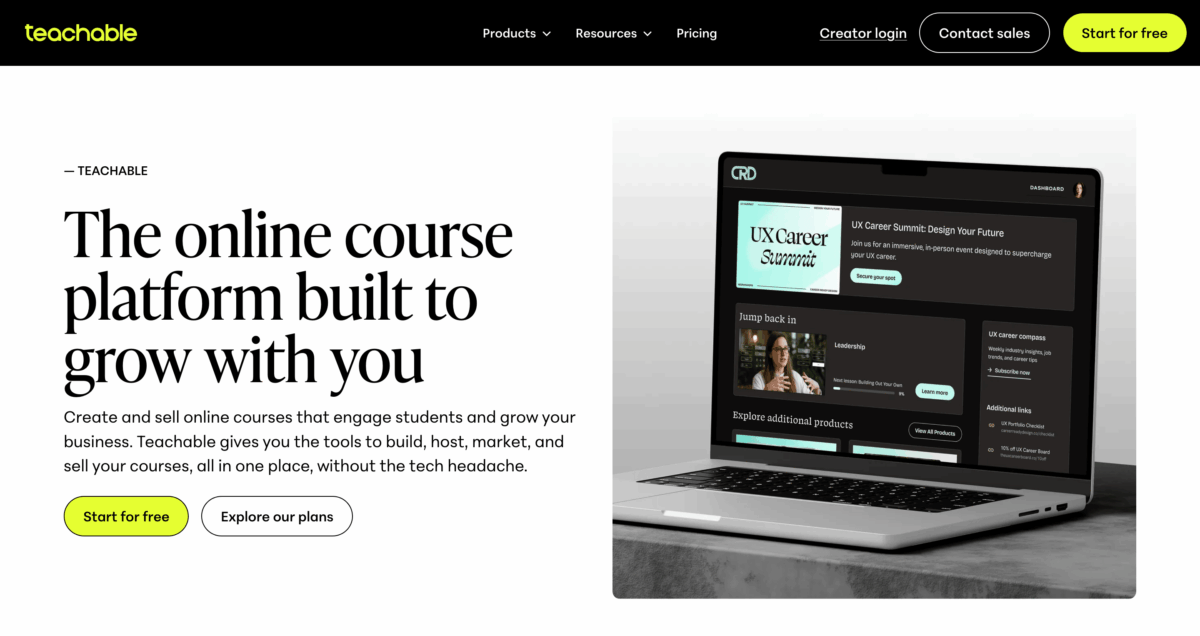
Platforms like Teachable handle course hosting, payments, and student management pretty well, but it’s a paid platform. You can also try Systeme.io since it’s free, so the risk is low.
For making content, OpenCut and Canva are good tools to use and they don’t cost anything either.
The real barrier here is creating a course takes serious time upfront. You’re not earning while you’re building it, and the first version will probably need adjustments based on what students actually ask once they’re inside.
The start cost is $0 if you keep the course simple and basic.
10. UGC creator: get paid to film on your phone, no following needed
I put this at the end of the post for a reason. First, creating content takes a lot out of you, and you need time for it.
Second, most people hear “content creator” and immediately think you need a big following, a ring light setup worth $500, and a whole personality for the camera.
UGC is different. It stands for user-generated content, and the idea is simple.
Brands need short videos of real people using their products for their ads and social media. But right now, what every business is after is not the polished studio kind of thing.
They want it to look like someone actually bought the thing and is talking about it in their living room. That’s the job.
You make the video. They pay you. You don’t post it on your own social media.
You’re basically a freelance actor and video editor for brand ads, except the “acting” is just talking naturally about a product while holding your phone.
The workflow goes like this. You pick a niche, skincare, kitchen tools, fitness gear, whatever you’re comfortable talking about.
Then, you build a small portfolio with a few sample videos, even without a client.
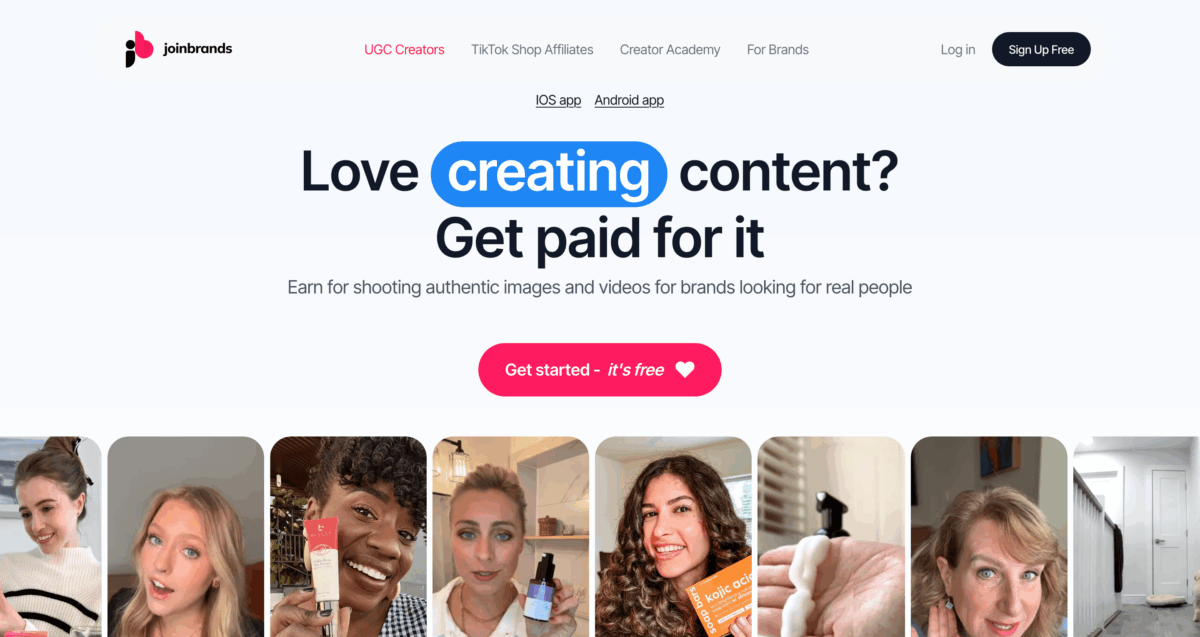
Then you pitch brands directly through email or platforms like Billo or JoinBrands, or find gigs on UpWork.
If you do a little search, you’ll see names like Kelly Rocklein, who was doing exactly this on the side while working a full-time marketing job, just 15 hours a week in front of a camera, scripting and filming product videos for brands.
By 2022, she was making over $142,000 a year from it, mostly through referrals.
I mean, this is not really about being an influencer, it’s closer to doing freelance work with a camera, the production side.
For editing, CapCut and OpenCut are both free and handle everything a brand needs at this level. If you want to go further with scripts, voiceovers, and more polished edits, InVideo is worth looking at.
The downside is, it’s not quick money, so finding your first client takes time, and people just starting out should expect about a few months before things pick up. But once you’ve worked with a few brands, referrals start coming in by themselves.
The startup cost is around $100, a mini clip-on mic, a small tripod, and natural light or a cheap ring light but you do need a good phone with a good camera, which you probably already have.
So which one should you actually start with?
It depends on what you need right now.
If you want the fastest path to your first dollar, thrift reselling or bookkeeping might get you there quickest. Both can bring in real money within a few weeks if you keep at it.
If you want something that earns while you sleep eventually, digital products on Etsy, print-on-demand, or a newsletter are the clearest paths.
But I have to say you should give it at least three months before you make a call on it. Month one is always slow.
If you already have a skill from a day job that someone would pay for, that’s the most overlooked option on this list.
You don’t need to build an audience or anything like that. You just need to find the right people and tell them straight up what you can do for them.
If you’re more of a hands-on, make-things person, candle making or being an organizer are both low-risk ways to start with almost nothing.
And if you’re comfortable on camera and want something that’s trending right now, UGC is worth looking into seriously.
Whatever it is, choose the one that fits your situation, not the one that sounds the coolest or the one that pays the most.
The best idea is the one you’ll really do and never give up on.