
I’ll tell you straight. Back when I started blogging, I thought I knew how the money thing worked.
You write your thing, people read it, ads run, and then money comes in. That simple.
Well, that’s not exactly how it works.
The ads part is still a part of it, but if that’s the only thing you’re counting on, you’ll be watching a dashboard show you a dollar fifty a week for a long time.
The bloggers actually making real money are doing a few specific things, and it took me longer than it should have to figure out which ones actually matter at the start.
This is what I’ve done on TalkBitz to make money blogging, what worked, and what I’d do differently if I was starting right now.
Disclosure: This post has affiliate links. I earn a commission if you buy, at no extra cost to you.
1. Start here: display ads (the easiest one to set up today)
Display ads are the most passive blogging income source of everything on this list. You apply to an ad network, get approved, their code goes on your site, and ads start showing up for your visitors automatically.
You don’t have to sell anything. You just need people to show up.
The hard part is the money starts small. When I first got approved for AdSense on TalkBitz, I was making a few dollars a week.
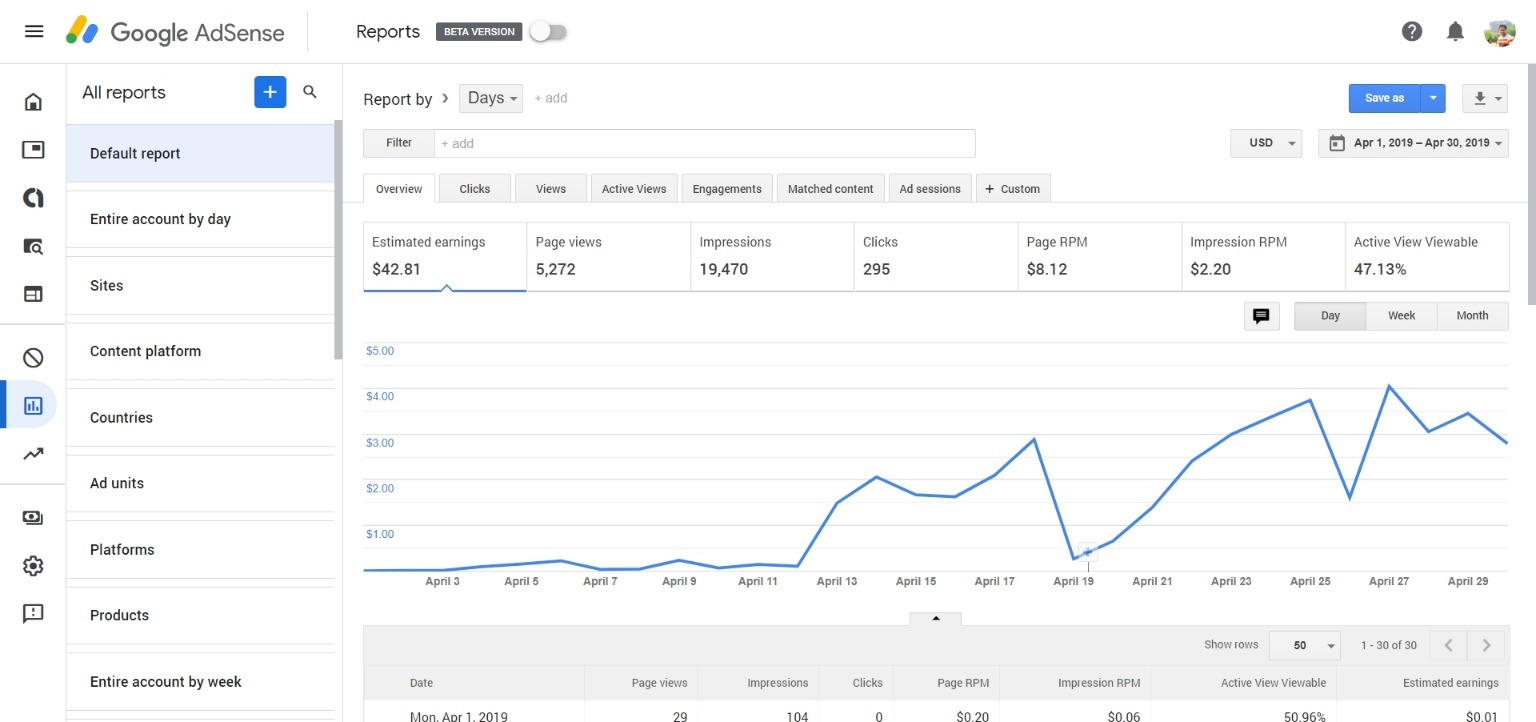
That screenshot from my AdSense dashboard in 2019 was exciting at the time because it was real money from my own site, but it wasn’t quit-your-job money.
Not even close.
The income scales with traffic. More visitors, more ad impressions, more money. Simple math, slow climb.
And yes, you do have to keep bringing in traffic to earn anything meaningful from it.
For beginners, two options make sense right now, and first one is Journey by Mediavine, which is built for smaller blogs and doesn’t need huge traffic numbers to get started.
Google AdSense is the other entry point, widely available and straightforward to apply for.
Mediavine’s main program is something to aim for later. The payouts are higher, but you need a lot more traffic to qualify. I’m talking about at least 50K monthly traffic to earn something reasonable.
2. The one that actually pays the most: affiliate marketing
This is how most bloggers make money from a blog, not from ad clicks, but from recommending products and getting a cut when someone buys through their link.
It sounds simple, but this is the part that actually pays the bills for a lot of bloggers.
Here’s how it works in practice.
You write a post about a tool or product. Let’s say you run a food blog and you write about a pressure cooker on Amazon and you’re an Amazon affiliate too.
Someone sees it on Pinterest, comes along and reads it, then clicks your own unique affiliate link, and makes a purchase.
That’s really all it takes.
And at the end of the day, you earn a commission.
Commissions range anywhere from a few percent, like 3 to 5%, on physical products to 30, 40, even 50 percent on software and digital products, depending on the program.
Affiliate marketing has been the biggest income source on TalkBitz since I started. And it started working before my traffic was anything impressive.
A few hundred people landing on a focused review post converts better than thousands of pageviews on a broad article with just banner ads.
Here’s a screenshot of what I earned back then from a web hosting affiliate program in the early days of TalkBitz:
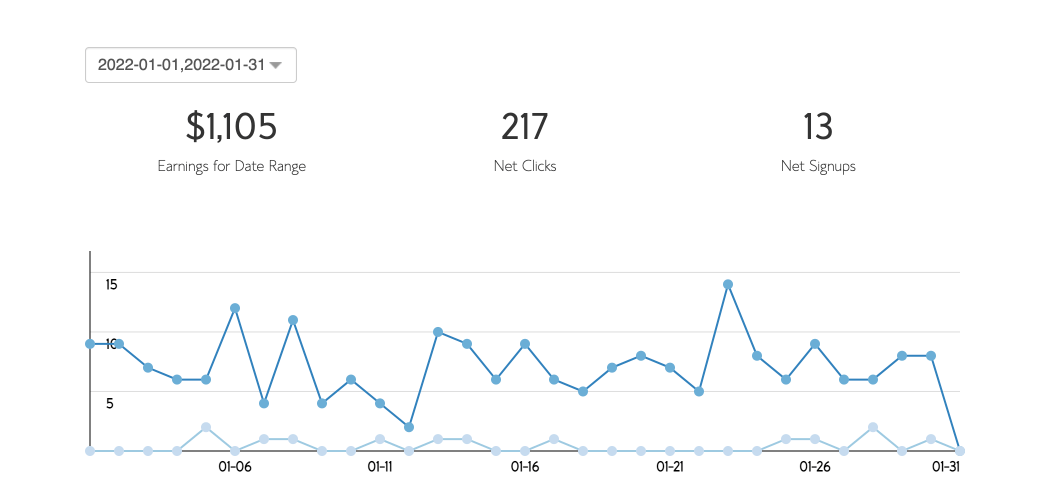
The thing most people don’t tell you is it works a lot better when you’re recommending something you actually used.
Not something you picked because the commission is good.
What I’m saying is, readers can tell the difference, and honestly, it shows in how fast they leave your page too. You can see it in the numbers pretty quickly.
Here are some places to start with:
- ShareASale
- Amazon Affiliate Program
- ImpactRadius
- Fiverr Affiliates
- CJ Affiliate
Almost every niche has affiliate programs in it, hosting, tools, courses, fashion, fitness, finance. You just need to find the ones that actually make sense for what you write about.
And one more thing to keep in mind. When you get into any affiliate program, you’re basically agreeing to their rules.
And you need to disclose to your readers that the links are affiliate links. This is also a legal requirement under FTC guidelines in the US, not just a best practice.
A simple line at the top of the post works fine, something like “This post contains affiliate links. If you buy through them, I may earn a commission at no extra cost to you.”
Keep it clear, keep it visible.
The good part is that being honest about it actually makes people trust you more, and readers who trust you are more likely to click anyway.
3. Getting paid to write about brands
Sponsored posts are when a brand pays you to write about their product or service on your blog.
It could be a review, a mention inside a list post (listicle), or a full post dedicated to what they offer.
The rates are not the same for everybody. It all comes down to your niche and your traffic.
But even a small blog with just a few thousand visitors a month can pick up a paid deal here and there, especially in niches like personal finance, tech, beauty, or anything where brands compete hard for attention
The standard way to get started is joining a network that connects bloggers to sponsors. Here’s a list of sponsored post networks worth checking out.
But the thing is, brands have gotten pickier than before. It’s not just about raw traffic numbers anymore. Having a clear niche, posting regularly, and getting some engagement counts for more now.
And you even have things like AEO, which stands for answer engine optimization, plus affiliate marketplaces like PartnerStack that now have a Content Marketplace.
It matches publishers with brands for content that helps them show up in AI answers. So things have changed just because of AI too, and it has brought new opportunities too.
I did some work with brands over there, and honestly, it all turned out pretty good in the end.
4. Selling your own stuff, even with no product yet
Digital products are one of the better income options once your blog starts getting some attention.
I mean eBooks, templates, printables, presets, mockups, plugins, courses, the things you create once and sell repeatedly.
The income ceiling is higher than ads because you keep more of the money. And the margins on digital products are good since there’s no inventory, no shipping, no restocking.
I’ve listed Canva Pinterest templates on Etsy before. Those templates actually came straight from the kind of content I was already making for TalkBitz anyway.
If you’re already creating something as part of running your blog, there’s a good chance there’s a product version of it.
Etsy is a good place to start with all of those. If your products fit into categories like design, printables, or anything visual, then it works well because it’s a marketplace that already has its own built-in audience.
You don’t have to count only on your blog traffic to sell stuff, but yes, things are pretty packed over there though.
5. Online courses: more work, but the margins are different
If you know something well enough to teach it, an online course can be the highest-margin thing on this list.
The price you pay is effort.
A real course takes time to build, structure, record, and set up. It’s not a weekend project. But once it’s done, it can sell repeatedly with minimal ongoing work.
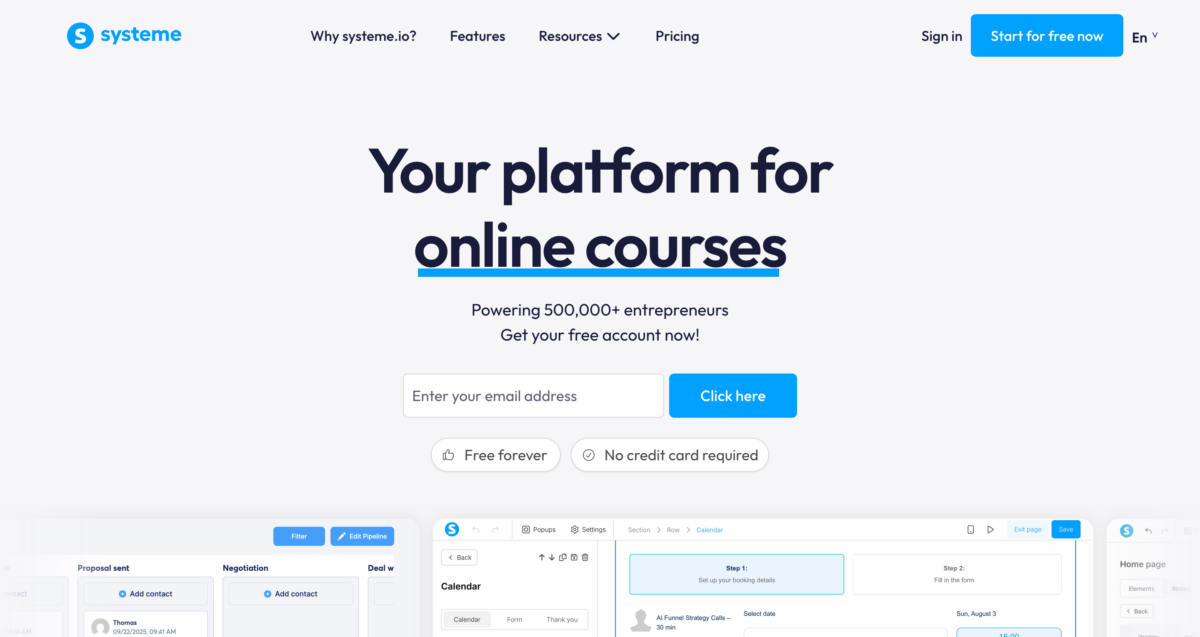
Systeme.io is the cleanest starting point if you’ve never built a course. It’s free to start, the interface is simple, and you don’t need any technical experience to get a basic course live.
The one thing I’d say before going this route is make sure there’s an audience for what you want to teach, in other words, blog traffic.
A course on a topic nobody’s searching for is just a lot of work and does nothing meaningful. Your blog is actually useful here because the posts that get the most traffic usually point to what people want to learn more about.
So where do you actually start?
You don’t have to do all of this at the same time. That’s how you end up with five income streams that are half done and nothing that actually works.
Don’t do that.
If this is your first time blogging, focus on writing helpful content, and display ads and one affiliate partnership are enough to start with.
The other options make more sense once you know what your audience actually responds to.
The bloggers making real income from their sites, or we can say the blog monetization part, aren’t doing anything mysterious.
But they’re writing content that genuinely helps people, content that helps someone figure things out, and recommending things they actually use or at least tested themselves, and building their traffic over time without trying to shortcut it.
Just start simple. See what people actually like. Then build on that from there.
If you’re setting up a blog from scratch, this guide walks you through the full setup step by step. And if you want to see what tools I actually use on TalkBitz, here’s the tools page.