
Almost everyone can start a small business; it’s exciting, but it’s not always easy.
I’m talking about money worries, limited time, tough competition, and yes, the need for good marketing.
When it comes to marketing, you’re not the only one. 47% of small business owners handle marketing all by themselves.
But creating a good marketing plan doesn’t have to be as complicated as solving a Rubik’s Cube blindfolded.
I get it, the word “plan” might make you feel like a big task ahead.
That’s why in this guide, I’m going to break it down into 8 simple steps that’ll help you create your small business marketing plan for 2026!
Plus, at the end of this guide, you’ll also get a free Notion template that’s ready to use for your marketing plan.
So let’s get started!

What's Inside
1. Setting Your Goals
Setting goals is important when making a small marketing plan because it gives your business a clear direction.
Without clear goals, it’s like driving without a map, and you’ll end up wasting your precious time and money on things that don’t really help your business grow.
In other words, a lack of goal setting can lead to unclear direction, which is one of the reasons why many small businesses struggle.
So, what do we do first?
We can start by setting SMART goals.
This is a goal-setting framework to make good goals for your business, introduced by George T. Doran in 1981 to help businesses and individuals make clear and achievable goals.
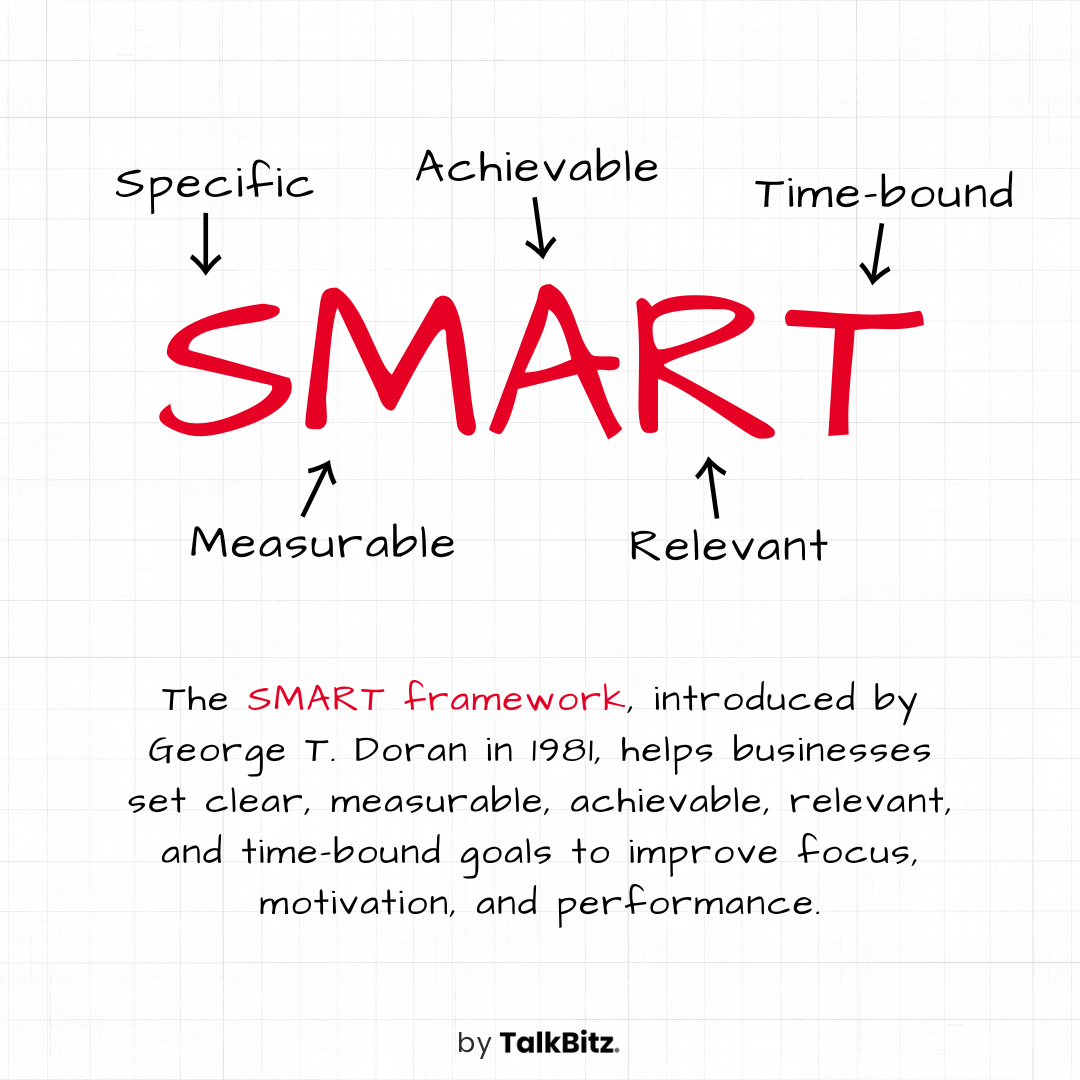
Put simply, SMART stands for Specific, Measurable, Achievable, Relevant, and Time-bound. These parts work together to make your goals clear and reachable:
- Specific: Clearly define what you want to achieve
- Measurable: Make sure you can track your progress
- Achievable: Set goals that are challenging but possible
- Relevant: Align your goals with your overall business objectives
- Time-bound: Set a deadline to create urgency
Here is a simple SMART goal example:
- “Increase website traffic by 20% in the next 3 months.”
- “Gain 100 new email subscribers within 6 months.”
- “Achieve 5 positive customer reviews on Google My Business in the next quarter.”
You can start with just one main goal. As you gain experience, you can slowly add or adjust goals.
For example, you could find out that your audience likes watching videos more than reading blog posts, or that one social media platform works better for your business than others.
When you discover these things, you can keep adjusting your approach based on what you learn about your customers and what works best for your business.
The important thing is to start somewhere and keep getting better, step by step!
2. Understanding Your Ideal Customer
The next step is to get to know your ideal customer, the type of individual or organization that is most likely to benefit from and appreciate your products or services.
“But, I’m selling for everyone. Why is this so important?” you might ask yourself.
Well, knowing your ideal customer shapes every part of your business, from product development to marketing strategies.
Without a clear understanding of who you are targeting, it becomes super challenging to think about what products or services to offer and how to effectively reach potential customers.
Here’s how you can get to know your ideal customer (creating a customer profile):
- Demographics: Start with basic information like age, gender, location, and income.
- Psychographics: Learn about their interests, values, and lifestyle.
- Pain Points: Identify the problems they face that your product or service can solve.
- Buying Behavior: Understand how they make purchasing decisions.
Let’s create a sample customer profile. We can name it “Sarah”:
- Demographics: 35-year-old mom, lives in the suburbs, household income of $75,000
- Psychographics: Environmentally conscious, values convenience, tech-savvy
- Pain Points: Struggles to find eco-friendly products that fit her busy lifestyle
- Buying Behavior: Researches products online, influenced by social media recommendations
By understanding Sarah in such detail, we can tailor our marketing to reach her effectively and engage with her.

This profile, or as we can say a buyer persona, allows us to create targeted content, choose the right marketing channels, and develop products or services that directly address her needs and preferences.
But how can you get started in identifying them?
Start by talking to 5 people this week.
Ask questions like:
- What’s your biggest problem when it comes to [product/service]?
- How have you tried to solve this problem before?
- What matters most to you when buying [product/service]?
- What do you care about when it comes to [product/service]?
After talking to people, you’ll start to see patterns in your customers. Look for things they have in common, like:
- What they’re interested in
- What are their pain points
- How they shop
Start by looking at the big picture. Then, you can focus on more specific details. It’s okay to create separate profiles for each type of customer you identify.
The best way to do this is to use HubSpot’s buyer persona generator, which is a free tool that lets you create as many online personas as your business needs, and further use them with their marketing tools.
3. Standing Out From The Crowd
You’re building a business in a competitive market, and you want to make your business stand out. This isn’t as easy as it sounds, and having a great product or service isn’t enough anymore.
You need to clearly explain what makes your business special and valuable to your customers.
This helps you attract and keep customers.
Let’s look at some simple ways to find your business’s strengths:
1. Conduct Competitor Research
Think of this as “spy work” for your small business. You’re looking at what other similar businesses are doing online.
- Use tools like Semrush or Ahrefs (they often have free trials for new users)
- Look at their websites, social media, and online ads
- Note what they do well and where they might be falling short
2. Identify Your Unique Selling Proposition (USP)
This is what makes your business special. To find it, use a SWOT analysis.
Here’s how:
- Strengths: What do you do better than others?
- Weaknesses: Where can you improve?
- Opportunities: What trends can you take advantage of?
- Threats: What could harm your business?
3. Create a “Why Choose Us” Message
This is your quick pitch. It should be short, clear, and show what makes you special.
Here’s a simple way to write it:
“We help [your ideal customer] to [solve their problem] by [your unique solution].”
For example: “We help busy professionals to eat healthier by delivering fresh, customized meal kits to their doorstep.”
You get the idea.
4. Showcase Your USP Visually
Once you’ve crafted your USP, think about how to communicate it visually across your marketing channels. The important thing is that people remember visuals better than text.
Use free tools like Canva or Adobe Spark to create eye-catching graphics that highlight your USP. You can use these across your:
- Website
- Social media posts
- Email signatures
- Business cards
One big thing I believe is that being different doesn’t mean you have to create something completely new. Often, it’s about doing things a bit better or in a unique way compared to others in your field.
4. Choosing Your Marketing Channels
Now, the next step is to strategically pick your marketing battlegrounds based on the buyer personas and all the things we discussed earlier.
Believe it or not, in numbers, 63% of businesses have already increased their digital marketing budgets in recent years. On top of that, 94% of small businesses plan to increase their marketing spending in 2024.
That’s why choosing the right channels that align with your ideal customer’s preferences is super important for your small business marketing plan.
Here are some top channels to think about, along with their pros and cons:
| Channel | Pros | Cons | Best For |
|---|---|---|---|
| Social Media | Wide reach, low cost | Time-consuming, algorithm changes | Brand awareness, engagement |
| Email Marketing | High ROI, direct communication | Building a list takes time | Customer retention, sales |
| Content Marketing | Builds authority, long-term benefits | Time-intensive, slow results | Education, SEO |
| Pay-Per-Click (PPC) | Immediate results, targeted | Can be expensive, requires expertise | Quick traffic, product launches |
For the first time, it’s always better to start with 2–3 channels. It’s like cooking — better to master a few dishes than burn a whole buffet!
Here’s a simple way to choose your channels:
- Identify where your target audience spends their time online
- Assess your resources (time, budget, skills)
- Start with channels that align with your strengths
- Test and measure results
- Gradually expand to new channels as you grow
And one thing to remember is, consistency is key. It’s better to post regularly on one platform than sometimes on many. As you gain experience, you can expand your presence across more channels.
Start a blog with no experience
Our free guide will take you through every step of the way.
5. Marketing Budget
This can be a tricky step when it comes to creating your small business marketing plan. Figuring out how much money you can afford to put into your marketing plan vs. how much money will be effective is super important.
You don’t wanna overspend, but you also wanna make sure that you’re putting your money in the right place.
According to a recent survey, on average, American companies spend $14,575 each year on marketing. This adds up to $481 billion across the whole country.
Most small business owners (66%) spend less than $1,000 a year on marketing. On the other hand, 15% of small businesses invest over $10,000 annually in marketing.
The remaining 19% of small business owners spend between $1,000 and $10,000 on marketing each year.
As we can see, while most spend under $1,000 on marketing, the key is not how much you spend but how effectively you turn that investment into growth.
If you’re not sure how to set your marketing budget, you can use this example as a starting point for your marketing budget:
| Marketing Activity | Monthly Budget | Quarterly Budget | Annual Budget |
|---|---|---|---|
| Social Media Advertising | $50 | $150 | $600 |
| Content Creation | $100 | $300 | $1,200 |
| Email Marketing | $25 | $75 | $300 |
| SEO | $75 | $225 | $900 |
| Other (e.g., Events, PR) | $50 | $150 | $600 |
These numbers are just examples; adjust them to fit your goals and budget.
Think of your marketing plan as a guide that changes as your business grows.
Look at it regularly to see what’s working well and what needs improvement, and make changes to your plan based on your results and insights.
6. Planning Your Content
Content is important; it helps attract and retain customers while building credibility. When done well, it can level up your marketing efforts. Think about those blog posts, short videos, podcasts, and even funny content—people love to consume them.
In numbers, 54.5% of businesses plan to spend more on content marketing in 2024 than they did in 2023.
And according to Semrush, about 67% of small business owners and marketers use AI to help with content marketing or SEO.
And when it comes to content creation, almost 80% of small business owners and marketers write their own content. About 17% hire writers within their team, and 14% work with freelancers.
These findings show that good content (even the ones written with the help of AI) can help businesses retain customers and generate results.
But before everything else, you need to figure out what type of content fits your small business, how to create it, and how frequently you should post it.
Let’s make a simple plan for your content to keep your marketing organized well. It’s like planning your meals for the week, but for your business’s online growth!
Here’s a simple content planning strategy:
- Pick 2-3 types of content to start with
- Decide on monthly themes for your content
- Make a schedule for posting each week
- Create content in bulk ahead of time
To give you an idea, here’s a list of popular content types, the best places to share them, and some tools to help you create them:
| Content Type | Best Platforms | Tools to Use |
|---|---|---|
| How-to guides | Blog, YouTube | Writesonic, Canva, VEED |
| Behind-the-scenes | Instagram, TikTok | VSCO, Picsart, VEED |
| Customer stories | Blog, Facebook | Google Forms, Jotform |
| Product showcases | Instagram, Pinterest | Photoshop Express, Picsart |
| Industry news | Twitter, LinkedIn | Feedly, Buffer |
| Infographics | Pinterest, LinkedIn | Piktochart, Canva |
| Podcasts | Spotify, Apple Podcasts | Audacity, Adobe Audition |
| Live Q&A sessions | Facebook Live, Instagram Live | OBS Studio, Streamyard |
Start with one type of content that fits your business. For example, if your customers like quick, visual content, try Instagram posts or product photos.
Choose the right platform for your audience.
If you offer services, LinkedIn might be best for sharing industry news. If you sell products, Instagram or Pinterest works well for showing pictures.
Most importantly, engage with your audience. Reply to comments, ask for feedback, and pose questions to keep your community interested.
And one more important part is consistency. It’s better to post high-quality content less frequently than to post low-quality content often.
Aim for 2–3 posts per week to start, and adjust based on your audience’s engagement.
If you think you need more guidance and want to improve your skills, try platforms like Skillshare.

They have many classes about social media marketing, content creation, and connecting with your audience. They also offer more than 25K classes on many personal skills, all taught by experts in their fields.
This can be a better investment for you and your small business.
7. Building Customer Relationships
Building relationships with customers is like tending a garden – it needs regular care and attention. For a new small business owner, this means consistently engaging with your audience and providing value.
But the things you can do for it don’t mean something you have to spend weeks of work.
There are many simple ways for beginners to stay in touch with their customers:
- Send a monthly newsletter with helpful tips or exclusive offers
- Respond to social media comments within 24 hours
- Follow up after purchases with a thank you email and request for feedback
- Create a loyalty program with points or rewards for repeat customers
- Host virtual events or webinars to educate and engage your audience
One main thing here is growing your email list. That is one of the best things you can start today to give your business good benefits in the long run.
It’s like collecting phone numbers at a party, but it’s way less awkward!
And there are many beginner-friendly options that you can try to build, like using Constant Contact, GetResponse, and Kit (formerly ConvertKit), which are great platforms for small business owners and also have free options.
Here are some strategies to grow your list:
- Offer a valuable freebie (like an ebook, discount, or mini-course) in exchange for emails
- Use pop-ups on your website (but don’t overdo it – aim for 1-2 per visit)
- Include sign-up forms on your most popular blog posts
- Run a social media contest where entry requires an email address
Don’t forget that quality matters more than numbers. Having a few loyal email subscribers who actually read and engage with your content is more valuable than having lots of subscribers who never open your emails.
Take it one step at a time, and keep at it regularly.
8. Regular Check-ins and Adjustments
What happens if you spend money without checking your bank balance and not taking time to manage your expenses?
Not knowing your money situation can lead to spending too much or missing chances to save money.
Similarly, by tracking your business performance, like sales numbers or customer feedback, you can make smarter decisions.
You’ll know when to invest more, cut back, or try something new, making sure your business stays financially and operationally healthy.
And yes, it may sound a bit complicated, so let’s break it down into what you should keep an eye on when getting started:
- Website traffic: How many people visit your site?
- Social media engagement: Are people liking, commenting, and sharing your posts?
- Email open rates: Do people read your emails?
- Sales conversions: How many visitors actually buy something?
- Customer feedback: What do people like or dislike about your product or service?
- Expenses: How much are you spending each month, and on what?
- Profit margins: Are you earning enough after covering your costs?
- Inventory levels: Do you have enough stock, or are you holding onto items that aren’t selling?
- Customer retention: How often do customers return to make another purchase?
- Marketing ROI: Which ads or campaigns bring in the most sales?
You can track your business performance using free tools like Google Analytics to monitor website traffic, HubSpot for customer relationship management, Facebook and Instagram to see social media engagement, and email tools like Constant Contact to track email performance metrics.
You can also use Notion as a powerful tool to track your business metrics and organize all your efforts in one centralized workspace.

It can help you create custom dashboards, manage content calendars, track campaign performance, and collaborate with team members – all while keeping your business data organized and easily accessible.
I know, these tools may have a learning curve, but it’s always good to take time to learn them as they make it easy to see how your business is performing and help you make better choices about what to do next.
You can set aside 30 minutes each week to review these metrics.
Are your numbers going up or down? Which posts get the most engagement? Use these insights to guide your future marketing efforts.
You don’t need to track all numbers at first, but having them is so beneficial. Start small, focus on a few key metrics, and gradually expand as you get more comfortable.
Final Thoughts
Even though it’s not covering every detail, I hope you now have a clear roadmap to create your small business marketing plan for 2026!
Starting something new might feel scary, but every big-time result starts with one small step.
As Albert Einstein once said, “A person who never made a mistake never tried anything new.”
Just choose one thing from this guide and try it this week.
It could be something simple, like writing down your business goals or talking to someone who might want your product.
You can do this!

