You open Canva, stare at the screen, and think, how do people make those clean logos I see everywhere?
Not because you lack ideas. Not because you are lazy.
You just do not know where to start.
The truth is, Canva lets you do it for free (yes, some things are limited, but it is more than enough to get the job done).
But still, making a logo is not just picking a template and typing your name on it.
Typography matters, colors matter, and also, who you’re building this for matters.
If you get those wrong, your logo quietly works against you.
And it sounds like there’s a lot to figure out.
It is, but it’s not complicated, it just takes knowing what you’re doing before you start clicking around.
Even if you’ve never touched a design tool before, go through this step by step and you’ll end up with a logo that actually fits your brand, not just one that looks fine.
Okay, let’s get into it.

Disclosure: This post has affiliate links. I earn a commission if you buy, at no extra cost to you.
5 Things That Make or Break Your Logo
Have you ever noticed how different businesses have their own unique logos and branding styles?
They usually have a symbol and some text, along with carefully chosen colors and design elements.
If you are thinking about designing a logo for your own business, there are a few key things you should keep in mind to make it stand out and be memorable.
Let’s go over some important facts!
1. Know What Your Business is Actually About
A logo is one of the most important parts of any business. It simply helps show what your brand means to the world, so your logo must send the right message.
At first, when looking for ideas for a unique logo, think about what makes your business special, such as your products, where you are, your building, or other special features.
For example, a coffee shop might use coffee beans or a hot cup in its design, while a beach hotel might use waves or palm trees to show where it is.
Also, think about your brand’s style and what you believe in.
A tech startup might want a clean, simple design, while a toy store might use fun colors and shapes.
You get the idea, right?
What I think is that simple logos are often the most memorable, just look at Apple, Nike, or McDonald’s, whose easy-to-spot logos are known all over the world.
Every Thursday, I research what’s actually working in online business and marketing, and send it straight to your inbox. 1,800 people read it.
Join them here2. Pick Colors That Say Something (Not Just Ones You Like)
It’s important to choose the right colors before creating your logo, even though knowing them might help you reconsider your ideas.
Here’s a simple look at what colors make people think of different businesses:
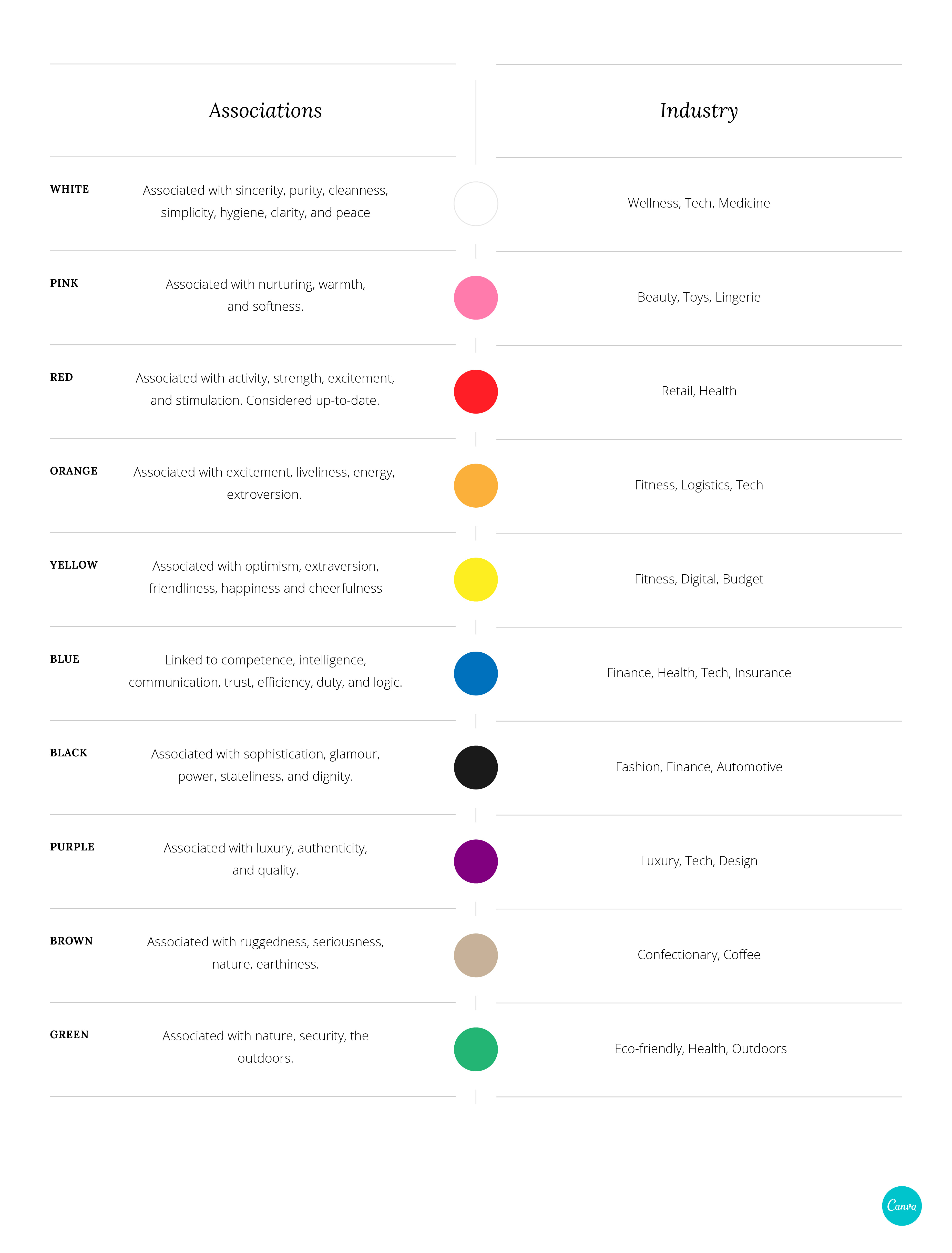
The fact is that choosing the right color will help you build a picture of your own brand in your customers’ minds.
If you can take the time to decide how your logo needs to be colored, that would be a big advantage for your next steps.
3. Get Your Typography Right (Or Watch It Ruin Everything)
Like in any other design, typography plays a key role in logo design. It’s one of the most vital parts of creating a logo.
Good text makes good artwork better, while bad font choices can spoil even the best logo design.
For example, think about using a font like Comic Sans for a law firm’s logo. I don’t really need to go into details about how it would hurt the firm’s professional image.
So when picking a font, test different fonts to make your logo unique, a font that’s easy to read, with the right size and spacing.
Think about how fonts make people feel. Serif fonts often feel traditional and trustworthy, while sans-serif fonts feel modern and clean.
4. Know Who You’re Actually Designing For
Go find out who’s actually going to look at this thing. Not in theory, go check.
A skincare brand selling to women in their 30s needs a completely different logo than a gaming app built for teenagers glued to their phones.
Same homework, opposite results.
Just think about it.
A skin product brand might target urban-living women, aged 30-45, who have money to spend and like taking care of themselves, while a gaming app might focus on young people who know about technology and like playing games on their phones.
5. Steal Ideas From Logos That Already Work
It doesn’t mean simply copying.
Look at famous logos across different industries, from Nike’s simple swoosh showing movement and winning, to FedEx’s hidden arrow showing forward motion and speed.
Each carefully made logo tells a special story.
A good logo can quickly show what your brand stands for, what it aims to do, and what it’s like.
Think about how Amazon’s arrow makes a smile while linking A to Z, or how Pepsi’s circle represents energy and refreshment.
These elements work in any language to leave a strong mark on people’s minds.
When creating your logo, think about how shapes, colors, and empty spaces can work together to show deeper meaning.
How to Create a Free Logo with Canva
Canva has both free and paid logo templates and design elements that make it easy to create a logo.
The only difference is that the paid plan includes access to premium templates, brand kits, background removal, and advanced export options that are not available on the free plan.
It also gives you access to better logo designs, lots of elements, shapes, fonts, see-through logos, and many other tools to change any logo design.
However, if you’re not a fan of their paid version, you can still make your logo using the free version of Canva.
Sounds good? Let’s get started!

Here’s how to create a logo with Canva:
- First, sign up for a free Canva account.
- Then, search for “Logos” and pick a template you like.
- Next, add your own colors using Canva Editor.
- Finally, save and share your logo! It’s really simple.
If you need any additional graphics or elements for your logo, simply use the “Elements” tab and “Styles” tab in the Canva editor to change the look and feel of your logo.
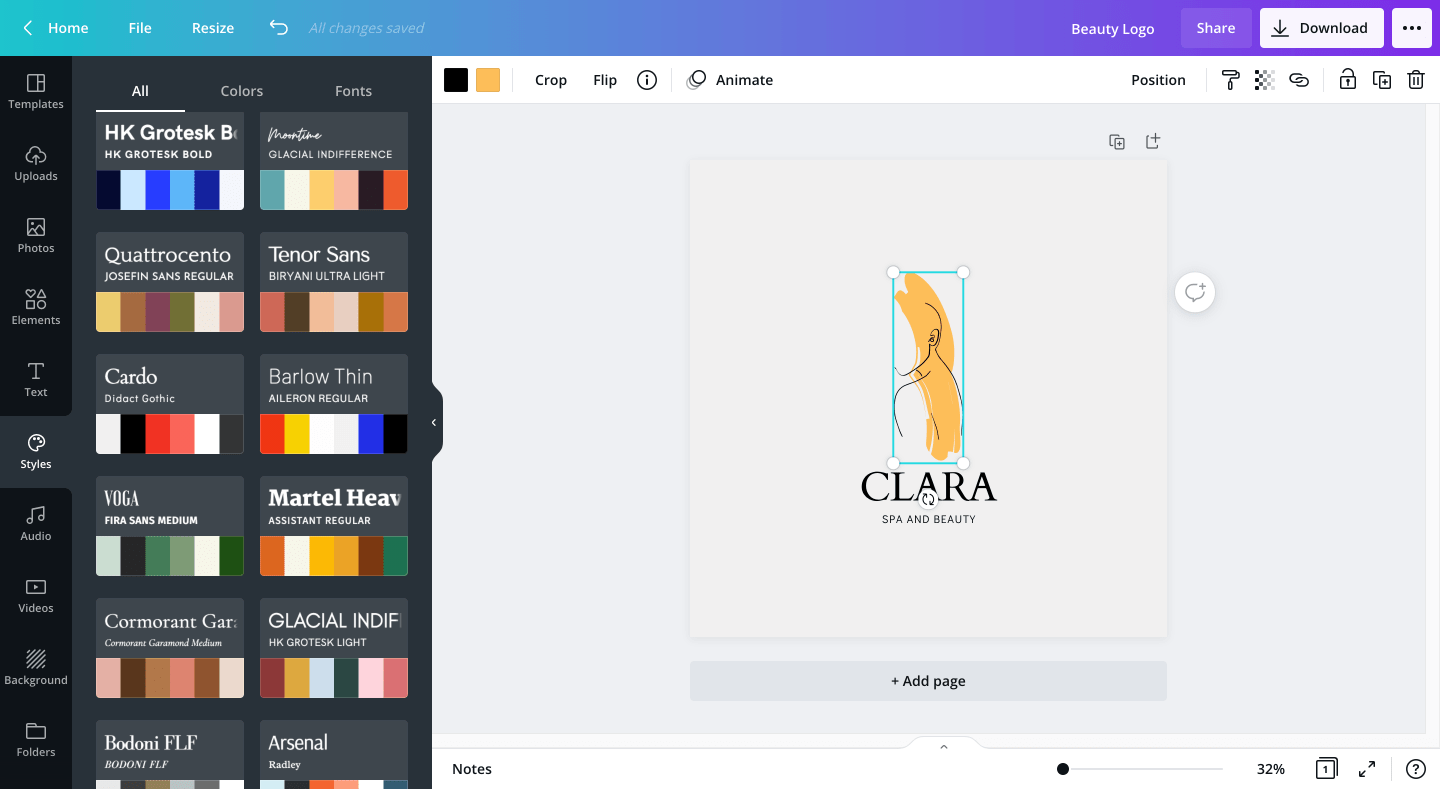
When you’re done, you can save your logo as a PNG file.
If you have it, with Canva Pro, you can export logos with transparent backgrounds and download them as SVG files, while JPG and standard PNG exports are also available on the free plan.

Your logo is ready. Now build the store to go with it.
Should You Even Use Canva for Your Logo?
Canva’s kind of taken over as the go-to tool for non-designers making their first logo, and there’s a reason for that.
It’s easy to use, and free.
I’m pretty sure you also won’t be disappointed with Canva’s time-saving features, so yeah, use it, just don’t expect it to be one of a kind.
What I mean is, even though Canva offers a huge set of design elements and templates, there is a significant possibility that other businesses might end up using similar or identical elements in their logos.
That might be a risk if you’re serious about building a brand in the long run.
In such a case, if you want to work with a logo designer, I recommend checking out Fiverr.com.
It is a popular freelance marketplace where you can find logo designers from many countries ready to help you, and you can check their ratings and past work to make sure you get good designs worth your money.
Happy logo creation!
Frequently Asked Questions
- Is Canva free to make a logo?
- Yes. The free plan covers everything you need for a solid logo. Canva Pro adds extras like transparent backgrounds and SVG exports.
- Can I use a Canva logo for my business?
- Yes, as long as you’re not using Pro-only elements without a subscription.
- Do I need design experience to make a logo in Canva?
- No. Canva’s templates do most of the work, you’re mostly just changing colors and text to match your brand.