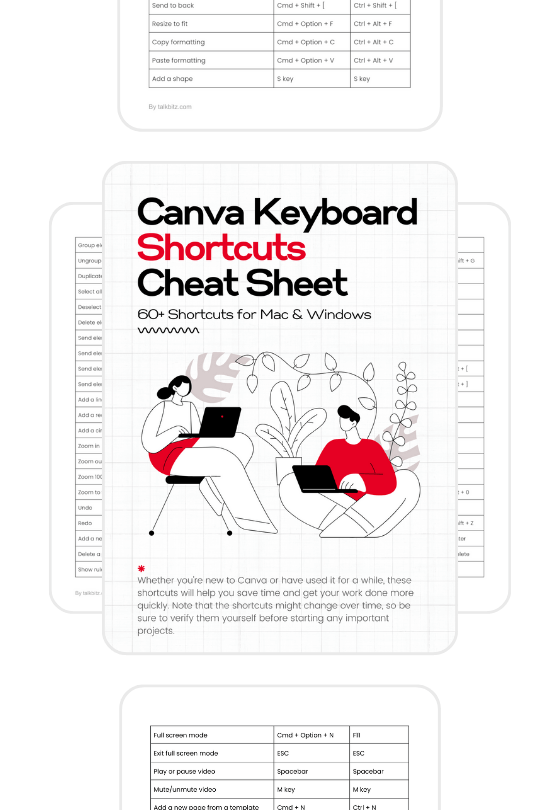
Canva is genuinely good. I’m not trying to hate on it.
The free version works fine for most people. Templates are solid, the editor is easy, and you can get a lot done without spending a single dollar.
But after using it for a while, a few things start to get annoying.
Download speeds can be surprisingly slow sometimes, nothing to do with your internet. And the Pro-locked elements, they’re everywhere.
You’ll be halfway through a design and realize the one thing you need is behind a paywall.
On top of that, Canva had some pretty bad outages in late 2025. Designs not loading, saves failing, blank screens. Not great when you’re on a deadline.
So I went and tried ten Canva alternatives.
Used them a couple of times, tested templates, checked what the free plans give you, and figured out where each one makes more sense.
Here’s what I found.
Disclosure: This post has affiliate links. I earn a commission if you buy, at no extra cost to you.
1. Placeit by Envato – Best for Mockups

I’ve used Placeit mostly for mockups. Like when you need to show a digital product inside a laptop or a phone screen without owning any actual gear. That specific thing is hard to beat.
The mockup library is massive. Way bigger than what you’d find on Canva. And you can edit everything right inside your browser, no downloads, no installs.
Design templates are good too, logos, social posts, video intros, they have it all. Not the most creative bunch, but they’re clean and professional enough for most online business stuff.
Placeit is owned by Envato, the same people behind Envato Elements. But these are two separate platforms. Envato Elements gives you downloadable assets. Placeit lets you edit designs directly.
Both are useful, just for different things.
One Placeit subscription covers everything, too. Meaning you get access to all Mockups, designs, logos, and even video templates, all of them.
Reasons to try Placeit:
- Massive mockup library, probably the biggest you’ll find in any design tool at this price
- Edit everything in your browser, no downloads needed
- One subscription covers mockups, designs, logos, and video templates
- Logo templates for pretty much any industry you can think of
- Video templates built specifically for YouTube and Twitch
Placeit pricing:
- Free Account: Free (limited library)
- Single Download: From $2.99
- Monthly Unlimited: $14.95/month
2. Pixelied – Simple, Fast, No Hard Learning

Pixelied is simple and fast. That’s the best summary I can give for it. You open it, pick a template, make your changes, and export.
There’s no long, confusing sidebar, no feature overload. It just works without making you think too hard, which is exactly what most of us need.
You get a good range of templates, access to stock photos, and tools like background remover and mockups if you go Pro. Nothing groundbreaking, but everything you’d actually need for day-to-day design creation is in there.
The free plan works fine for basic stuff. Pro opens up the full library and the more useful editing tools. But the biggest thing I’m missing there is a social media scheduler, like what Canva has.
Reasons to try Pixelied:
- Thousands of templates, and you can find what you need fast
- Millions of stock photos are built right into the editor
- Background remover that actually works in one click
- Advanced tools like filters, face blur, and text effects
- Team workspace if you’re working with others
- Product mockups without leaving the platform
Pixelied pricing:
- Free Plan: Free (basic editing tools)
- Pro: $47/year
- Pro+: $79/year
3. Stencil – Design and Schedule in One Go

Stencil is the kind of tool where even a kid could figure it out in five minutes. I mean that as a compliment.
It doesn’t try to do everything. No fancy animation tools, no document builder, no team collaboration setup. It just does social graphics, cleanly, without making you overthink anything.
You get five million royalty-free photos, icons, Google fonts, and a solid browser extension that lets you grab images from anywhere on the web and edit them in the same spot. That extension is genuinely useful if you’re making content regularly.
But one thing that stands out is that it connects directly with Buffer. So you can design a post and schedule it without switching tabs. For social media guys, that’s a real time saver.
So yes, if you want a lean, simple tool for social posts and anything goes with it, Stencil is a solid pick. But you have to create a Namecheap (a domain registrar) account to access it.
Reasons to try Stencil:
- Five million royalty-free photos and icons
- Browser extensions for Chrome, Safari, and Firefox grab and edit images
- Connects directly with Buffer so you can design and schedule in one go
- Instant image resizing, no manual adjusting
- Simple color picker to save your brand colors and reuse them
Stencil pricing:
- Stencil Free Plan: Free (limited access)
- PRO Plan: $9/month
- Unlimited Plan: $12/month
4. VistaCreate – Closest One to Canva
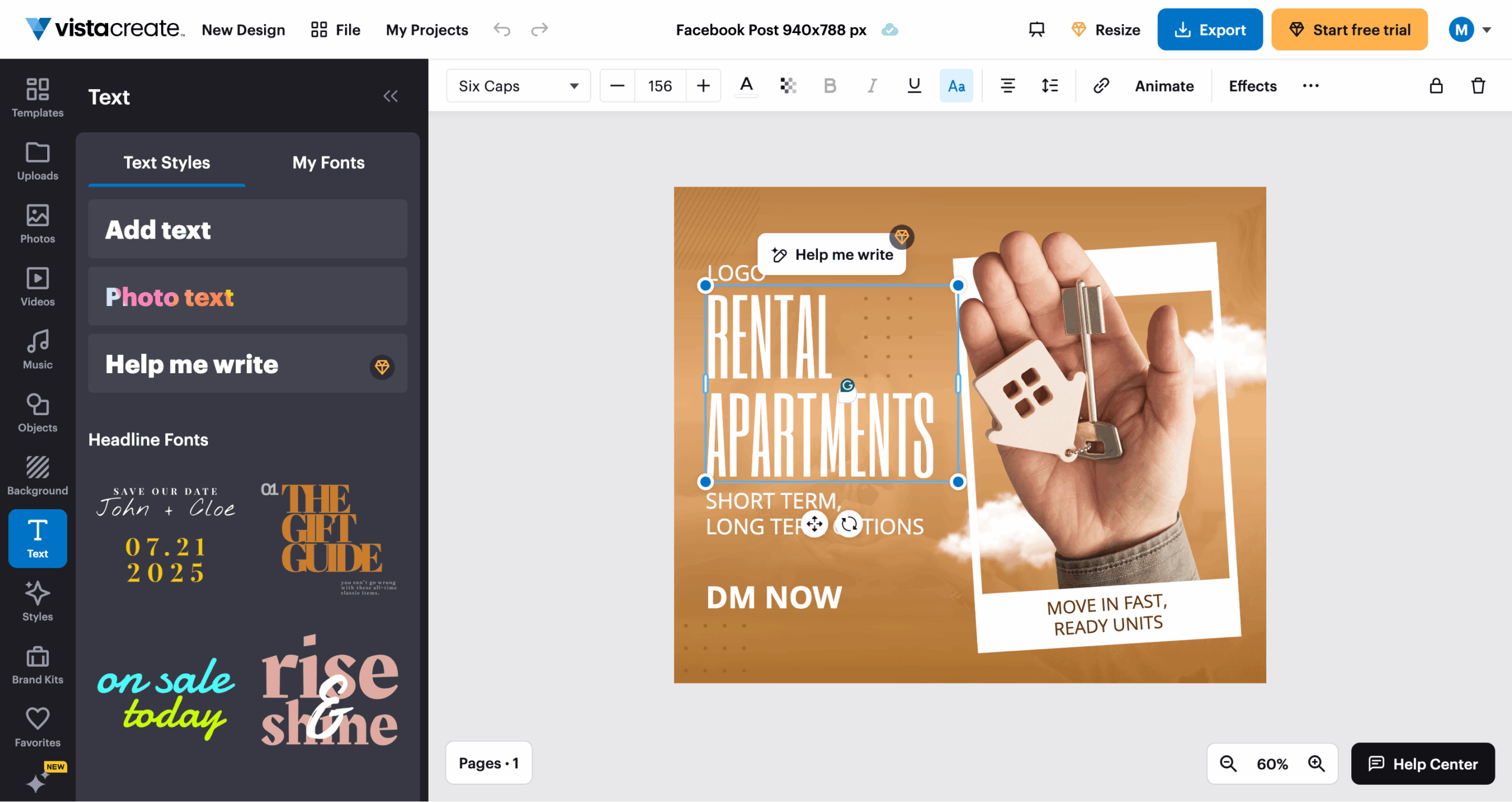
VistaCreate is the one that feels the closest to Canva out of everything I tried. The layout, the way templates are organized, how you drag and move things around, it’s all familiar.
If you’re switching from Canva and don’t want to relearn anything, this is probably your smoothest option. And there are some reasons for that.
The template library is big. 200K+ designs across all kinds of formats. And it comes with 170M+ photos, videos, vectors, a social media scheduling feature, and AI tools, so you’ve got a lot to work with without leaving the platform.
There’s also a brand kit feature, so you can save your fonts, colors, and logo in one place and apply them across everything. Canva has this too, but it’s nice to see it here.
The free plan limits you to 100K design templates and removes some features like the one-click resizer and AI tools, not a big deal, but the Pro plan removes those caps completely.
Reasons to try VistaCreate:
- 50,000+ templates across pretty much every format you’d need
- Pulls stock content from Depositphotos, so 200M+ files to use
- Brand kit to store your fonts, colors, and logo in one place
- Animations, stickers, and filters that actually look good
- Team collaboration on Pro if you’re working with someone else
VistaCreate pricing:
- VistaCreate Free Plan: Free
- PRO Plan: $10/month
5. Snappa – Good for Quick, Simple Designs
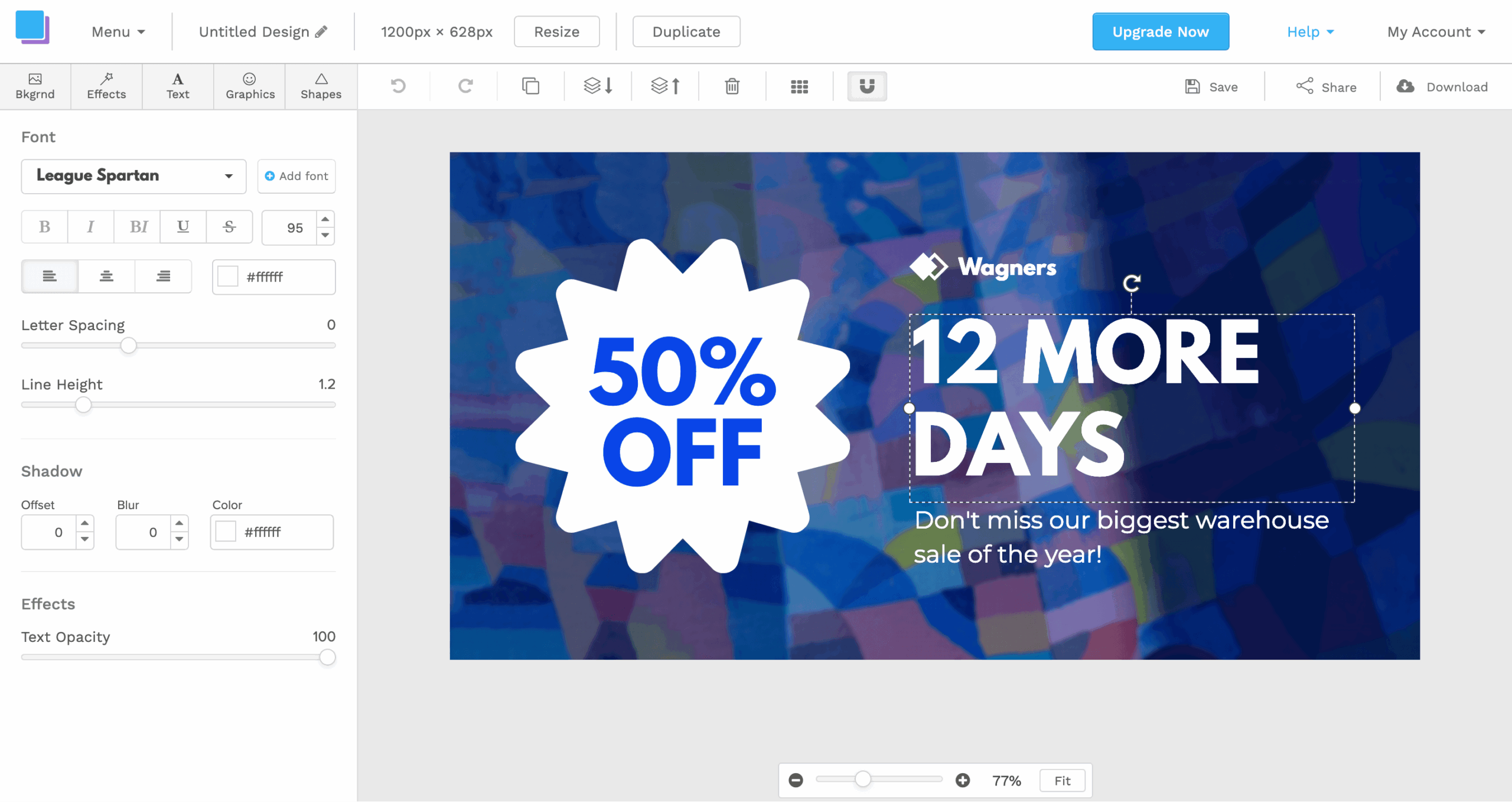
Snappa isn’t the most advanced tool on this list. It won’t replace Canva if you’re doing complex design stuff. But for simple, clean design work, a quick social post, or something you just need to get out fast, it does the job nicely.
6,000 templates, five million photos and graphics, direct Buffer integration, and a background remover, I believe that covers most of what someone creating designs regularly would actually need.
The free plan is quite limited, though. Three downloads per month, and no direct social sharing. If you’re using it seriously, the Pro plan makes more sense.
This is still a good starting point if you’re new to design and just want something that works for design, whatever you need in minutes.
Reasons to try Snappa:
- 6,000+ templates, enough variety for most users
- Five million photos and graphics to pull from
- Background remover built in, no third-party tool needed
- Connects with Buffer for direct social scheduling
- Team plan if you need to share designs with others
Snappa pricing:
- Snappa Starter Plan: Free (3 downloads per month)
- PRO Plan: $10/month
- Team Plan: $20/month
6. DocHipo – Built for Documents and Structured Content

DocHipo surprised me a bit. The UI is clean, simple, and it leans more toward documents and structured content than pure social graphics. I mean, flyers, web banners, infographics, reports, that kind of thing.
If you’re a marketer or content creator who makes a lot of document-style visuals, this fits better than most on this list. It’s not trying to be a Canva clone. It has its own lane, and it just stays in that.
The free plan is actually decent, too. You get smart resize, background remover, and no watermarks on downloads. That’s more than most free plans give you.
You can also save designs directly to Mailchimp, even Jotform, which is a nice touch if emails and forms are part of your workflow.
Reasons to try DocHipo:
- No watermarks on free plan downloads, which is rare
- Smart resize on the free plan, too, one click, and you’re done
- Background remover without needing to upgrade
- Saves designs directly to Mailchimp if email is part of your flow
- Real-time collaboration for teams
- One login, multiple companies, useful if you manage more than one brand
DocHipo Pricing:
- DocHipo Free Plan: Free (limited documents, templates, and features)
- Pro Plan: $12/month
7. DesignCap – Lightweight but Not Quite There Yet

DesignCap is decent. The editor is lightweight and quick to load, templates are organized well, and there’s a simple chart editor built in if you ever need to turn numbers into something visual.
But something felt slightly off when I used it. Hard to explain exactly, like it’s almost there but not quite. It could be the template variety feeling a bit thin, or it could be small things in the editor that don’t feel as smooth as you’d want.
It works, just not my first pick. But still, worth trying on the free plan to see if it works for you. Some people love it, so maybe it’s just a personal thing.
Reasons to try DesignCap:
- A Lightweight editor that opens fast and doesn’t get in your way
- Built-in chart editor if you need to visualize data quickly
- Pre-made template library organized well for many use cases
- Millions of stock photos inside the editor
- Modules like diagrams, timelines, and statistics
DesignCap pricing:
- DesignCap Free: Free (limited templates and features)
- Basic Plan: $4.99/month
- Plus Plan: $5.99/month
8. PicMonkey – Great for Photos, Weak on Templates
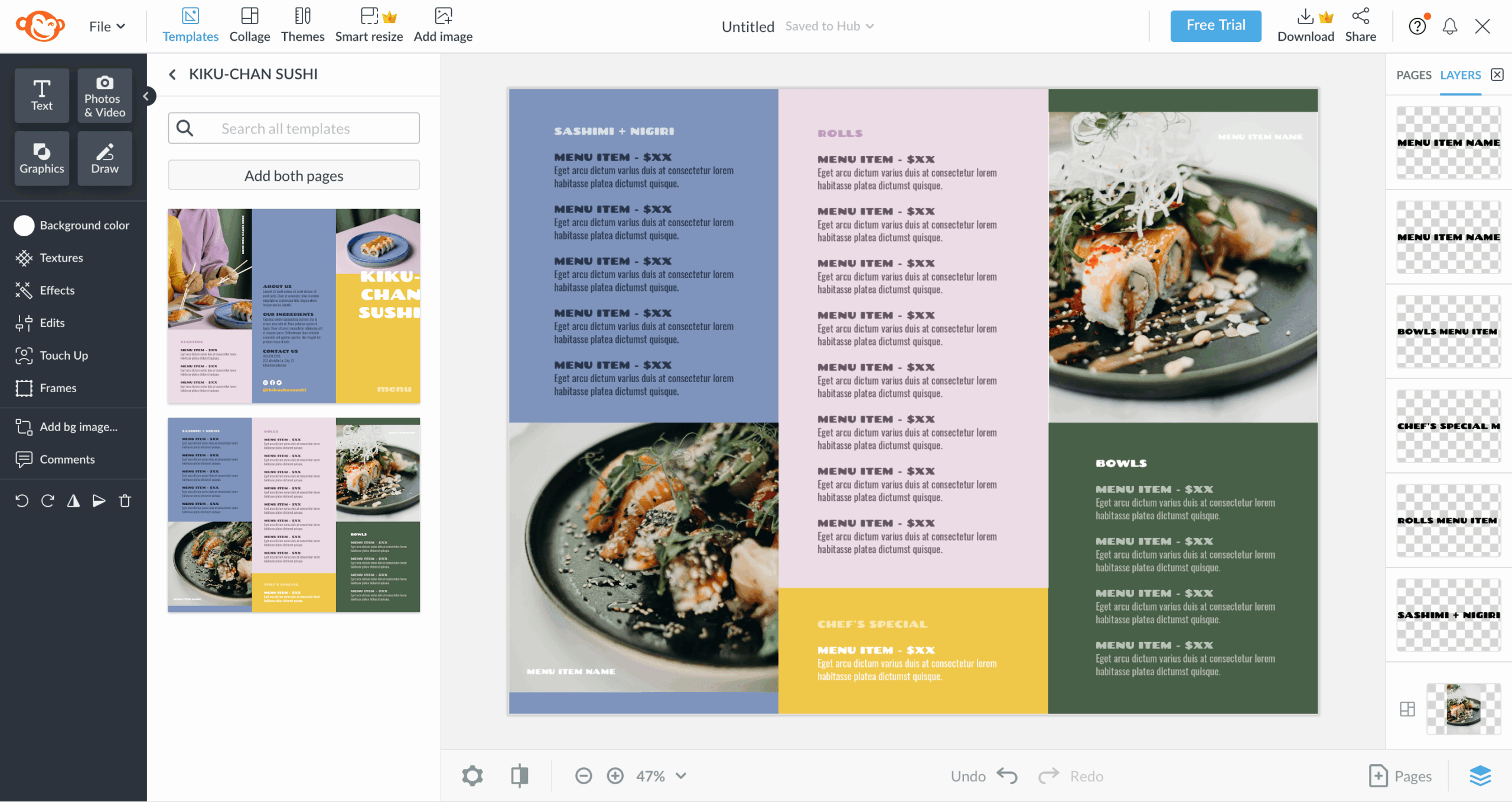
PicMonkey is good, specifically for photo editing. Cropping, color adjustments, background eraser, exposure tweaks, it handles all of that well. If a lot of your design work starts with a photo you need to fix up first, PicMonkey fits that flow nicely.
The template side of things, though, is not that impressive. If you’re coming from Canva, expecting a huge library of ready-to-use designs, you might feel a bit limited here.
It’s more of a photo editor with design features, not the other way around.
There’s a 7-day free trial, which is enough time to get a real feel for it before committing.
Reasons to try PicMonkey:
- Solid photo editing tools, cropping, color, exposure, sharpening, background eraser, all in one place
- Drawing tools, if you want to add something by hand
- Brand kit for fonts, logos, colors, and graphics
- Larger media library with both photos and videos
- 7-day free trial so you can actually test it before paying
PicMonkey pricing:
- PicMonkey Free: Free to use (needs a subscription to download)
- Basic Plan: $72/year
- Pro Plan: $120/year
- Business Plan: $228/year
9. Adobe Express – Better Fonts and Stock Photos
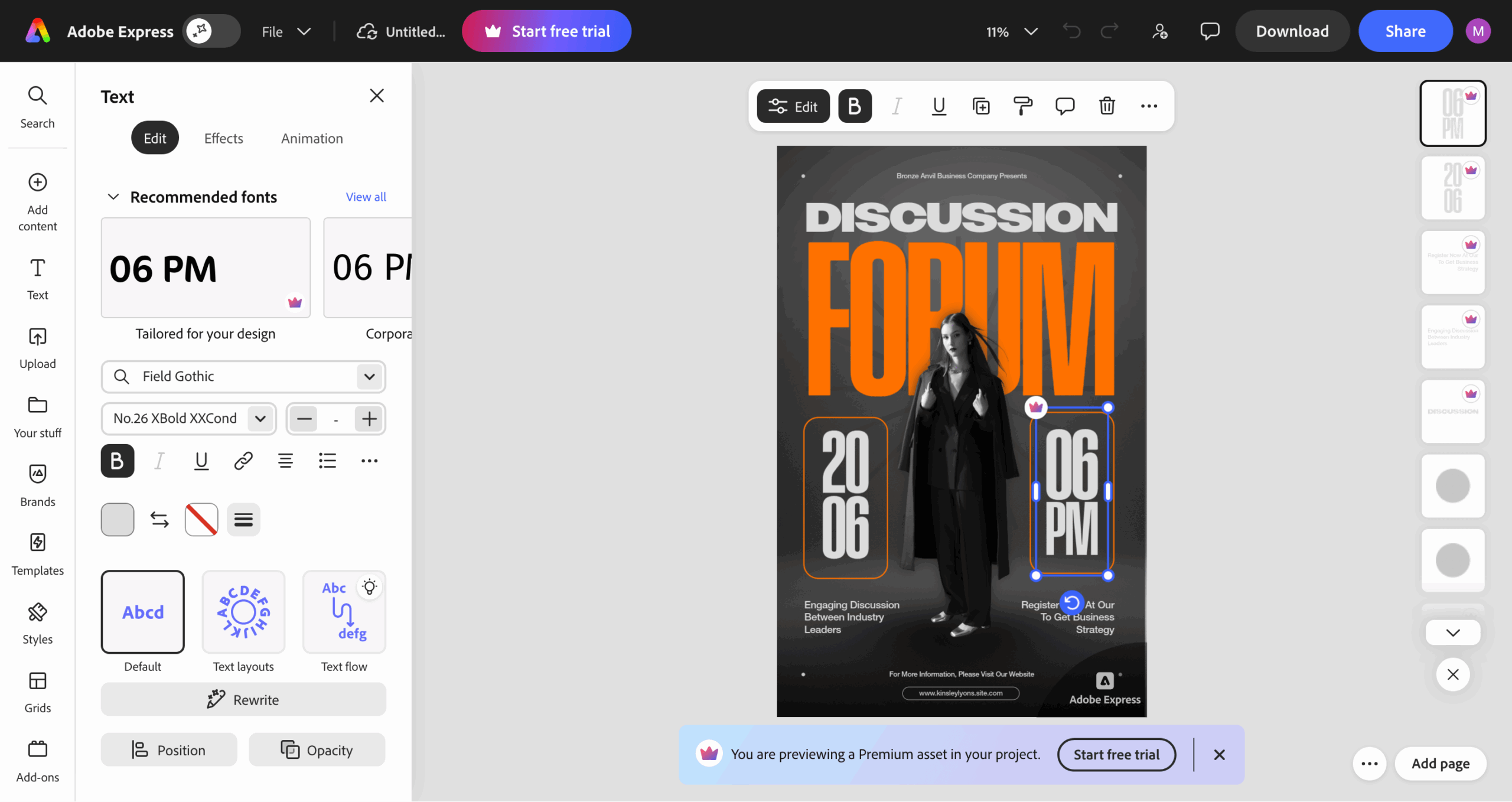
Adobe Express feels pretty close to Canva in how it looks and works. Templates, drag and drop editor, fast exports. If you’ve used Canva before, you won’t feel lost here.
What makes it better is the fonts and stock photos. You get access to Adobe Fonts and the Adobe Stock library on the premium plan, which is a serious advantage if visual quality matters to you.
And if you’re already inside the Adobe ecosystem, using Lightroom or Premiere or anything else Adobe, Express just makes sense. Your assets, branding, and files are already easy to bring into the same workflow.
Outside of that, it’s a solid tool, but nothing dramatically different from the others on this list.
Reasons to try Adobe Express:
- Access to Adobe Fonts, way more variety than most design tools offer
- Adobe Stock photos on the premium plan, 160M+ royalty-free images
- Background remover built directly into the editor
- One-click resize across formats
- Fits naturally if you’re already using other Adobe tools
- Schedule designs to TikTok, Instagram, Facebook, X, Pinterest, and LinkedIn for free
Adobe Creative Cloud Express pricing:
- Adobe Creative Cloud Express Free: Free to use (limited features and templates)
- Premium Plan: $9.99/month
10. Visme – Best for Presentations and Infographics
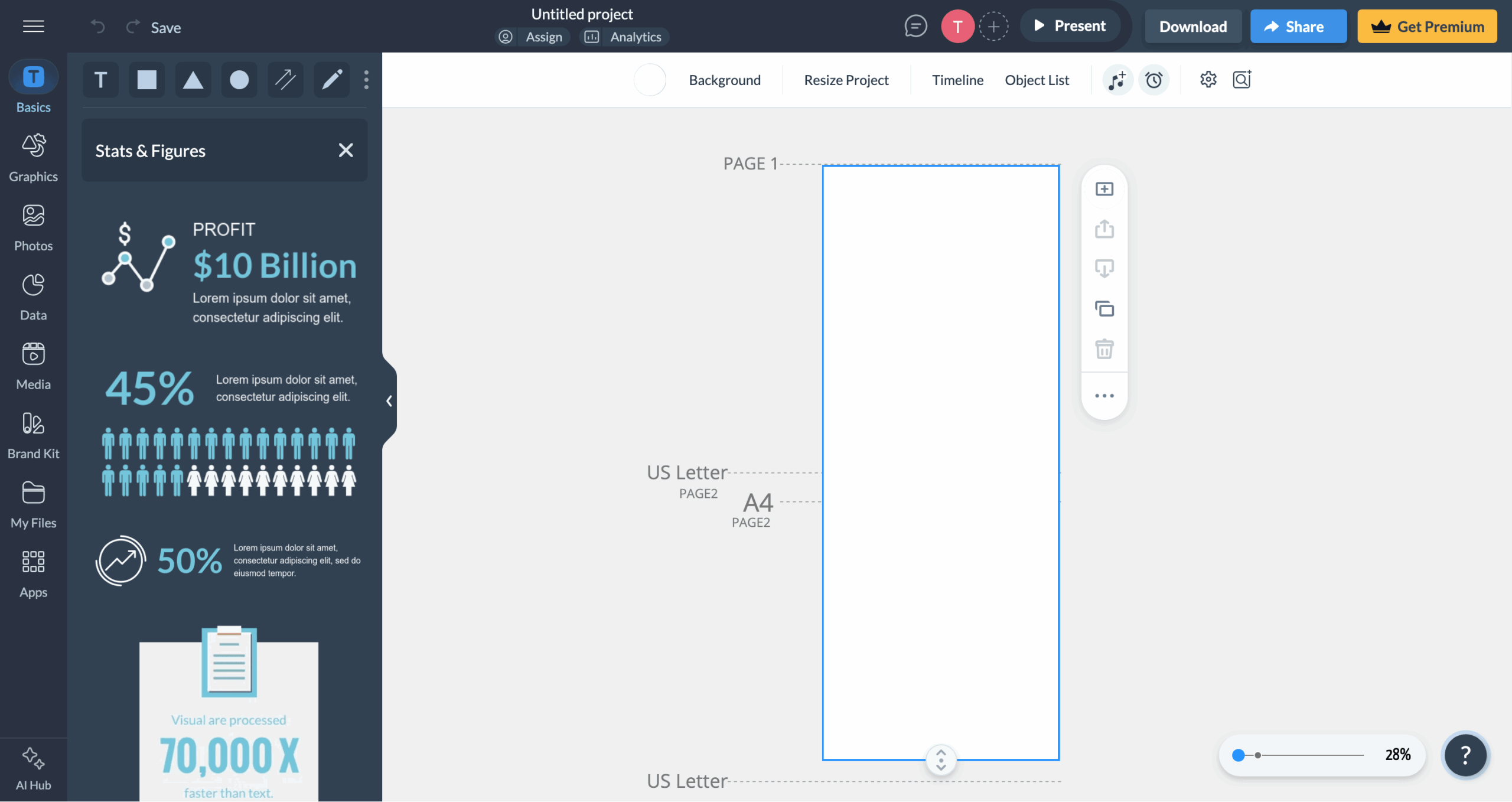
I used Visme a while back, mainly for infographics. It’s genuinely good for that. The templates are more polished than most, and the editor gives you enough control to make something that actually looks professional without spending hours on it.
But it goes beyond infographics, too. Presentations, reports, documents, data visualizations, it handles all of that well.
So if your work leans more toward structured visual content than quick social posts, Visme fits better than most tools on this list.
The free plan gives you unlimited projects with 500MB storage, which is more generous than it sounds for basic use.
Reasons to try Visme:
- Unlimited projects, even on the free plan
- Strong template library for presentations, infographics, and reports
- Data visualization tools, if numbers are part of your content
- Brand management tools to keep everything consistent
- Special plans for students, educators, and nonprofits
- Privacy controls for anything you publish
Visme pricing:
- Visme Basic: Free (limited access to templates and features)
- Personal Plan: $12.25/month
- Pro Plan: $24.75/month
Wrapping It Up
So there you have it. Ten tools, all tried, all real opinions.
If I had to point a beginner to just one, I’d say start with VistaCreate, Stencil, or Snappa. They feel closest to Canva, so you don’t have to learn much again.
If mockups are your thing, Placeit. Nothing else comes close for that specific use case.
Already in the Adobe world? Just use Express. Your stuff is already there.
And if budget is the actual problem, Pixelied’s free plan is more usable than I expected. Worth starting there before spending anything.
Look, Canva is still a great default.
But it’s not always the right fit for everyone.
One of these might actually work better for what you’re doing, and you won’t know until you try.
Which one are you going with?