I know you’ve seen it too. Big promises, no sense, always the same: dropshipping, trading, and becoming a YouTube millionaire overnight.
Rinse and repeat.
But it’s not 2019 anymore. Now it’s easier than ever to start an online business.
I mean, unlike regular shops you see on the street, online businesses usually cost less to start, let you work from anywhere, and help you reach people all over the world.
But the hardest part? I feel it. That’s why you’re here. You’ve watched the viral videos, followed the “exact steps,” and still… nothing really happened.
You just want to finally figure out how to start an online business.
And on the other hand, you’d think AI can make you a millionaire, and you just sit and watch.
Well, it won’t do anything with just a “do it bro” prompt unless you know how to correctly use it.
So here, we’re not going to hype up “get rich quick” dreams. I want to show you, and see you figure out what works and also what doesn’t, and if this is even right for you.
Think of it like I’m giving you the same advice, from what I’ve learned from years of my experience, that I’d give a friend sitting at my kitchen table with a cup of tea.
Sound good? Let’s go.

What is an Online Business?
Alright, you can skip this, but let’s clear this up for a second because I know what you’re probably thinking. Maybe some big online store, or a YouTuber with a million subscribers, or people trading NFTs or something.

But an online business can be much simpler than most people think.
If you’ve ever sold something on Facebook Marketplace, or designed a logo for a friend and got paid by bank transfer (we can do this better on Fiverr, though), or even posted a digital download on Etsy, that’s an online business, too.
Even if you made five bucks.
Some people run a full online store with shipping and inventory. Some write a blog and make a decent income from ads or affiliate links. Others sell Notion templates, run newsletters, or do one-on-one coaching over Zoom.
You can even build apps, do freelancing work, or help people write better resumes. All of it counts.
What makes it “online” is that the business happens on the internet. People find you, learn about you (and yes, you educate them), and pay you using their phone or laptop.
You don’t have to own a physical shop, rent an office, or even leave your room (though some sunlight is good, keep that in mind).
On the other hand, you don’t have to quit your job or leave school. Bills still need to be paid, yes, the internet bill and your coffee, maybe the electricity, and dreams don’t cover rent.
Most people start an online business as a side thing. Sometimes it stays small and super simple. Sometimes it grows fast, and they go full-time.
Is it always glamorous? Nope.
But the freedom and reach are kind of things I can say are real. You can work with customers anywhere, test weird ideas, or pivot fast if something flops.
And there’s no rule saying you have to “scale” or become the next Amazon. Sometimes, all you want is a little extra money or to finally build something that feels like your own.
Alright, now let’s get to those steps.
Step 1: Pick a Simple Idea (And Test It Fast)
I know, including me, after my school ended, because I had a knack for doing something online, a lot of people think they need a giant, world-changing idea.
Truth is, most businesses started as little side hustles or quick experiments. Yes, I said the word “experiments.”
According to a recent survey, it also shows that more than 64% of businesses started small, as a side hustle, a hobby, or a problem that needed solving. Not full-blown companies.
Just a person, a laptop, or maybe a notebook full of messy ideas.
What I’m saying here is, don’t get stuck searching for “the next big thing.” Instead, try to solve a tiny problem for a clear group of people.
You have to test, run experiments, and grow even with imperfection.
Maybe, if we think about something way too beginner-friendly you can sell online, it’s busy parents who want meal plans, or teachers who need digital planners, or students looking for smarter note-taking tools.
See the problem you’re going to solve, not how much X you can make from doing X. On the other hand, the smaller your target, the easier it is to talk to them.
But how do you know if your idea is any good? Here’s what I’d do:
- Ask ChatGPT or Gemini, “Can you check if people are showing real interest in [your topic or idea]? Look for trends, growing discussions, or any data that shows demand.”
- Check Google Trends to see if interest is going up or down.
- Drop a simple version of your idea in a couple of subreddits like r/Business_Ideas, r/Startup_Ideas, r/SideProject, or r/Entrepreneur. Or share it on Threads or in a niche Facebook group. Wait. Watch. See comments. If people reply, you’re onto something.
I saw someone on Reddit asking, “People earning money with AI, what do you do?”. Probably, he had something in mind to start that blends with AI.

At the time I viewed it, it had 209 upvotes and 229 comments, and I saw a comment that said, “I offer my AI business planner. The money is not that great, but I cannot complain considering I created the website back in July.”
You get the idea what we’re doing here, right? We can simply call it a quick validation, checking real interest before you build anything.
Step 2: Know Who You’re Helping (Your Niche = Your Edge)
This is not rocket science. When you target a niche, you know exactly who your audience is, where they are, and what they want, which lets you reduce overall costs and also a lot of stress along the way.
The more you focus on a niche, or we can say the more you niche down, the less competition you’ll have, and the easier it’ll be to connect with that audience.
You can use AI for research. (No, I don’t think it feels like cheating.)
Ask ChatGPT, Gemini, or whatever AI tool you use these days, which has search capabilities, “What problems do new moms have with wellness?”
Or check Google Trends or Pinterest Trends to see what people are pinning, searching, and talking about.
Another nice thing is that if you use Pinterest Trends, it clearly shows how seasonal topics go up and down.

For example, searches for “Halloween printables” jump around October every year, while general “printables” stay steady all year.
So what I’m saying here is, instead of “printables,” you go with “wellness printables for new moms.” Instead of “online store,” maybe it’s “custom mugs for plant lovers.”
You get the point, right?
That might be a small group, but you can still build a strong connection.
And don’t just stay in your own space. Be where your audience is, like Pinterest, Discord, or Threads. Watch, listen, and join the talk; in other words, engage with them.
Step 3: Choose a Platform You Can Handle
Alright, let’s get technical, not that deep, but still, we need it. Not every platform is built the same.
These days, if you dig around, you’ll see most businesses use “no-code” or “low-code” platforms.
This means you don’t need to know how to code or design, and you definitely don’t need to spend weeks setting up a website from scratch.
Say if you want to sell physical or digital products or even memberships, Shopify is still the king. It’s easy, scales well, and has AI tools built in to help with a lot of things.

Start selling online with Shopify
Learn how to sell online, in Person, and everywhere in between.
For simpler digital products, Gumroad and Payhip are easy options.
If you’re thinking about email newsletters, Beehiiv or Kit.com are your best bets.
Want a classic blog? WordPress (hosted on Bluehost) is still solid (and that’s where this website is built, too), and almost any type of website can be built on it, not just blogs.
TikTok Shop and Pinterest Shop are great if you want to go social-first and start selling fast.
If you have a skill that can sell, like graphic design or writing, you can try Fiverr or Upwork.
And you can even start building a website without spending a cent.
As you can see, the gap between you selling something or starting an online business vs the way you do business has been greatly reduced or smaller nowadays.
Now it’s more like how you set up your Instagram or Facebook account, and now we also have AI, meaning building something on those platforms is as simple as just answering a few questions.
But you still need to pick what you can handle right now.
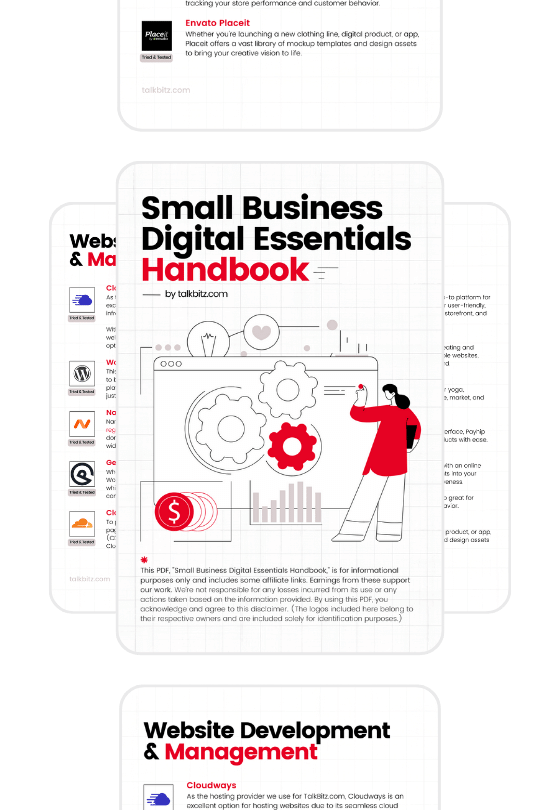
Simply, download our Digital Essentials PDF, packed with all the tools you need to run a business online, from our resources page, so you’ll know what to use and when.
Step 4: Create One Useful Thing (Not a Whole Catalog)
The biggest mistake, I’d say, the trap most people make is trying to start with too many things, like 10 products, 5 services, and 3 eBooks. No need, you really don’t need all that.
The most successful solo founders I know started with just one better offer. One thing that solves a clear problem.
What does that look like? Maybe it’s a single Notion template for college students.
Or one mini course on Canva design for Pinterest pins.
Or maybe you just offer one-hour video calls to help new parents organize their week.
A website setup service for local yoga teachers who hate tech.
One recipe eBook aimed at people with gluten allergies.
A single micro SaaS (software as a service) tool, like a Pinterest analytics dashboard or a social media post scheduler.
AI prompt packs or automation templates for business owners who want to save time.
A paid online community (on Circle or Skool) with monthly live workshops and a resource library for freelance designers.
Or even something weird (but I see many already doing this), like a private Discord channel for book lovers that meets on Zoom once a month.
Whatever it is, focus on doing one thing well. You can add more stuff or grow it to another stage later.
And don’t forget, AI can help you work faster. Use it to come up with ideas, plan your offer, write the first version of your sales page, or even make a quick logo.
But still, keep your own tone and style. Don’t let it do everything. Add your voice and your reason behind it.
If you’re not sure what to choose, try building in public. Share what you’re doing on Threads, X, or Instagram stories, and now we also have Bluesky. It might feel strange at first, but people enjoy seeing something grow from the start.
Not to mention that it also builds trust, and trust is what helps you sell.
Think of this as more like validation 2.0 (what I talked about in Step 1). You’re actually testing if your product, service, or offer has a real audience and enough interest to keep things going further.
Step 5: Share It Where People Already Hang Out
Now, here’s where most people mess up and then give up in frustration, thinking, “Maybe I’m not made for this. Maybe others are just luckier.”
The problem behind it is they launch their thing and just… Hope someone finds it. That almost never works.
So what can we do about this? The right way?
Take your offer to places where your audience already hangs out.
That means Pinterest, Discord servers, TikTok, Facebook Groups, wherever your people are talking about their problems or dreams.
Don’t just post a link and run. Answer questions. Show behind the scenes. DM a couple of people who you think might need what you’re offering. I know it’s slower, but way more effective.
Pinterest is huge right now for “how-to” guides, side hustle tips, and any visual product.
And I don’t know about you, but when something needs to be bought, say a small gadget like earbuds, or even new software, I always go check Reddit to see what other people are saying about it.
So think about it, it’s not just posting your thing on any social media, you just need to find where your audience lives and then show what you have for them to get their burning problem solved.
Not only that, you can also do some personal outreach, yes, DM them (of course, including your friends, why not?).
For example, you could tell them something like:
Hey! I just launched a simple [product/service] that helps with [main benefit/problem it solves].
Here’s a quick sample so you can see what it’s like: [sample link]
If you like it and want the full version, let me know!
Once someone’s interested, send them a quick payment link (PayPal, Gumroad, Payhip, whatever you use), and deliver the product right after.
Then, ask for feedback or a short comment you can use as proof for the next person.
Meta’s Threads and X are also great for this, and already, many people are doing it.
Because both places have lots of people looking for ideas, tips, or just cool stuff, but don’t try to be “salesy.”
Just create content around your niche, show them the problem, then tell why you built your product and how it solves it, show a picture, or share a quick story about making it.
One great example of this is Jason Chin, aka @heyeaslo on social media. He built an online business just by selling Notion templates.
He started as a student organizing his own notes. He posted free templates, built a following, then built a premium (paid) version of his product.

That’s mostly content, slow growth, but after 2 years, he shared that he earned $110K in online income.
That’s basically how real online businesses grow. Little by little, post by post, until one day it just works.
Step 6: Keep Learning and Updating
This is the way I’ve seen it happen, again and again. No business stays the same for long, especially with how fast AI changes things, and yes, I mean everything on the Internet.
You need to treat your online business like a living project, not a finished product.
Here’s what I mean and what you should pay attention to:
- Ask your audience what’s working (and what isn’t) every month or so.
- Use AI to see what competitors are doing, or to find new trends fast.
- Update your main pages, FAQs, and products every 2 or 3 months. Keep things fresh.
It simply makes you look like you care, which, you know, you should.
On the other hand, nobody really knows what’s coming next, but what I think is that there are a few things we can agree on, like AI isn’t going away.
It’ll keep making things easier, we’ll see more tools, more automation, and content will keep getting shorter and more visual.
And the most important one is that the community is becoming the new traffic. Even HubSpot’s 2025 Social Media Marketing Report says “more emphasis on community.”
So yes, things change fast. The best way to keep up is to keep learning, stay close to your audience, and keep getting better bit by bit.
That’s how you stay in the game.
Take the First Step, and Don’t Overthink It.
Starting an online business in 2026 isn’t about being everywhere, doing everything, or pretending you know it all. It’s about helping a small group, using AI as your sidekick, and keeping things real.
You’ll make mistakes. So what? That’s the whole game.
The only difference between people who succeed and people who stay stuck is that the first group started anyway.
So, take the first step. Learn as you go. And if you mess up, welcome to the club.
Frequently Asked Questions
- Can I start an online business with no money?
- Yes, you can. Most online businesses start with very little. I mean, sometimes just a laptop, free tools, and a small idea they have. You don’t need a pocket full of notes (you’re not opening a shop on the street), but you do need time, effort, and most importantly, patience.
- How long does it take to see results?
- It depends. Some people see their first sale in days, others take months. We can’t tell the exact time for sure. The must-do thing here is to test, engage with your audience, and keep learning and improving. Sometimes it takes a few tries (or pivots) to get traction.
- Do I need to know coding or design?
- Not at all. Now we have “no-code” and “low-code” tools that let you build and sell almost anything without touching a single line of code. If you want to learn design, great. Otherwise, use templates or hire a freelancer for the heavy parts. But still, you can almost do everything yourself.
- What are the easiest online businesses to start?
- The easiest ones are things you already know how to do: selling digital downloads, templates, printables, offering a small service (editing, design, coaching), or starting a simple blog or newsletter. Pick what fits your passion, experience, skills, and audience.
- What if I fail?
- Everyone messes up at some point. Not just online businesses, but every single business owner. Treat every “fail” as feedback. You’re learning, not losing.