Pinterest sends real traffic. Like, the kind you see in your analytics and actually turns into email subscribers and sales.
I know this because when I started using it more consistently for TalkBitz, the blog traffic didn’t jump overnight, but over a few weeks, I kept seeing pins getting views.
Nothing crazy, just consistent. And that consistency builds over time.
But here’s the part people skip over: most beginners make pins that look decent and get nothing. The visual is fine, but the pin just sits there.
That happened to me, too, for a while.
So in this post, I want to walk you through what actually makes a Pinterest pin work, from the design basics to the stuff you might be ignoring, like keyword strategy and board organization.
Disclosure: This post has affiliate links. I earn a commission if you buy, at no extra cost to you.
What’s Changed on Pinterest in 2026
Pinterest isn’t really a social media platform in the way Instagram or TikTok is. It’s a search engine, or we can say a visual search engine.
And understanding that changes how you should be thinking about your pins.
So there are a few things worth knowing before you go any further.
First, static image pins still work.
For bloggers driving traffic to a post, they’re still the main format. But Pinterest has been pushing video, carousels, and collages too, and their own guidance says mixing up your formats helps you reach more people.
It doesn’t mean you have to go all-in on video, but one or two now and then probably doesn’t hurt.
Next, the bigger shift is how Pinterest now handles search and discovery.
What we know is that Pinterest’s recommendation engine pulls signals from your pin title, description, and board name.
Saves are a direct signal, too. Meaning, when someone saves your pin, Pinterest takes that as a sign it’s useful and may show it to more people with similar interests.
The same rules work for your boards as well. Every board should have a proper title and description because boards also show up in search results.
But now, one was happening is that Pinterest uses machine learning to decide what shows up in home feeds, search results, and related pins.
It’s not just keyword matching anymore.
The algorithms are learning from how people behave on the platform, what they save, what they click, and what they ignore. So the more your pin connects with the right people, the more Pinterest pushes it further.
Also, Pinterest trends last nearly twice as long as trends on other platforms, which is unusual and actually useful. If a topic is rising on Pinterest, it tends to stay relevant longer.
Their free Trends tool at trends.pinterest.com shows what’s growing, and it’s worth checking before you decide what to create next.
What Makes a Good Pinterest Pin?
A good pin does one thing: it makes someone stop scrolling.
That’s it. Pinterest is a visual search engine, and people move fast through their feed. If your pin doesn’t stop them in the first half-second, they’re gone.
But stopping the scroll isn’t enough.
After that, you need them to click. And to click, they need to feel like what’s on the other side is worth their time. That means your blog post, product page, or anything you are offering on the other side.
So a good pin is: visually clear, easy to read fast, and matches exactly what the person was looking for when they searched.
That sounds simple. Getting all three right at the same time is where most beginners get tripped up.
I know that’s not easy, but there are still some things you can do to make the chances better.
1. Size and Dimensions
The size and dimensions of pins can affect how well they are shared and how people interact with them. If the pins are too large or too small, they will not look good on Pinterest and may be difficult to view.
The right size and dimensions are simply what help users have a positive experience on Pinterest.
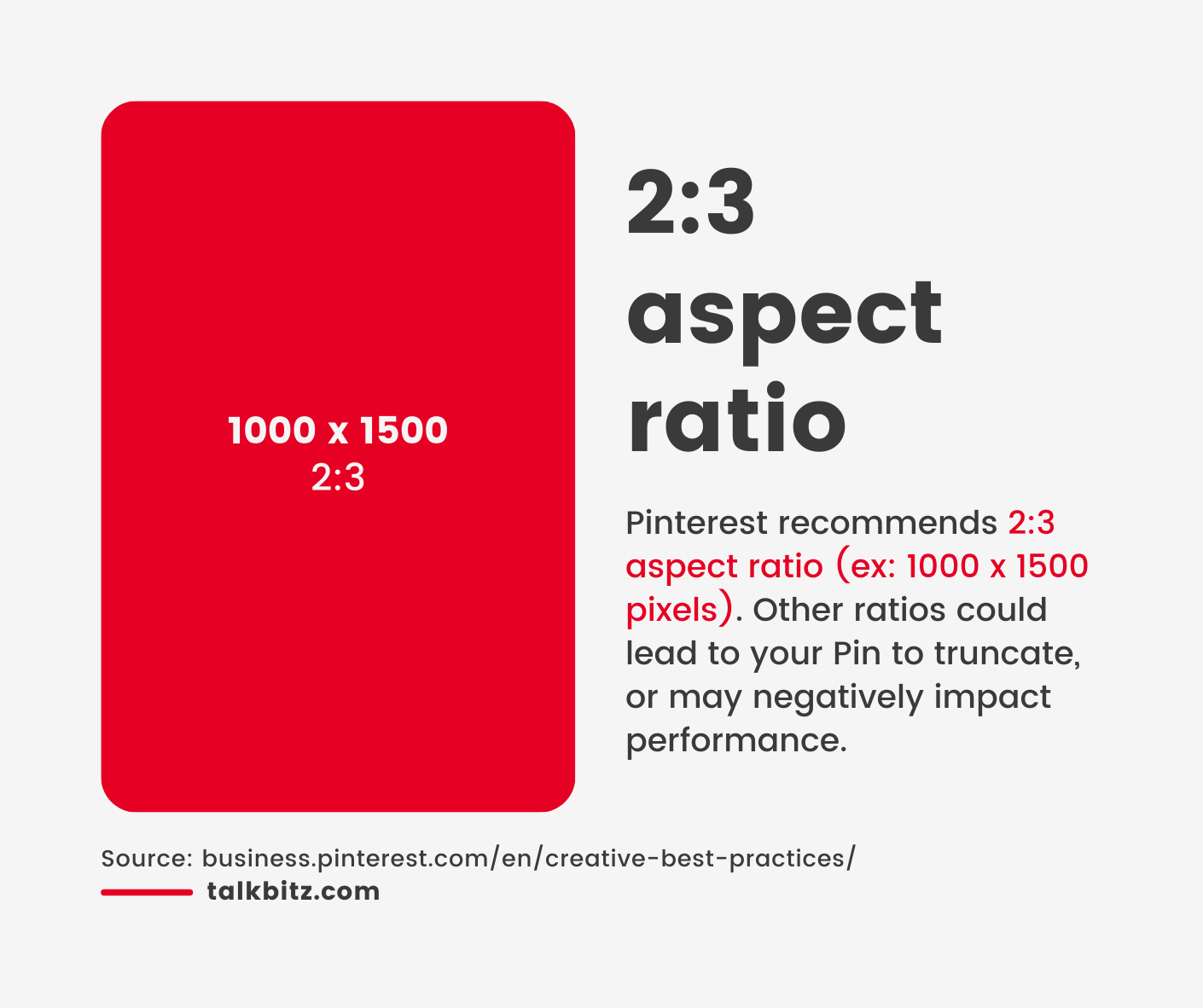
So, when creating pins, it’s important to keep these dimensions in mind so that your pins can do the work and get the most engagement possible.
- The recommended size for a Pinterest pin is 1000 x 1500 pixels with an aspect ratio of 2:3. This will make sure that the pin looks good on people’s feeds and does not negatively impact the performance.
- The best size for Pinterest square pins is a 1:1 aspect ratio and a 1000 x 1000 px image size.
- The best Pinterest long pin size is 1000 x 2100 px with a ratio of 1:2.1.
- For infographics, the best dimensions are 1000 x 3000 with a ratio of 1:3.
There are tons of tools to help you create pins; almost any design software can do that.
And one tool, and also my favorite, is Canva.
With Canva, you can create custom pins, and there are tons of templates there to help you get started, or you can create your own design from scratch.
If you don’t want to spend time creating pins, another tool called Tailwind can help you automatically generate hundreds of pins in one simple click. And it is also a great Pinterest scheduler to schedule your pins at the best times.
2. Image Quality
We both know that Pinterest is a visual search engine, which is why having high-quality images is so important. When creating pins, use quality and rarely used images to make sure that you get the best possible engagement.
Also, be careful with the text you add to your pins, I mean, the overlay text. Keep it short and clear, because too much text can make the image crowded and hard to read.
Canva has tons of stock photos, so don’t forget to take advantage of that.
I will say, the difference between a pin made with a low-quality stock photo vs a clean, original-looking image is noticeable in the saves.
I’ve had pins with the same title and description perform very differently just based on whether the image felt generic or felt specific to the topic. It’s the kind of thing you start to see once you’ve been watching your own pin analytics for a few weeks.
3. Catchy Titles and Descriptions
Your pin title may not be the first thing you consider when you create a pin, but it helps to increase click-through rates, which is the number of people who click on your pin after seeing it in a feed or board.
When someone sees a pin, and if it doesn’t catch their attention, they will likely move on.
The same goes for the description.
It needs to grab attention so people feel like clicking.
Simply put, when a user sees a pin with a great title and description that speaks to them, it simply encourages them to click through and learn more about the thing being discussed.
4. Using Keywords
When creating boards and pins on Pinterest, it’s important to use keywords to help people find your content.
For example, if you’re a wedding photographer, you may want to use keywords like “wedding photography” in your board titles and pin descriptions.
This is what will make your pins searchable for people who are looking for wedding photography tips and ideas, and help them find your pins.
To find popular keywords to use in your pins, simply enter any topic into the Pinterest search bar.
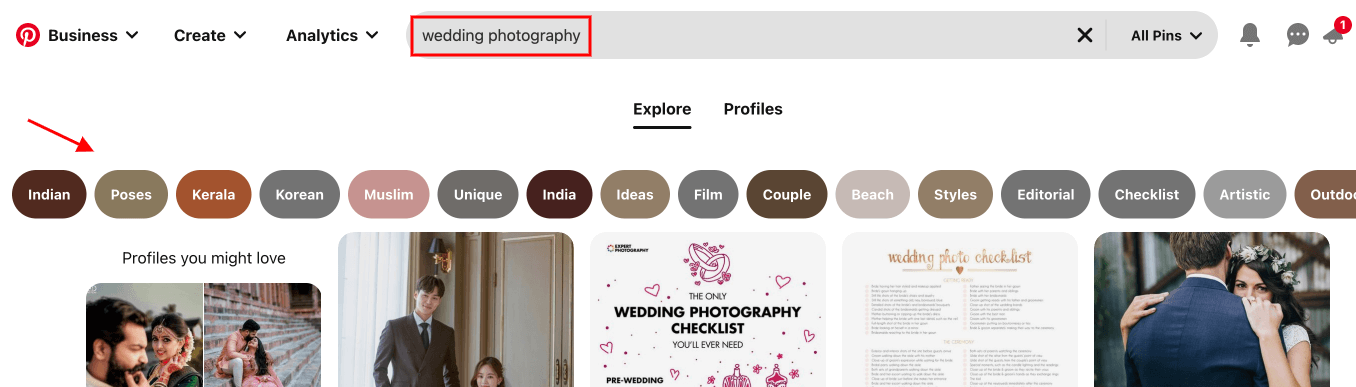
This provides similar searches on what people are searching for, and when you hit a search, it also shows you tiles with other related keywords that you can use in your pins.
5. Pinterest Board Organization
This one feels separate from pin design, but it’s not. Where you save your pins matters because it helps Pinterest sort and show them.
If the board you are pinning your pins to is messy and does not even relate to what you are pinning, you’re hurting your pin reach, even if the pins look good.
There are a few different ways to organize your boards on Pinterest.
You can create boards based on topics, seasons, or interests. You can also create boards for specific projects or events.
And you can use board sections to create sub-topics to organize your pins within your board.
For example, if you have a board about vacation ideas, you could add a board section for beaches, one for amusement parks, and one for restaurants.
Here are some tips for creating and organizing your boards:
- Name your boards descriptively. This will help you and other users find the pins they’re looking for.
- Use keywords in your board names and pins. This will help people find what they’re looking for on Pinterest.
- Pin regularly to your boards. This will keep them updated and useful to others.
You can create boards for almost anything you like. But make sure the content matches your target audience and what you’re offering on the other side.
One Last Thing
If you’re just starting out on Pinterest, don’t try to get all of this right on the first pin.
Your first 20 to 30 pins are mostly the learning curve.
What helps more than anything is looking at what’s already working in your niche on Pinterest.
Open the Pinterest search bar, type in your topic, and look at the pins that show up first. What do they look like? What do the titles say?
That’s your research, and it’s free.
Then go make your version of that, with your own image and your own angle.
For scheduling and getting your pins out consistently, I use Canva and sometimes Tailwind too.
These two platforms can save a lot of time and make sure I’m not forgetting to pin for weeks at a time, which used to happen.
No, you don’t have to pay anything. Just start with the free plan.
Happy pinning!