If you’re starting a blog or website, one of the most important decisions you have to make is choosing the right domain name.
It’s the address of your website and a fundamental part of starting a website, so it’s important to get it right.
But I know, if you’re just getting started, it can be a bit overwhelming.
That’s why I created this beginner’s guide to help you choose a domain name that not only fits your website but is also budget-friendly.
Let’s get started!
What is a Domain Name?
In short, it’s the website address that you type into the address bar of your browser to visit a website.
In other words, it’s the unique address for your website.
Every website has a unique domain name, and each domain name is made up of two parts: the second-level domain (SLD) and the domain extension (sometimes referred to as the “top-level domain” or “TLD”).
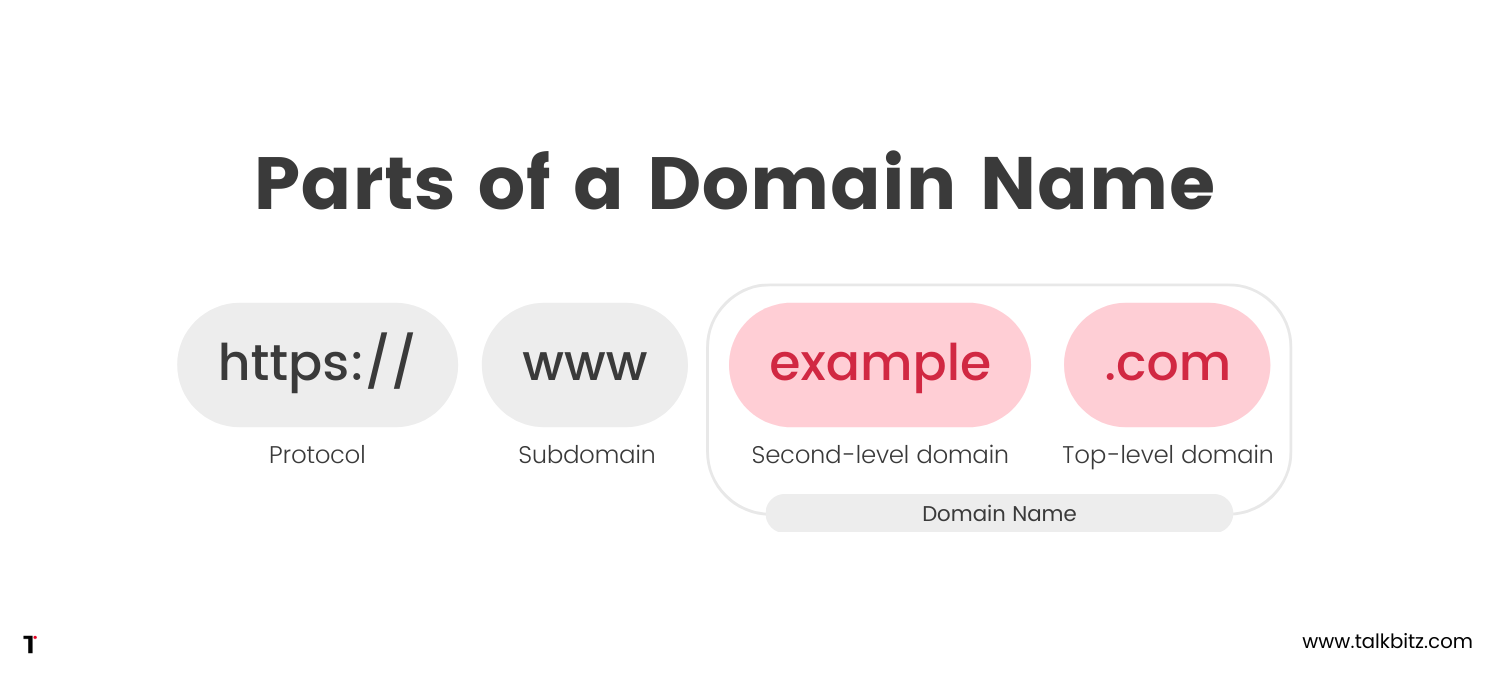
For example, the domain name “example.com” is made up of “example” as the second-level domain, and “.com” as the domain extension.
And is “.com” the only domain extension you can choose? Not exactly.
There are also different domain extensions, such as .net, .org, .info, and so many others to choose from.
However, when selecting a domain name, it’s important to consider how the domain will look when typed into the address bar, as well as how it will sound when spoken aloud.
It should also be easy to remember, as well as being unique, and not too long.
How to Choose a Domain Name
Now that you know what a domain name is, you’re probably wondering how to choose the right one.
Don’t worry, I’ve got your back!
Here are 5 tips for choosing the perfect domain name for your website.
1. Consider the domain name extension
While it may look like a small detail, the domain name you choose can make or break your website’s success, so it’s important to choose wisely.
One of the most important considerations when selecting a domain name is the domain name extension (Top-level domain or TLD).
As you already know, there are plenty of Top Level Domains (TLDs) available, but the most common ones you’ll see are .com, .net, .org, and .co.
However, the .com extension is the most widely used and recognized.
It is the default option for most people and businesses. If you want to be taken seriously as a business or professional, you should go with a .com domain name.
Free 2-month email address trial included
→ More details
However, if “.com” is not available, depending on your industry and audience, other domain extensions might actually be more suitable.
For example, if you’re in the education industry, .edu is a popular domain name extension that is dedicated to educational purposes.
Similarly, .gov is only for government entities and .net is commonly used for websites and applications that are related to technology, software, computing, and the Internet.
You get the idea, right?
2. Brainstorm ideas for the domain name
Before you start looking for a domain name, you need to come up with some ideas.
Don’t limit yourself, brainstorm as many ideas as you can think of.
Some great sources of inspiration are your business name, website taglines, products, services, or anything else related to your website.
Start with your brand name.
If you already have a business, use its name as the starting point for your domain name. This is the most straightforward way to choose a domain name and ensures that your name and brand will be recognizable across the web.
Be creative.
If you don’t have an existing brand name, you can still come up with a creative domain name. Brainstorm words and phrases that relate to your business and try combining them in interesting ways.
Think of your target audience.
What words or phrases do your ideal customers use when searching for your products or services? Consider using these terms on your domain name to help your customers find you more easily.
Be descriptive.
Try to come up with something descriptive.
For example, if you sell books, you could use “bookstore” or “bookshop” in your domain name.
If you’ve not thought of anything, start making a list of words and phrases related to your business. This can help give you some inspiration and direction.
3. Keep it short and easy to remember
Once you’ve got a list of ideas, the next step is to consider how many characters it takes to spell out the name.
Long names are often difficult to remember, so try to keep it as short as you can. If a name is too long, it’s likely to be forgotten.
Think of it this way: if your domain name is too long, people might forget it and you could lose potential customers. If it’s too confusing, even people who want to visit your site they might struggle to remember the exact domain name.
Another thing to keep in mind is the spelling of the domain name.
Try to make it easy to spell. If it’s hard to pronounce or spell, you already know what will happen.
4. Avoid numbers and hyphens
When picking a domain name, it’s important to avoid using numbers and hyphens.
But why?
While these may seem like a great way to make your domain name stand out, they can make it difficult for people to remember and revisit your website.
For example, a domain name like www.shoe-store.com could easily be confused with www.shoestore.com. Or, a domain name like www.shoe4u.com could easily be misread as www.shoe4you.com.
In either case, customers may end up on the wrong website — and miss out on your offering.
Another thing to keep in mind is to make sure you don’t include any words or phrases that are trademarked. If you do, you could end up in some legal issues later on.
5. Use your own name
If you’re not sure where to start, why not start with your own name?
A domain name with your own name can be a great way to create a personal brand and establish yourself as an authority in your field.
Think about it – if someone were to search for your name online, they would be more likely to find your website. Plus, if your name is unique enough, it can even be easier to remember.
It’s also a good idea to include your first and last name or stick to a nickname you’re comfortable with.
Let’s say your name is Cloe Silva.
You could register a domain such as “CloeSilva.com”, or even “CloeSilva.me”. If those options are taken, you could also try variations such as “CloeSilvaBlog.com” or “CloeDesigns.com”.
How to Register a Domain Name
This is an exciting first step towards creating a website on your own.
And when it comes to registering a domain name, we highly recommend Namecheap.
Why?
With over 10 million customers and 77 million domains under management, Namecheap is the go-to choice for many.
And if you’re looking for a unique domain name, Namecheap also offers a wide range of domain extensions. These include .blog, .club, .store, .tech, and more.
And the best part? The name speaks for itself, so yes, they offer some budget-friendly options.
Getting started is also simple.
Just enter the domain name you want in the tool below and hit the “Search” button. If the domain is available, Namecheap will take you through the process of registering it. It’s that simple!
Check if your domain name is available:
powered by Namecheap
If you’re stuck somewhere during the registration process, don’t forget to check out our step-by-step guide. It will provide you with extra information and tips on how to complete your domain registration the right way.
Final Thoughts
Choosing a domain name isn’t always easy, but with a bit of thought and research, you can come up with a great one that will help your business stand out in the online space.
When selecting a domain name, remember to keep it short, sweet, and memorable.
Finally, if you can, try to register your domain name right away to make sure that no one else can snatch it up!