
The subscription business market hit $555 billion globally in 2025 and is projected to reach $1.5 trillion by 2033, growing at 13.3% annually.
But there’s one thing that nobody really talks about.
And that is, roughly 47% of subscription cancellations are driven by price increases.
Meaning the real killer isn’t your idea or your product. It’s your numbers and how you price things.
So yes, even if the opportunity is real, you could lose huge money on this.
And I’m not saying this to scare you off.
I’m saying it because most of us walk into subscription businesses the same way: excited about the concept, sketching out the product, maybe even picking colors for a logo.
And then completely skipping the part that actually decides if this works or fails.
The math. The retention. The cost structure.
So I studied what kills subscription businesses, found the same pattern every time, and turned it into a 90-day roadmap on how to start a subscription business so you know what you’re doing before you spend a dollar.
Disclosure: This post has affiliate links. I earn a commission if you buy, at no extra cost to you.
Why Subscriptions Fail Before Anyone Notices the Problem
There’s a pattern I notice seeing again and again in subscription businesses.
For example, someone starts a subscription, gets their first 30 or 40 customers, feels really good, and then things slowly start going wrong around month two or three.
The reason is almost never what you’d expect. It’s not bad marketing. It’s not even a bad product.
While digging into why subscriptions fail, I found the same problem in two very different businesses.
The first one is about a freelance illustrator, Miruna Sfia, who launched a subscription box of her own artwork at $19.99 per box.
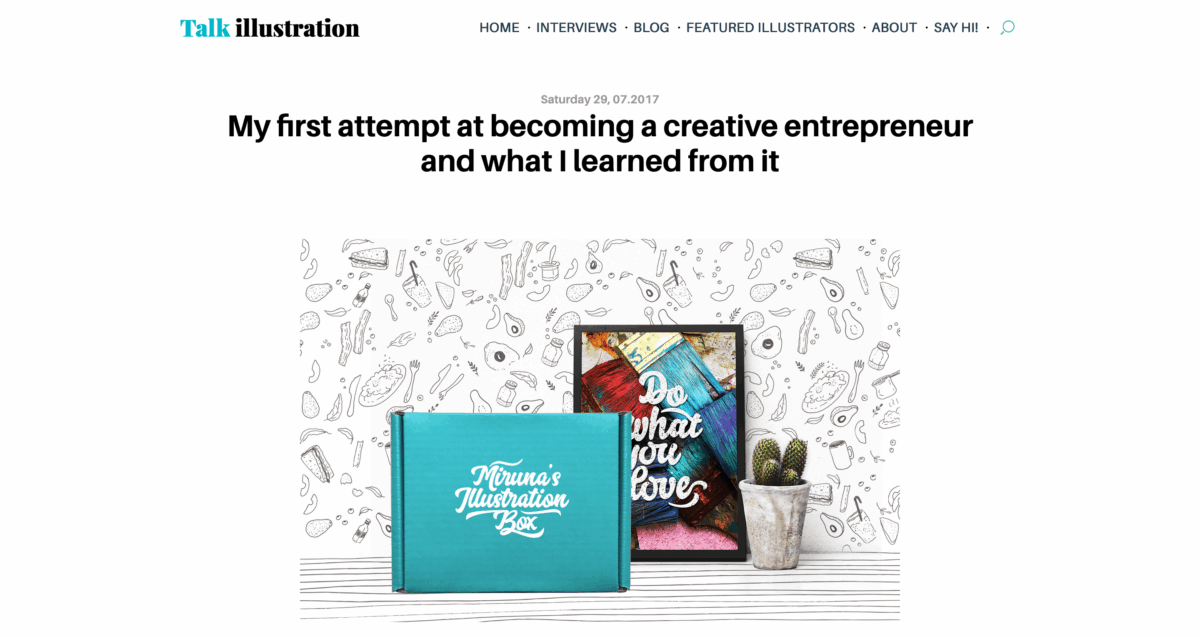
After she added up the cost of quality prints, packaging, “free” shipping (which was actually 30% of the price she was charging), website costs, and payment fees, she was losing roughly $1 on every single box she shipped.
She ran it for six months and then shut it down, even though I can really see (I bet even anyone can) the effort and care she took into making her illustrations.
As she put it, 80% of the work was about finding suppliers, calculating costs, doing spreadsheets, and marketing.
Almost none of it was the creative work she’d actually started the business to do.
The next story I saw is about Jameson Morris, who co-founded Conscious Box and Escape Monthly, and identified the number one reason subscription boxes fail as not mapping out COGS (cost of goods sold) and not building in enough profit margin.
He also noticed that many early failures simply copied competitor pricing without doing the math themselves, assuming the competitor had figured it out. Most of the time, the competitor hadn’t either.
But these days, subscriptions aren’t just boxes. They’re SaaS tools, fitness apps, meal kits, streaming services, memberships, you name it, it’s almost everywhere, even for the ink you get for your printer.
The type of subscription doesn’t matter. Miruna learned it with prints and packaging. Jameson saw it across hundreds of boxes.
The lesson scales.
So before anything else, you need to know what it’s actually costing you to deliver your product or service.
If that number doesn’t leave room for profit after fees, platform costs, and shipping, nothing else you do will save it.
So here’s where you actually start.

Step 1: Validate the Idea Before You Build Anything
I think this is the step, the most important one, but most people skip it because it doesn’t feel like progress.
You want to build the thing. You want to set up the website, design the packaging, and pick the name.
I get that.
But the most useful thing you can do in the first 30 days is find out if people will actually pay for what you’re thinking about, before you’ve invested money or months of your life into it.
Y Combinator’s Michael Seibel, who co-founded Justin.tv before it became Twitch, has a clear take on this.
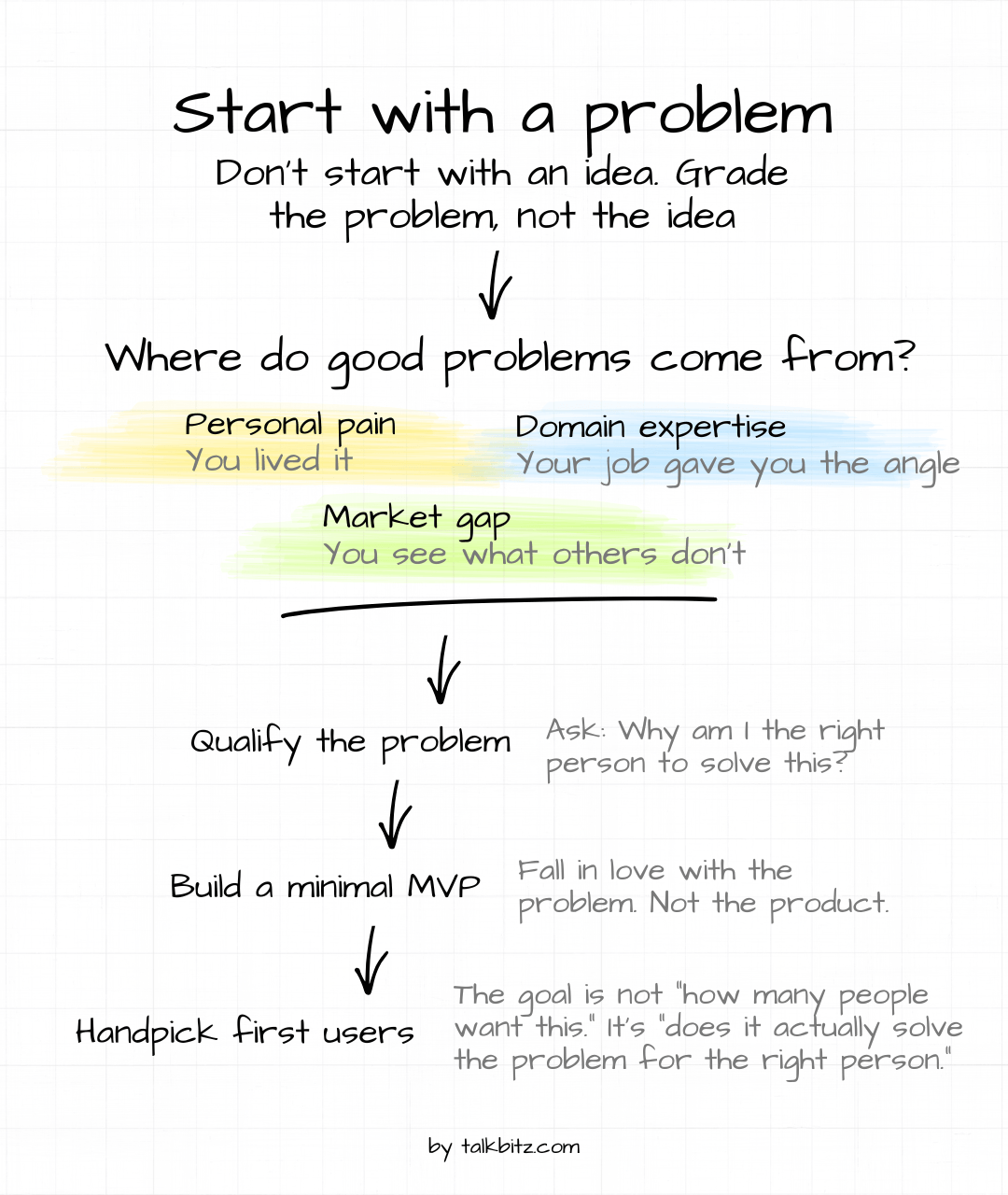
In his YC talk on getting and testing ideas, he says your initial users should almost be hand-picked, and your goal with an early product is not to see how many people want to use it.
It’s to see whether, for any group of people, it actually solves the problem.
That framing changes how you think about validation entirely.
You’re not trying to get 500 signups. You’re trying to find 10 people for whom this is a real, urgent problem, and confirm that your subscription actually solves it.
If it does, you have something. If people are politely interested but not changed by it, you don’t yet.
Paul Graham, YC’s co-founder, adds the other half. In his essay “Do Things That Don’t Scale,” he says the most common unscalable thing founders have to do early on is recruit users manually.
Just by going out and finding the right people one at a time.
And I know, now almost everything is digital, and doing this the internet way is what we now call community engagement.
It could be a subreddit, a Facebook group, or a niche forum; those are the places where people openly describe the problem your subscription is meant to solve.
Be there. Listen first. Then, well, that’s where the talk part should come.
On the other hand, keep the setup dead simple.
The minimum you need for validation is not that complicated:
- A one-page landing page
- An email capture form
- A clear one-liner about what the subscription does.
One tool that can handle all three is Kit.com.
The free plan gives you unlimited landing pages, unlimited email sends, and one automated welcome sequence, all up to 10,000 subscribers.
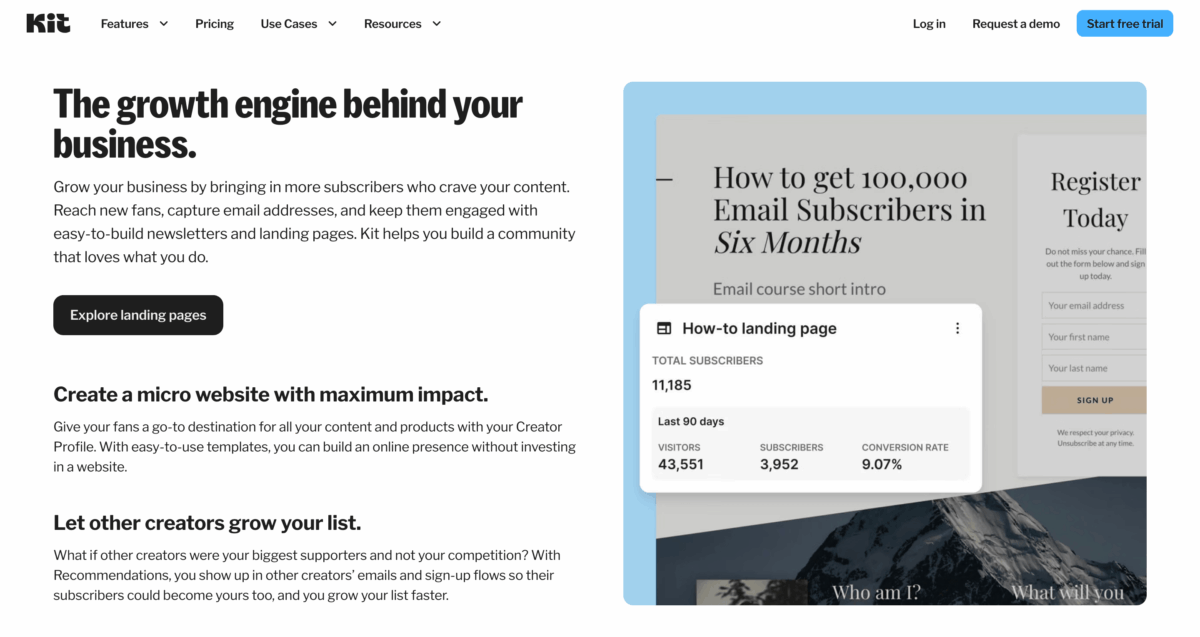
It’s been more than 3 years now, and I still use Kit for the TalkBitz newsletter, and the free plan is more capable than it looks.
Setting it up took maybe 1 hour the first time and no duct-taping things together.
That’s exactly why I keep recommending it as the starting point for validation.
You get your validation page and your email list in the same place, so when you’re ready to launch, the people who showed interest are already in your system waiting.
And while you’re doing that, talk to people directly.
Not asking,‘ Would you buy this?’ because people don’t say no to your face. They say ‘that sounds interesting’ and then never open their wallet.
Ask them: how much would you pay? How often do you need this? What would make you cancel?
That kind of conversation tells you a lot more than any conversion number.
Give yourself 30 days for this.
If you don’t get anyone truly interested after a month of honest outreach, that tells you something.
It could be more like changing direction before you build, not after.
Step 2: Pick the Right Subscription Type
There are three main types of subscription businesses, and they’re not equally easy to start.
Digital subscriptions, things like courses, newsletters, templates, or software tools, have the highest margins (usually 80 to 95%), the lowest startup costs (often $0 to $500), and the least operational complexity.
Lenny Rachitsky is a good example of how far a simple digital subscription can go.
After leaving Airbnb, he started writing a newsletter with no audience and no plan to monetize it. He just kept writing every week because people found it useful.
Then, around the start of COVID, with no income and no startup idea working out, he decided to add a paid tier. In a 2021 interview with Nathan Barry, Lenny said he had over 3,200 paying subscribers at that point and was earning more from the newsletter than he ever made at Airbnb.
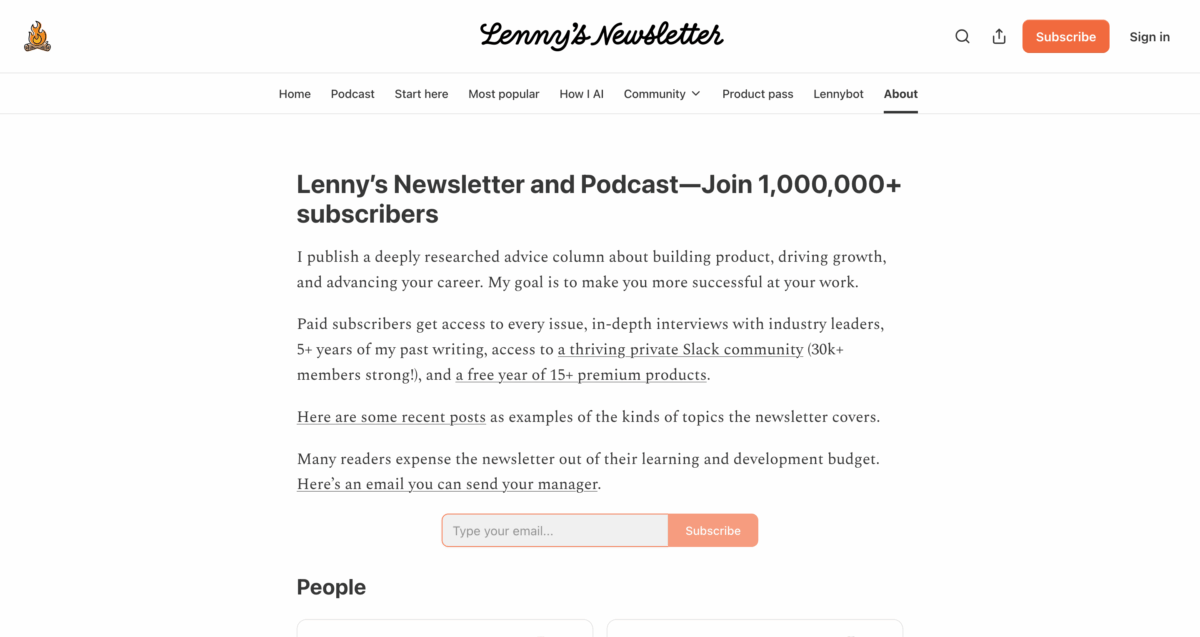
Now Lenny’s full-time work is his simply named Lenny’s Newsletter, where he shares everything he has learned about building products and teams.
Physical subscription boxes have mid-range margins of around 40 to 60%, higher startup costs, and significantly more operational work.
Shipping, suppliers, packaging, everything is taking part in the whole business.
So it’s no secret that physical boxes also take more effort than digital subscriptions, and that gap matters when you are checking if the business survives. That does not mean physical boxes are a bad idea, but you need to go in understanding that.
Service subscriptions, things like coaching, community access, or memberships, have variable margins and require you to be the product, at least at first.
A digital nomad and indie maker, Pieter Levels built Nomad List, a nomad remote workers community, as part of his “12 startups in 12 months” challenge.
He started with a public spreadsheet posted on Twitter asking for feedback. That spreadsheet went viral, filled up with crowdsourced data, and within weeks, he had built a proper site from it.
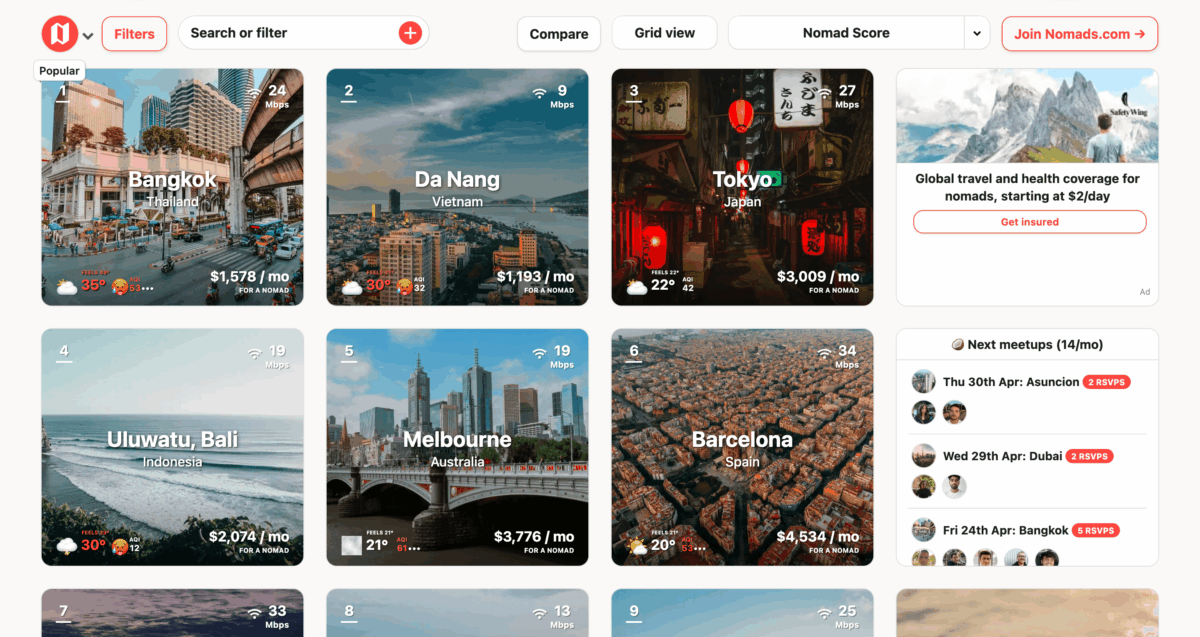
He then added a paid membership giving members access to a paid community and nomad kits around the digital nomad lifestyle.
This kind of subscription really works if you genuinely enjoy working with people directly and have something specific to teach or offer. If you don’t, it gets exhausting fast.
If you have limited time or budget, digital is the place to start. If you have product expertise and some starting capital, physical can work. Just make sure the math works first (which we’ll get to next).
Step 3: Do the Math Before You Set a Price
This is the part that saves you from many bad situations. Three numbers matter more than anything else at this stage.
Let me explain.
The first is your Cost of Goods Sold (COGS): what it actually costs to deliver one unit of your subscription.
For digital products, this is usually low (platform fees, email tool, payment processing).
But for physical boxes, most of the time, you need to calculate every single cost: materials, shipping, packaging, labels, payment processing, and your time.
And for a service, it’s your hourly rate times the hours per month you’ll spend on each subscriber.
The second is your Customer Acquisition Cost (CAC): this is about how much you spend, in time and money, to get one paying subscriber.
If you’re a beginner using organic channels like Reddit or personal networks, this can be close to zero. But “close to zero” still has a cost. You want your CAC to pay back within three to six months.
You get the idea.
The third is Customer Lifetime Value (LTV): What it simply means is, how long does the average subscriber stay, multiplied by what they pay.
If your churn is 5% monthly, the average subscriber stays about 20 months. At $20 per month, that’s $400 in lifetime value.
From what I found, your LTV needs to be at least three times your CAC for the business to make sense long-term.
These three numbers don’t live separately. They talk to each other.
For example, if your COGS is too high, your price has to go up. If your price goes up, some people won’t subscribe. If fewer people subscribe, your CAC goes up.
And if your LTV can’t cover that CAC in three to six months, the whole thing runs at a loss, no matter how good the product is.
That’s the math most beginners skip, and it’s exactly why some subscriptions quietly die around month four with no obvious reason.
So let’s make sure yours doesn’t.
Here’s a simple pricing structure to start with:
- For physical boxes, a common starting point is 3x markup on COGS. If it costs you $10 to deliver, you should be charging at least $30.
- For digital subscriptions, $5 to $50 per month or $50 to $200 per year is the typical good range.
But I don’t really know what you’re actually selling.
It might be a physical box? A digital course? A community? A service?
What I’m saying is, your offer shapes everything that comes after.
Don’t pick a price tier and then try to build a product around it. Figure out what you have, calculate your real costs, then use these benchmarks to land on a price.
Step 4: The Platform Question Everyone Gets Wrong
Here is where a lot of beginners go wrong: they jump straight to Gumroad because it is free, fast to set up, and not gonna lie, it is a solid place to start.
No monthly fees, no commitment, just upload and sell.
But as your revenue grows, the math starts working against you.
And Gumroad is not the only one people get wrong. A lot of beginners also go for Shopify because it sounds professional.
But Shopify is not built for digital subscription businesses by default, but it works well for businesses like subscription boxes.
For most beginners, especially those selling digital products, Payhip is the right starting point.
I set up a Payhip store myself for a few digital products before I built TalkBitz, and the thing that really surprised me was how fast it was.
It’s more like connect Stripe or PayPal, add your product, and you’re live.
With their free plan, you get everything, but Payhip takes 5% per sale. The Plus plan for $29 per month cuts it down to 2%.
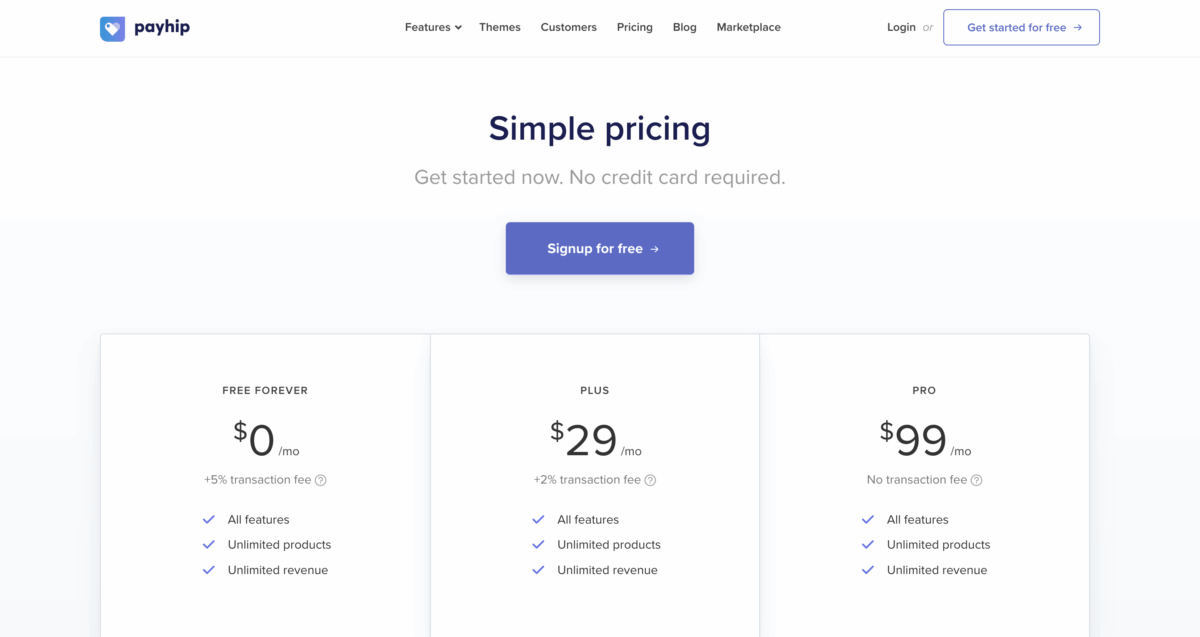
The Pro plan for $99 per month removes Payhip fees, but PayPal/Stripe will still charge their regular transaction fees.
Payhip also handles EU/UK VAT automatically, which also matters more than we realize.
This is how each Payhip plan looks in total cost and percent of revenue at $1,000/month (50 sales assumed with Stripe (2.9% + $0.30 per transaction) as the payment processor):
| Plan | Monthly fee | Payhip fee | Stripe fee | $0.30 fees | Total cost | % of revenue |
|---|---|---|---|---|---|---|
| Free | $0 | $50 (5%) | $29 | $15 | $94 | 9.4% |
| Plus | $29 | $20 (2%) | $29 | $15 | $93 | 9.3% |
| Pro | $99 | $0 | $29 | $15 | $143 | 14.3% |
If we compare this with Gumroad, it has no monthly fee, but takes 10% + $0.50 per transaction, plus Stripe’s regular fees on top.
For physical products or subscription boxes, Shopify is a strong choice.
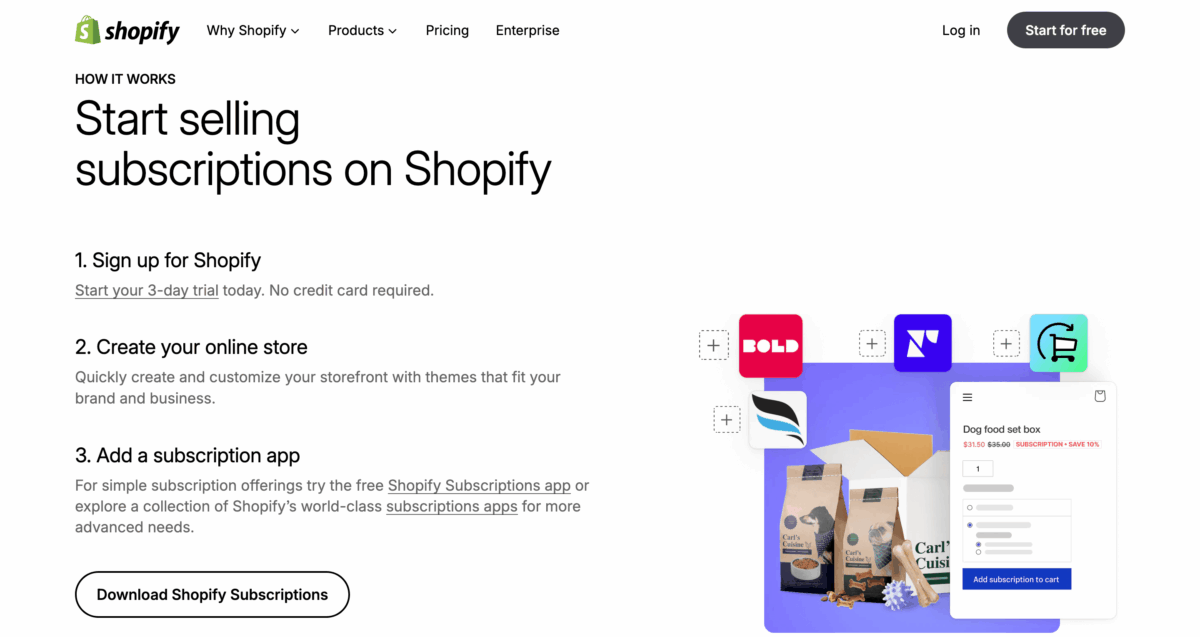
At $39 per month for the Basic plan, it comes with a free native subscription app, but total costs depend on your location since Shopify Payments fees vary by card type and country.
On the other hand, Podia is worth looking at if you need email marketing and community features built in.
At $39 to $89 per month, it comes with more built-in tools and ends up with total costs close to Payhip Pro at your level.
If we take all those platforms, here is a quick side-by-side so you can easily see how these look next to each other:
| Platform | Best For | Monthly Cost | Transaction Fee | Total Cost at $1000/mo |
|---|---|---|---|---|
| Payhip Free | Validation stage | $0 | 5% + Stripe (2.9% + $0.30) | ~$94 |
| Payhip Plus | Early growth | $29 | 2% + Stripe (2.9% + $0.30) | ~$93 |
| Payhip Pro | Scaling digital | $99 | Stripe only (2.9% + $0.30) | ~$143 |
| Podia Mover | All-in-one (email + community) | $39 | 5% + Stripe (2.9% + $0.30) | ~$133 |
| Gumroad | Easy and Fast setup | $0 | 10% + $0.50 + Stripe (2.9% + $0.30) | ~$169 |
| Shopify | Physical + subscription products | $39 | Shopify Payments (varies by card + location) | ~$70+ |
As you can see, the costs are different across all these platforms, but what you actually get for that money is also different.
Another thing we need to take seriously is that switching platforms later is also painful. Your subscriber data does not transfer cleanly. Payment history requires manual import.
There is no easy migration button.
So pick the right platform that fits well for your current stage, stay on it until the math tells you to move, and plan to make that switch only once.
Step 5: Build the Minimum That Actually Works
You don’t need a beautiful website to launch a subscription. You don’t need an app, advanced analytics, multiple payment methods, or sophisticated automations.
Just think about it, you don’t need a full kitchen to sell food. A cart, a menu, and a line of customers. That’s a business. The dining room comes later.
Same thinking here, too.
Right now, what you actually need to launch is:
- Your product or service fully tested (not half-baked)
- A payment page on your chosen platform
- A confirmation email that goes out automatically when someone subscribes
- One public place where people can find you (could be a simple website, an Instagram account, or a newsletter), and a way to collect feedback.
For digital products, it usually takes about three to five days to go from idea to launch.
Physical boxes, two to four weeks if you already have suppliers. Services, one week (just a landing page and a payment link).
Most of us waste the most time building a big, complex website before they sell anything. I know it’s kind of tempting, but that’s not what matters in the beginning.
Just set up something basic, get one customer, then improve from there.
Your First 90 Days, Week by Week
Ninety days sounds like a lot until you see how it actually breaks down.
The first 30 are for validation, finding out if people will actually pay before you spend a dollar building anything.
The next 30 are for launching the minimum version out there.
And the last 30 are for learning who’s staying, who’s leaving, and what needs fixing before things quietly fall apart.
So yes there’s a pattern, and knowing this in advance will save you from a lot of panic.
Weeks one and two are about sharing it first with people you already know.
Email people you know personally, post in the communities where your target audience already hangs out.
Your goal here is not revenue. Your goal is understanding how people describe the problem you’re solving. The language they use is what you’ll use in your marketing later.
By weeks three and four, you should have somewhere between 20 and 50 early subscribers or at least email signups.
Talk to them.
Ask what they like, what’s confusing, what almost made them not subscribe. Don’t over-correct based on one opinion, but start looking for patterns.
By month two, you’ll probably notice one channel is doing most of the work. Maybe Reddit, maybe Instagram, maybe your personal email list.
Double down on that one channel and basically ignore the others for now.
Your goal is 10 to 20 new subscribers per week coming in consistently.
And we also should not forget there can be tough months. The first excitement fades, the billing cycle hits again for the second or third time, and people start asking if it is worth it.
When that happens, and it will, the move is not to panic and add features.
Reach out to your early subscribers directly. Ask how they’re doing. If your platform allows it, set up a pause option so people can step away without fully canceling.
And around day 25 of the billing cycle, send a short email about what’s coming next month. Something worth staying for.
The Churn Thing That Actually Kills You
Early on, it’s easy to spend too much time thinking about customer acquisition and not enough time thinking about retention.
That’s the backwards way to run a subscription.
There’s a simple math, and you can check this yourself.
If your monthly churn is 5%, that compounds to roughly 46% annual subscriber loss.
Just imaging, you start with 100 subscribers. You add nobody new. With 5% monthly churn, by the end of month 12 you’ve got 54 people left.
Nearly half your subscribers gone, just from normal monthly dropout.
To just stay flat at 100 subscribers with 5% monthly churn, you need to add 8 new customers every single month, forever. That’s a lot of effort just to end up in the same spot.
Now here’s the part most people don’t think about.
Not all churn is someone deciding to leave.
Some of it has nothing to do with your product at all.
Think about some cases like, a card expires, a payment fails, and if nothing retries it automatically, that subscriber is just gone. They didn’t decide to leave. Your platform did it for them.
So setting up automatic payment retries on your platform, most people call this dunning, helps catch a lot of failed payments before they turn into real cancellations.
It costs nothing to set up and should be one of the first things you set.
The harder type is voluntary churn, where someone genuinely decides to leave.
It usually happens when the customers are not the right match, or the product doesn’t give what it promised, or the price doesn’t feel worth it anymore.
The fixes here are less about systems and more about people.
- Better onboarding so someone doesn’t sign up, get confused, and quietly disappear.
- More proactive communication so subscribers don’t feel like they paid and got forgotten.
- A pause option for the person who just needs a month off but would happily come back.
- And when someone does cancel, just send a short email. One question. Something like, ‘Was there something we could have done better?’ Not to guilt them into staying. Just to understand why they left. That answer is worth more than any analytics dashboard.
Then, if we pack all of these things into one sentence, there is the obvious part, and that is to deliver something worth staying for every single time.
Keeping the people you already have is more valuable than trying to find new ones at almost every stage.
One Last Thing Before You Build
The subscription economy is real and it’s still growing.
The opportunity is there.
But it doesn’t reward the most excited person in the room. It rewards the one who did the math before they launched, priced based on what things actually cost, and cared more about keeping subscribers than just getting them.
That’s everything I saw while doing the research for this post.
You don’t need a lot to start either.
A product that solves something real, a platform that costs you nothing or close to it, and maybe 50 people who’ll give you honest feedback instead of lying to your face.
That’s actually it.
But before you touch any of that, sit down with a spreadsheet.
Figure out your COGS. Know what churn you can survive. Leave room for the fees nobody warns you about, platform cuts, payment processing, shipping if you’re doing physical.
Then launch.
Talk to your first subscribers like they’re the most important people in the room, because at that stage, they are. Listen to what they say. Change what needs changing.
Most posts about subscriptions are obsessed with how to get customers.
The founders who actually built something that lasted were obsessed with why people stayed.
And that’s the part most people figure out too late.