Starting a small business is one thing.
But figuring out which tools to actually use while doing it is a completely different problem.
I had a time where I was signed up for so many platforms at once.
Some free, some not, and most of them collecting dust in browser bookmarks I’d completely forgotten about.
Even though it felt like I was going to have a proper “system,” it was just excitement after a few days.
So this list is what I’d actually tell someone to start with.
And no, this is not all the tools that exist on earth, just the ones that cover what a small business actually needs when you’re getting going and trying not to lose your mind while doing it.
Disclosure: This post has affiliate links. I earn a commission if you buy, at no extra cost to you.
1. Wix: build a proper website without touching a single line of code
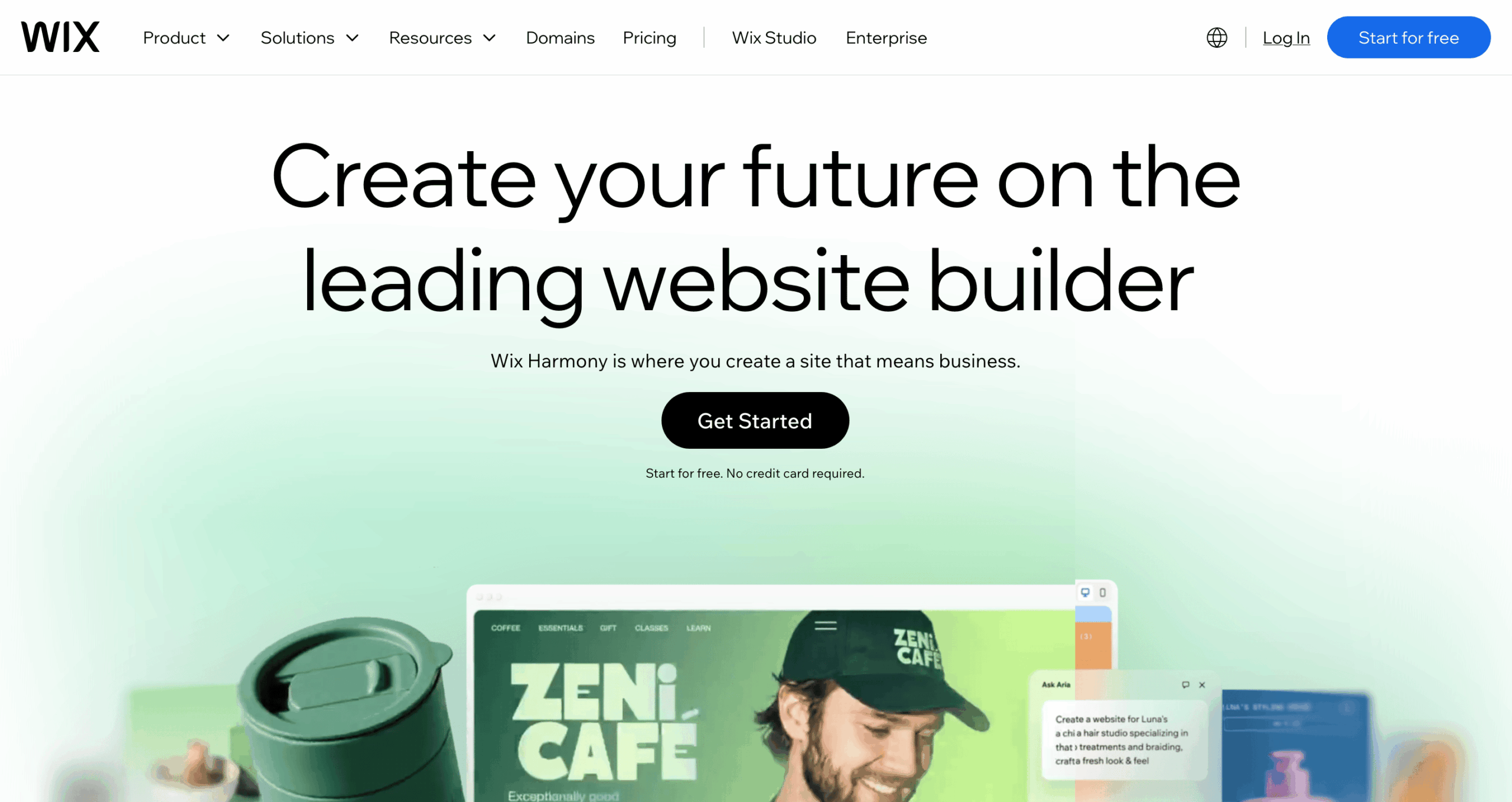
Wix is simply for any small business owner who wants a website up and running without tech headaches, and without any of those hosting setups.
You just sign up, pick a template, drag, drop, and the site looks exactly how you left it. What you see while editing is what your visitors see.
The AI site builder they added also makes it even faster now. You answer a few questions about your business and Wix generates a starting layout. You still customize everything, but you’re not staring at a blank page.
It also handles more than just a basic site. You can set up a blog, an online store, a booking system, a members area, even a portfolio, all without switching to separate tools.
That’s a bigger deal than it sounds when you’re trying to run everything yourself and you’re still in your first weeks of selling.
Pricing: The free plan puts Wix’s own branding on your site and gives you a wixsite.com address instead of your own domain. The Light plan at $17/month gives you a custom domain (free for 1 year) and removes the branding. If you also want to sell products or take payments, the Core plan at $29/month.

2. Shopify: the easiest way to start your first online store

Shopify is an eCommerce platform, and my first reaction was that it was way too much for a small business owner just starting out. A full platform, monthly fees, and you haven’t sold a single thing yet. Why not just start small?
That’s a fair reaction. But there’s one thing that I actually missed. And that was that the “small” alternatives cost you something worse than money.
For example, building a store from scratch on WordPress means finding a theme, adding WooCommerce, hooking up a payment gateway, then spending a weekend fixing the checkout that breaks on mobile, then probably calling someone who knows what they’re doing.
WordPress is a solid platform, but it’s basically a content management system, selling online is another story, so to get it working like that, you have to spend more time and money than you had to.
All of that before you even sell one thing.
But Shopify lets you skip that whole headache. You pick a theme, drop your product in, hook up your payment, and the store is really live.
There’s also a built-in POS if you sell in person, which I didn’t expect the first time I saw it. It brings you into the same ecosystem, same inventory, no separate setup.
Pre-orders, subscriptions, discount codes, all of that is in there too.
Pricing: Shopify gives you a 3 day free trial that you don’t have to hand over a credit card to start. After that it is just $1 for the first three months and then you have to pick a plan starting around $39 a month.
3. Printify: sell custom products online without touching any inventory
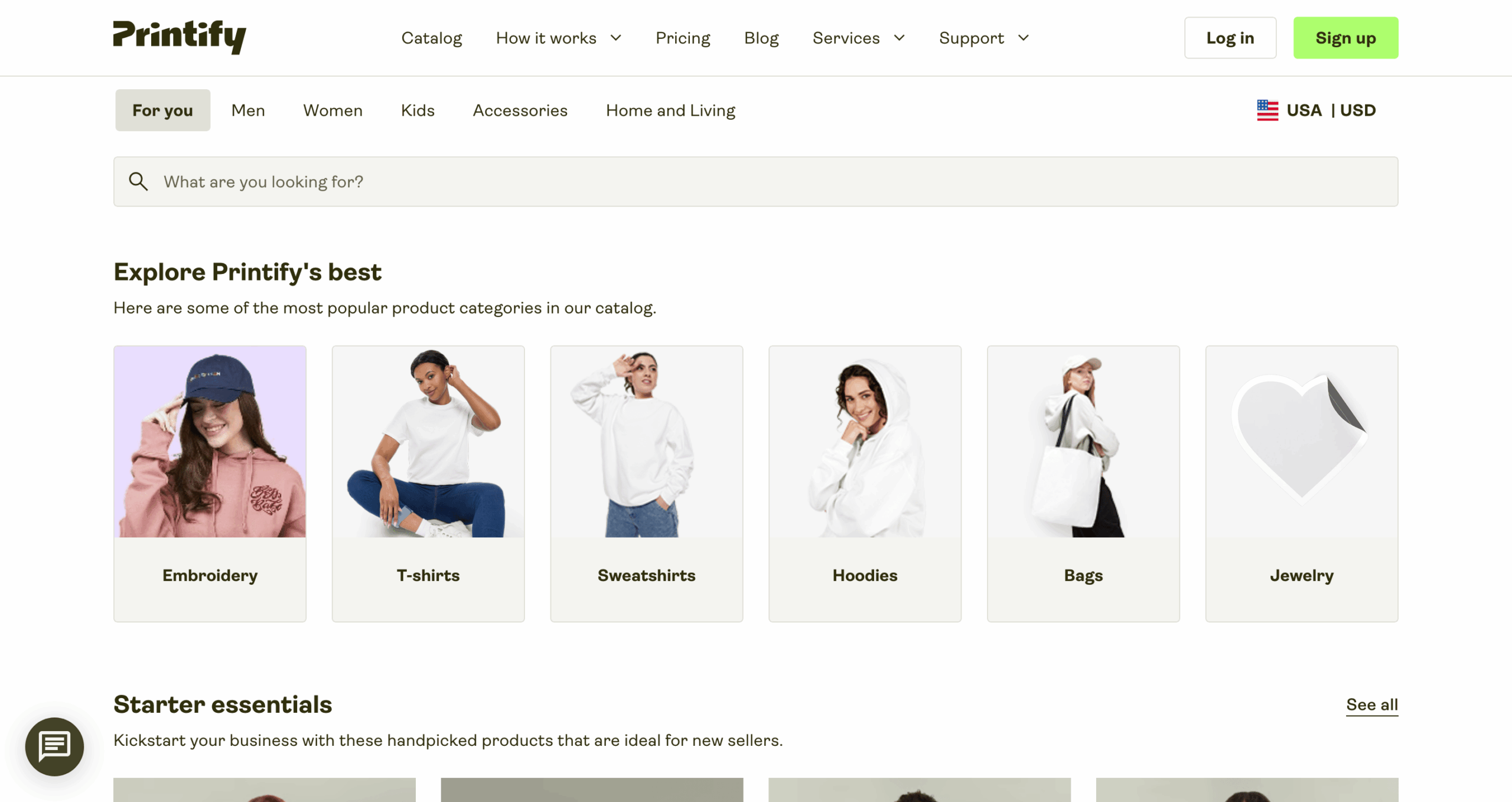
Printify is a print-on-demand platform. If you’ve been wondering how people sell t-shirts, mugs, hoodies, phone cases, and all of that online without renting warehouse space or buying stock upfront, this is it.
You design the product, list it in your store, and when someone buys it, Printify prints it and ships it directly to the customer. You never see the item, you never pack a box, you just set it up and let it run.
It connects directly with Shopify (also Etsy, Amazon, Wix, even TikTok Shop), which is why I added these two sitting back to back on this list. You can have a Shopify store running and Printify products listed in it probably the same day.
The free plan is actually free, it ain’t some half baked trial and you get access to over 2,000 products (including t-shirts, home decor, bags, jewelry, phone cases, socks), up to 5 connected stores, and unlimited designs at $0/month with no per-order commission beyond the base product cost and shipping.
So yes, for someone just testing a niche or thinking about starting a small business selling custom products, this is the best tool that can handle more than half of your new business for you.
Pricing: It’s free to start, you pay only when a customer places an order, the base product cost plus shipping, and you keep whatever margin you set above that. If you start doing a higher volume, the Premium plan gives you up to 20% off on all products, and it’s $39/month billed monthly, or $24.99/month if you go annual.
4. Hostinger: reliable web hosting that doesn’t cost much to start
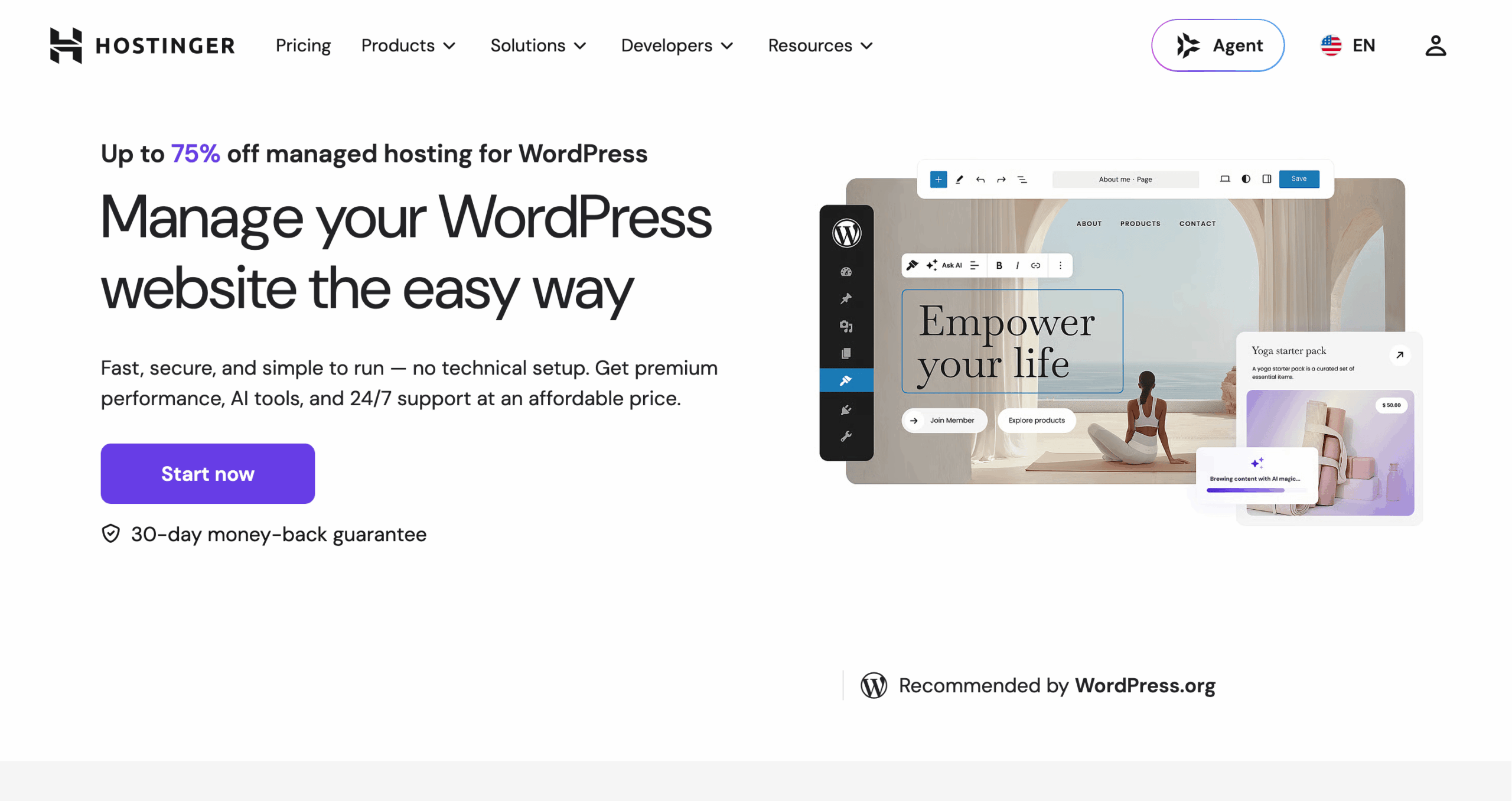
Hostinger is what you would pick as your hosting partner, if you’re building a WordPress blog or a website rather than an eCommerce store.
And for most beginners, this is where I’d send you first, not just because it makes things easy, but because the price and what you get for it is decent.
The first thing is the starting price. The Premium plan comes in around $2.99/month on a longer-term plan, and that includes one-click WordPress installation, a free domain for the first year, free SSL, and unlimited bandwidth.
That’s most of what a new site really needs, all in one plan. And on the other hand, I want to be straight with you about something, because most hosting reviews skip it: the renewal price is a real jump.
Once your initial term ends, the same Premium plan renews at around $10.99/month.
That’s not a scam, it’s just how most web hosts work, and almost all of them do the same thing. What makes it worth it for beginners is how smooth the setup actually is.
It doesn’t feel like setting up hosting at all, you get a solid base for your WordPress setup and yes, with more control over everything behind your setup. If something does go wrong, their support team is available around the clock.
Pricing: The cheapest hosting plan is around $2.99/month, but that price needs you to pay for 48 months upfront and you get a free domain for the first year too. When it renews, it goes up to about $10.99/month. There’s also a 30-day money-back guarantee if you sign up and it’s not what you expected.
5. Buffer: schedule your social media posts so you’re not winging it every day
Buffer is the tool I always come back to for scheduling social posts, and it works across whatever platforms you’re on, Instagram, Facebook, LinkedIn, TikTok, Pinterest, X, YouTube, Threads, all of it from one dashboard.
And yes, I know you’d think posting on social media every day sounds like no big deal. But only until you’re actually running a business.
Then it’s 9pm, you haven’t put anything out yet, you’re rushing to come up with something, and whatever you upload looks rushed, because it is.
That’s why having a schedule changes how you think about content. When you do this at a time you’re not stressed, let’s say on a weekend, you start thinking about what makes sense for the whole week.
You sit down maybe for an hour or two and do it all in one go, schedule everything, and then get on with your day. Just that one change on its own is worth more than the tool itself.
It also connects with tools you’re probably already using, Canva, Google Drive, if you want to take it further.
Pricing: The free plan covers 3 social channels and 10 scheduled posts per channel at a time, which is actually enough for a week if you post just once a day. If you need more, the Essentials plan is $6/channel per month ($5 billed annually), with unlimited posts and advanced analytics.
6. Canva: create professional graphics without paying a designer every time

Canva handles most of your design work, even the stuff a lot of people spend money on that they could handle themselves. Not because design doesn’t matter, but because for most everyday business graphics, it’s more than enough.
Social media posts, Pinterest pins, YouTube thumbnails, email headers, presentations, simple documents, all of it.
You can drag and drop, there are thousands of templates, and you don’t need any design background to end up with something that looks clean and professional.
I’ve been using Canva for years by now, and what keeps pulling me back is how fast it goes. You’re not starting from nothing every time. You find a template that’s pretty close to what you need, swap in your own colors and fonts, drop your content in, done.
Pricing: The free plan is more than useful and most beginners won’t need to go past it for a while. Canva Pro adds a brand kit, a bigger asset library, and the ability to resize one design across multiple formats. Pricing varies by region and billing cycle, so check Canva’s site for what it costs where you are.
7. Systeme.io: run your email, funnels, and courses from one place

Systeme.io is what I’d point someone to when they ask how to start selling something online without spending hundreds of dollars on some tools before they’ve made a single sale.
It’s an all-in-one platform. You get email marketing, sales funnels, course hosting, a blog, and an affiliate program, all in the same account.
These are tools that would normally cost you $50 here and $100 there and another $30 somewhere else.
The free plan is genuinely free, no need to put your credit card, and no time limit. You get up to 2,000 contacts, 3 sales funnels, 1 course, 1 blog, and unlimited emails. That’s enough to build a real product funnel and start growing a list before you spend anything.
I know, it’s not the flashiest tool on this list. But for someone who wants to start building something online without stacking 5 different tool subscriptions, it’s the most practical place to start.
Pricing: When you outgrow the free plan, the Startup plan is $17/month, which covers 5,000 contacts and 10 funnels. Compared to alternatives like ClickFunnels at $97/month for similar features, the difference is hard to argue with.
8. Interact: get email subscribers without it feeling like a pop-up
Interact takes a different angle to lead generation; quizzes. And it works better than most people expect because lead generation tactics feel either pushy or kind of pointless, but this tool makes it useful.
If we look at most of the ways people do this, like Pop-ups asking for your email, downloadable PDFs nobody reads, lead magnets that promise a lot and then give you something so flat.
What this tool does for you is, you build a short quiz around something your audience actually wants to know, like “What kind of online business should you start?” or “Which marketing strategy fits where you are right now?” And at the end, when the person wants their result, you ask for their email.
Because they actually want the answer, they give it.
And now you have someone on your list who already engaged with your content instead of someone who just clicked past a pop-up without reading it.
You can connect everything directly to your email platform like Constant Contact so new leads go straight into your list automatically.
Pricing: They offer a 14-day trial, no credit card required to start. After that, the Lite plan is $27/month billed annually.
9. Constant Contact: a solid email marketing option for more traditional businesses

Constant Contact is for the business owner who doesn’t want to become a marketing person. The one who just wants to send a newsletter to their customers, maybe a promotion once a month, and not spend three hours figuring out how to do it.
That is actually a real use case. Not everyone is building a funnel or growing an audience. Some people have a customer list and they just want to stay in front of them.
Think about a local bakery, a yoga studio, a service business that works with the same 200 or 500 people every year. Constant Contact was built for exactly that.
You also get list management, some good automation, sign-up forms, and analytics without needing to understand a complex dashboard.
Pricing: Start with a free trial to see if it fits. The paid plan starts at $12/month for up to 500 contacts. Check their pricing page for current tiers as your list grows.
10. Nutshell: stop losing leads once you actually start getting them
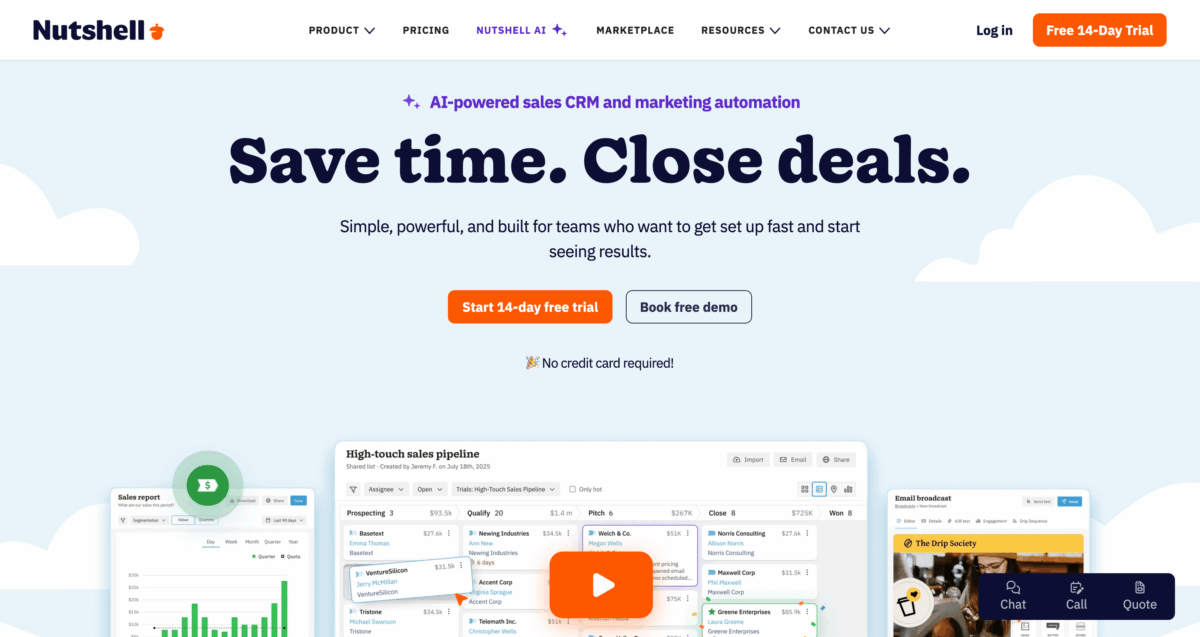
Nutshell is a CRM, and the problem it solves is very simple to understand. Almost everyone starts losing track of their leads once business starts to grow.
It’s a place to track every person who’s interested in your business, where they are in the conversation, and what the next step is with each of them.
Someone reaches out, you have a solid conversation, say you’ll follow up, and then three weeks go by and you’re staring at your inbox trying to remember who they were. They’ve moved on by then. Or worse, they went with whoever did actually follow up.
With this, you can log conversations, set follow-up reminders, build sales pipelines for different types of clients, and even send email sequences directly from the platform.
So for small businesses where you’re handling most of this on your own, that kind of organization matters more than most people think until they’ve already lost a few good leads by mistake.
Pricing: There’s a 14-day free trial to get started, and no credit card is required. You can check Nutshell’s pricing page directly to see the current plan costs.
11. Jotform: collect info from customers without building anything technical
Jotform handles all the forms your business will eventually need. Things like contact forms, order forms, booking forms, feedback forms, and intake questionnaires, all of them.
The builder is drag-and-drop, there are hundreds of templates to start from, and you can connect everything to Google Sheets, payment processors, or your email marketing platform.
So when someone fills out your form, the data goes exactly where you need it to go without you having to manually move anything around.
For a service business especially, this is a big deal. Instead of back-and-forth emails asking customers for information before you can even start working with them, a proper intake form collects everything upfront. Saves time on both sides.
Pricing: The free plan gives you access to the core features and a reasonable number of monthly submissions. If you grow past that, paid plans start at $39/month, which is on the higher end for a form tool.
12. Notion: the one place your whole business can actually live

Notion is kind of the hardest tool on this list to explain in a single sentence. But it’s also one of the most useful once you’ve actually set it up. Think of it as a blank workspace that becomes whatever you need it to be.
Your notes, databases, project boards, wikis, content calendars, task lists, SOPs, client trackers, it handles all of that.
In the same account, sometimes on the same page, if that’s how you want to set it up.
The reason it’s still on this list is that when you’re running a business by yourself, or with a small team, you need a place to think and sort things out that isn’t 10 different Google Docs and messy spreadsheets and WhatsApp groups.
Notion becomes that spot for you. Everything lives there, and you can actually find it again later whenever you need to look for it.
Pricing: It takes a bit of time to get it set up the way you want. But once it works, you probably won’t want to move. The free plan is solid for individuals. Paid plans go up from there depending on how many people are on your team and what features you need.
So which ones do you actually need right now?
Not all of them though. That’s the truth of it.
The mistake most people make is trying to set up the complete stack before they’ve made their first sale or published their first piece of content.
Then, you end up spending days and weeks figuring out tools and zero time on the real business.
So start with what your situation actually requires.
A website for your small business? Wix.
Selling online? Shopify. Want custom products with no inventory? Add Printify to it.
Building a WordPress site instead? Hostinger. Posting on social? Buffer. Design work? Canva.
The rest can come in later when you actually need them, not before that.